What feature might observers spot by using modest binoculars when viewing Jupiter in the western sky?
Answer
Its four largest moons (Io, Europa, Ganymede, and Callisto)
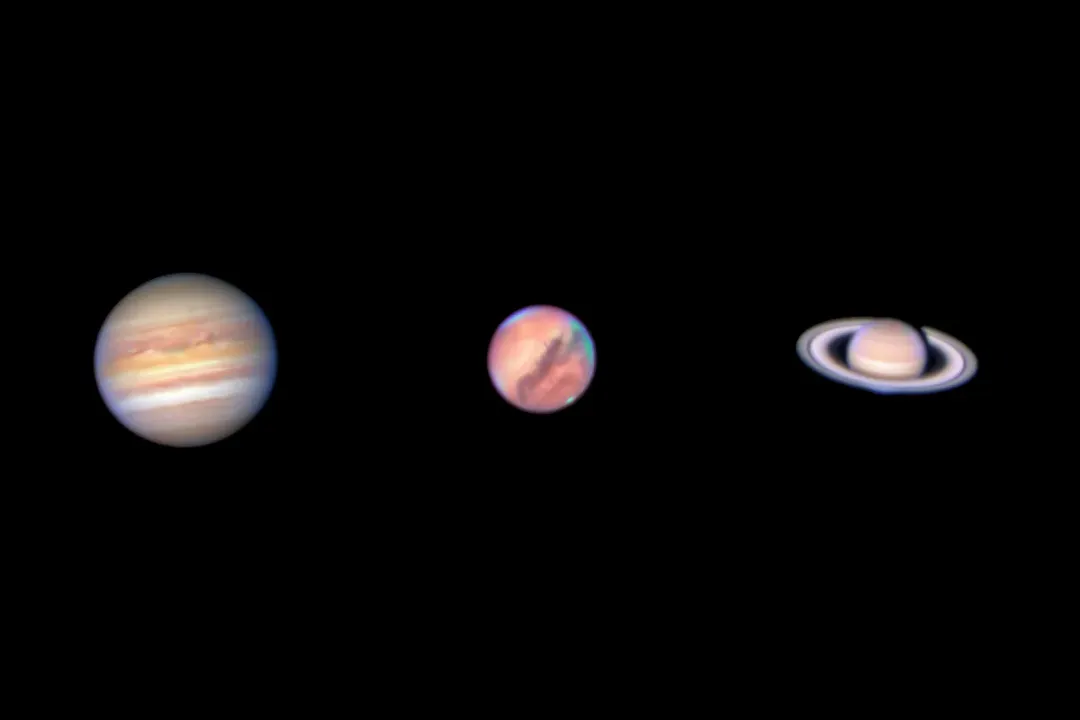
Jupiter, being the largest planet in the solar system, possesses enough visual size that under sufficiently dark sky conditions, observers using even modest binoculars can potentially resolve its four largest moons: Io, Europa, Ganymede, and Callisto. While Jupiter itself appears as a very bright, steady, yellowish-white light, the observation of these Galilean moons is a frequent achievement for those using basic magnification. In contrast, the intricate ring system is a feature uniquely distinguishable on Saturn, typically requiring a small telescope rather than just binoculars.
Related Questions
If a dazzlingly bright object shines low in the west after sunset, what planet is it almost certainly?What is the most reliable indicator for distinguishing a planet from a star when viewing objects in the west?What feature might observers spot by using modest binoculars when viewing Jupiter in the western sky?Why does Mercury present the greatest challenge for skywatchers hoping to spot it in the western sky?What distinct color is associated with the planet Mars when visible as a star-like object in the west?What unique structural feature observable in telescopes makes observing Saturn particularly rewarding?What celestial condition defines a planet as an "evening object" visible in the western sky shortly after sunset?What apparent path does the Sun take across our sky throughout the year, which planets orbit relatively close to?When attempting to view Jupiter or Saturn in the western sky, why is setting a second viewing window 45 to 60 minutes after sunset recommended?Why are Mars and Saturn generally less prominent visitors to the post-sunset western sky compared to Venus and Jupiter?