What is the intrinsic energy output capability of a star fixed by, according to its observable properties?
Answer
Its mass and age
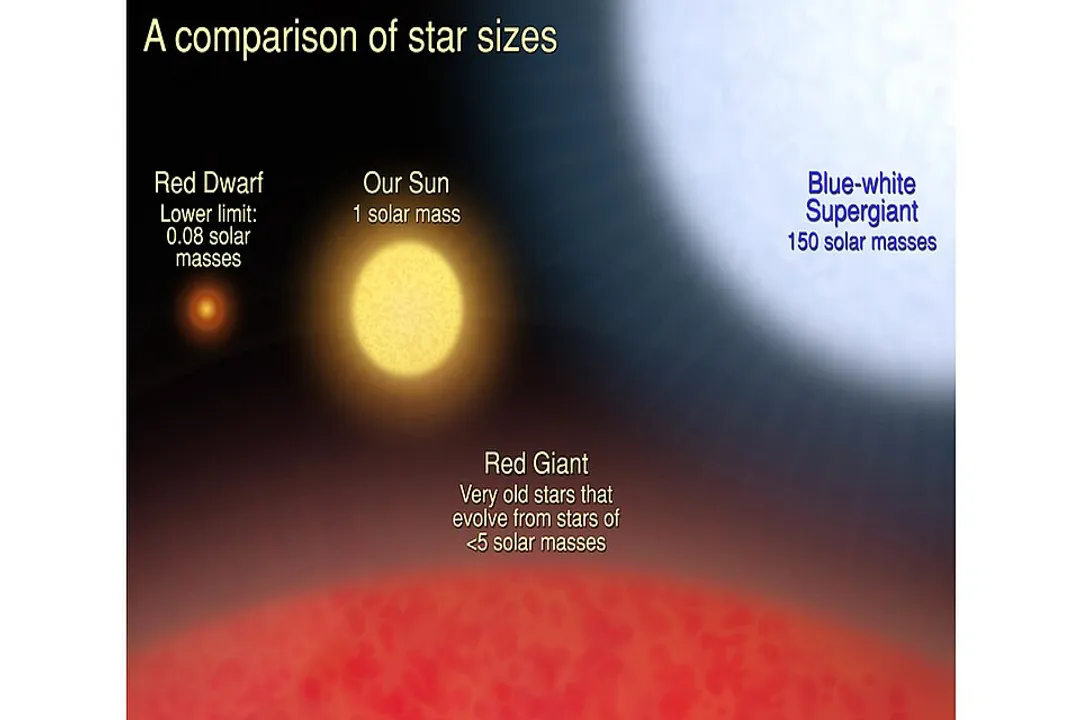
A star possesses an intrinsic luminosity, which describes the actual total amount of energy it radiates into space. This inherent characteristic—the star's fundamental power—is not dependent on how far away it is from an observer, but rather is fixed by two intrinsic physical properties established during its life cycle: its initial mass when formed, and its current age. While distance affects the *intensity* we measure, the total energy the star is capable of radiating is dictated by these internal parameters.
Related Questions
What is the defining mechanism causing a star to generate light and heat energy?What critical temperature must the core reach to force hydrogen nuclei to fuse?What celestial object forms if fusion fails below the mass threshold required for true stars?Which famous equation quantifies the mass converted into energy during stellar fusion?What type of high-energy photon initially results from fusion in the star's core?What are the three primary forms of energy emerging from the star's photosphere?What value represents the measured luminosity output of our Sun?How does the intensity of light received diminish as distance from a star increases?What are the two broad categories light reaching an observer in the universe can be divided into?What is the primary source dominating the energy striking Earth from non-terrestrial sources?What is the intrinsic energy output capability of a star fixed by, according to its observable properties?