What is star light?
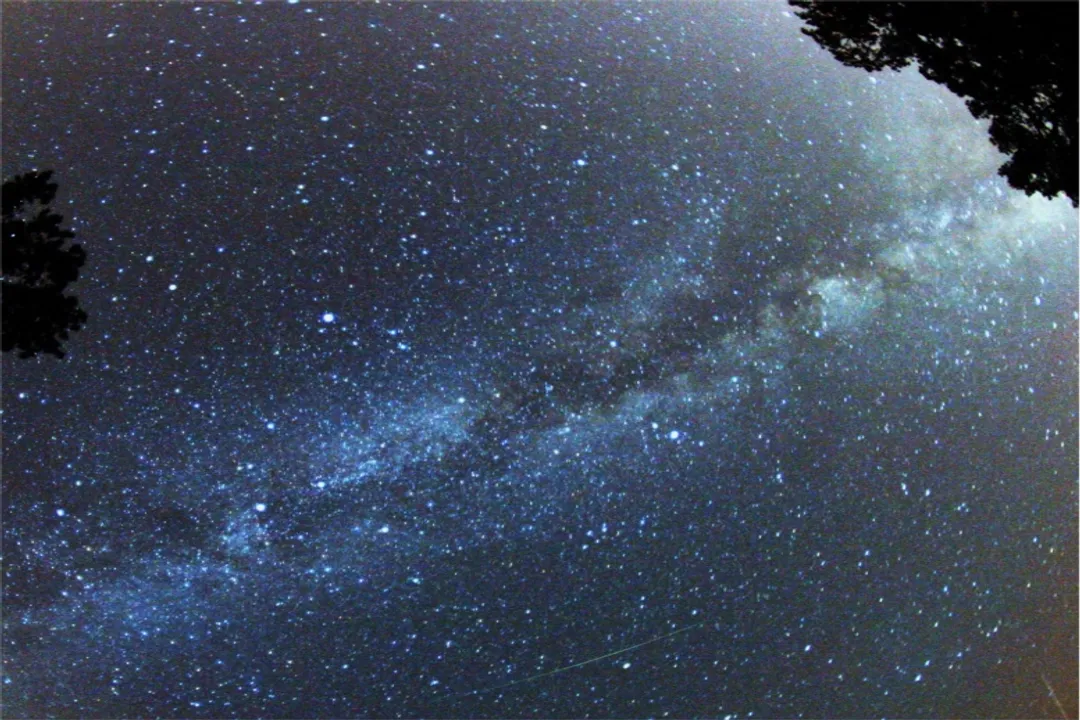
The light reaching our eyes from distant celestial bodies is an ancient whisper, carrying the history and composition of objects billions of miles away. Fundamentally, starlight is simply the electromagnetic radiation emitted by a star. [1] To grasp what it is, we must examine both its physical nature and its cosmic origin. It is the visible evidence of nuclear power operating on a massive scale, traversing the vacuum of space to become the primary source of illumination for our night sky. [6]
# Light Definition
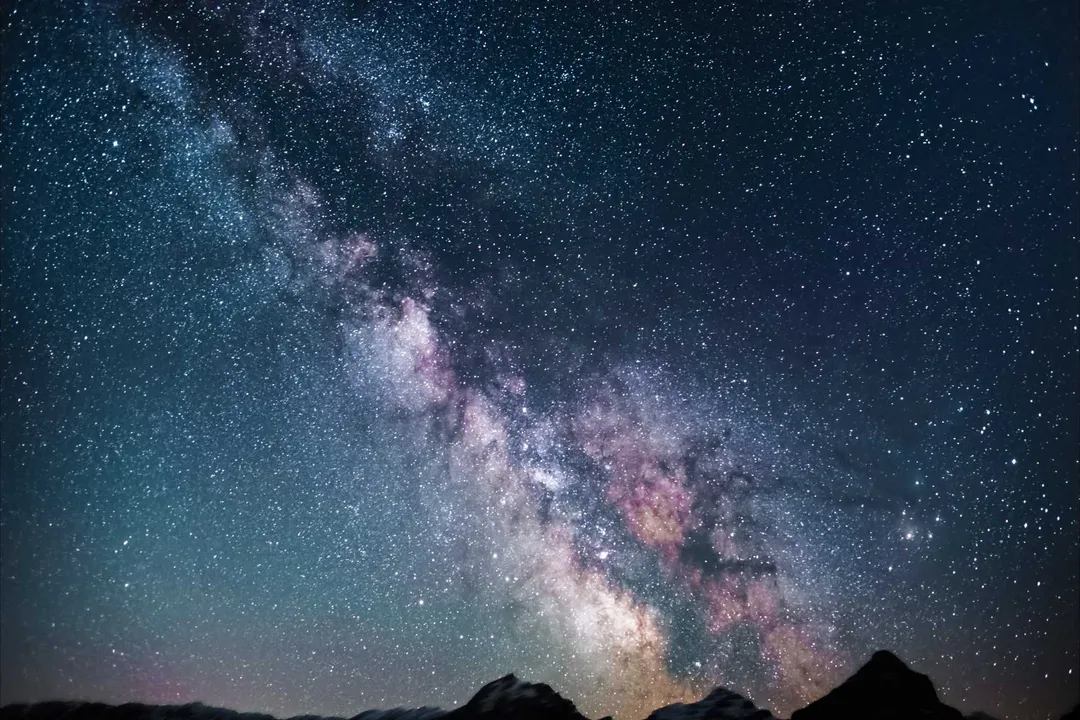
At its most basic, light is a form of energy that travels in waves or as tiny particles called photons. [6] When we talk about starlight, we are referring to this radiant energy that has managed the incredible feat of crossing interstellar and intergalactic distances. [1] Different definitions reflect this common concept: it is the light that comes from a star. [2][4][8] Whether you consult a traditional dictionary or a more modern scientific text, the core idea remains the same: it is the luminous output of a sun-like object. [2][4][8]
What makes starlight slightly different from, say, the light from a lamp in your living room, is the spectrum of that emission. A star is a gigantic sphere of extremely hot gas held together by its own gravity. [6] This intense heat means the radiation produced spans the entire electromagnetic spectrum, from low-energy radio waves to high-energy gamma rays. However, the light we typically perceive—the visible part of the spectrum—is what gives stars their apparent color and brightness. [6]
# Stellar Engine
The process that generates starlight is one of the most powerful reactions known to physics: nuclear fusion. [9] Deep within the core of any active star, the immense pressure and temperature force hydrogen atoms to fuse together, creating helium. [9] This conversion of matter into energy releases an enormous amount of energy, which manifests as the photons that eventually stream away as starlight. [9]
This mechanism highlights a crucial distinction in perspective. When we look at the sun, we are observing a relatively immediate product of fusion. When we look at a star hundreds of light-years away, we are observing light that has been continuously generated for an incredibly long time, having spent centuries or millennia traveling across the cosmos. [5] The star itself acts as a colossal, self-sustaining furnace, converting mass into the energy that allows us to see it. [9] Stars are fundamentally defined by this ongoing reaction; without it, they would merely be cold, dark spheres of gas. [6]

# Journey Through Space
Once created in the star's core, the journey of a photon to the star's surface can take an unexpectedly long time, sometimes hundreds of thousands of years, as it bounces its way through dense inner layers. [9] Once it finally escapes the star's photosphere, however, the travel time across space is dictated solely by the speed of light, which is approximately 299,792 kilometers per second (or about 186,282 miles per second) in a vacuum. [5]
This travel through the vast emptiness is crucial to understanding starlight. While space is often called a vacuum, it is not entirely empty; it contains trace amounts of gas, dust, and magnetic fields. [1] Over truly immense distances, this tenuous material can cause slight scattering or absorption of the light, causing even the brightest stars to dim marginally by the time their photons reach us. Furthermore, if a star is receding from us due to the expansion of the universe, the light waves themselves get stretched, a phenomenon known as cosmological redshift. [5] This stretching shifts the light toward the red end of the spectrum. While this is a subtle effect for nearby stars, it becomes a significant factor when studying the most distant galaxies—the stretching of the light itself becomes a measurable phenomenon that tells us about the expansion rate of space itself. [5]
# Cosmic Messenger
The true value of starlight lies not just in its illumination, but in the information it carries. Starlight is, essentially, a historical record of the universe. [5] By analyzing the properties of this arriving light, scientists can deduce nearly everything we know about distant celestial objects. [5]
We can use spectral analysis—breaking the light down into its constituent colors—to determine:
- Composition: The unique spectral lines within the light reveal the chemical elements present in the star’s atmosphere, much like a chemical fingerprint. [5]
- Temperature: The peak wavelength of the light corresponds directly to the star’s surface temperature. [6] Hotter stars appear blue, while cooler ones appear reddish.
- Distance: By comparing a star's actual known luminosity (how much energy it emits) with how bright it appears from Earth (its apparent brightness), astronomers can calculate its distance using the inverse square law of light. [5]
This capacity to read the universe through light is why it has been suggested that starlight teaches us about space—pretty much everything. [5] The data contained within these photons allows researchers to estimate the age of the universe itself, using the light from the earliest detectable sources as chronological markers. [7]

# Time Travel Aspect
Because light travels at a finite, albeit immense, speed, observing starlight is an inherent form of time travel. When you look up at a star, you are not seeing it as it is now, but as it was when the light left its surface. [5]
For example, the light from the nearest star system, Alpha Centauri, takes over four years to reach us, meaning we are seeing it as it was four years ago. [5] For more distant objects, this delay becomes staggering. Light from the Andromeda Galaxy takes about 2.5 million years to arrive. [5] If a catastrophic event were to happen to Andromeda tonight, we would not know about it for another 2.5 million years. The light we see from those distant galaxies represents the state of the early universe, providing direct, empirical evidence of conditions that existed long before our own solar system formed. [7]
It can be helpful to picture the entire night sky not as a static map, but as a complex timeline, with nearer objects showing recent history and fainter, more distant objects providing snapshots from epochs long past. The sheer quantity of this historical data is overwhelming; a single telescope gathers trillions upon trillions of photons every second, each one a historical data point about its source. [5] Considering the vastness, even the light from the faintest visible stars has been traveling for well over a hundred thousand years, offering a profound look into the Milky Way's history. [7]
# Observing Starlight
For the casual observer, starlight is simply something beautiful to behold. The definitions provided by sources like the Cambridge Dictionary simply state it is the light from the stars. [4] In practical terms, much of the light we see on a clear, dark night is not even from outside our own solar system, though we often use the term loosely. Planets reflect sunlight, and the dimmer, hazy glow that sometimes appears is often zodiacal light, caused by sunlight reflecting off interplanetary dust particles orbiting the Sun. [1]
However, when discussing true starlight, the limitations of the human eye become apparent. Our eyes are incredibly adept at detecting low light levels, allowing us to see stars down to a certain apparent magnitude. Yet, this sensory input is only a minute fraction of the radiation that strikes the Earth. Modern instruments, like large reflecting telescopes, gather light across wider wavelengths and focus it far more efficiently than the pupil of an eye ever could. This enhanced gathering power is what allows astronomers to detect galaxies whose light has been traveling for most of cosmic history, capturing photons that would otherwise simply pass by us entirely unnoticed. This difference in collection ability underscores the concept that "seeing" starlight scientifically means more than just visually perceiving its glow; it means quantifying the energy that has successfully navigated the cosmos to land on our detectors. [5]
Related Questions
#Citations
Starlight
STARLIGHT Definition & Meaning
ELI5: Star Light : r/explainlikeimfive
STARLIGHT | definition in the Cambridge English Dictionary
What Starlight Teaches Us About Space (Pretty Much ...
Star Light, Star Bright
Star Light & the Age of the Universe
STARLIGHT definition in American English
What is the source of light coming from stars in the sky?