What is the light of the star?
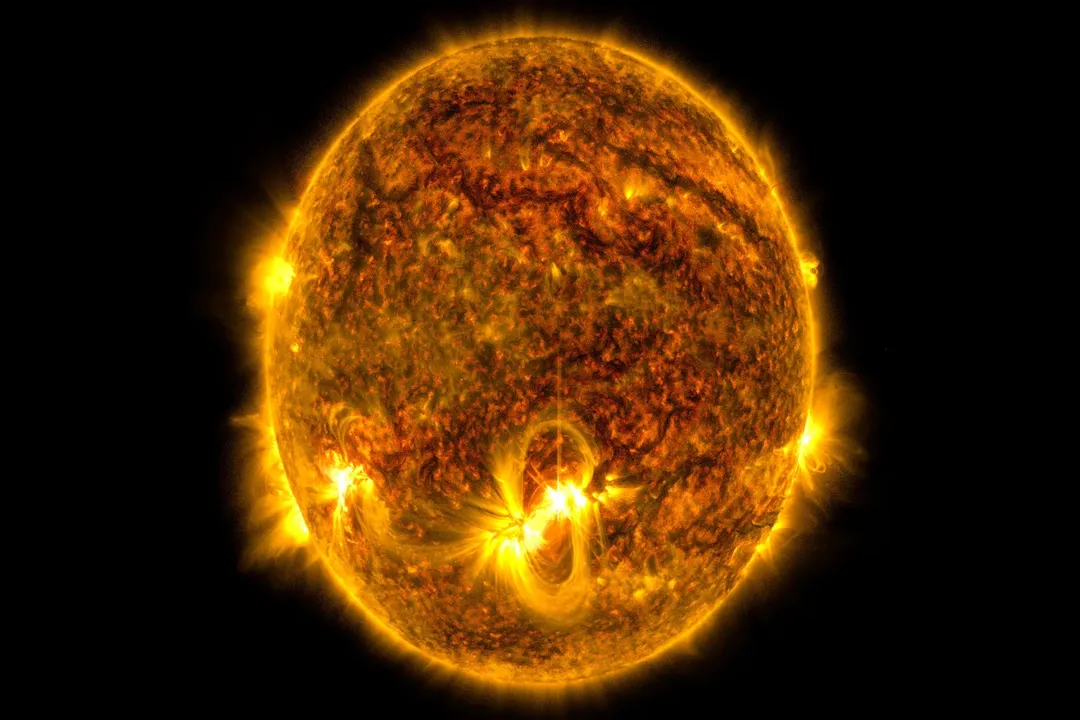
The light emanating from a star is one of the most fundamental phenomena in the universe, providing the energy that sustains life on Earth and allowing us to map the cosmos. This radiance is the direct result of titanic physical processes occurring deep within the star’s core, processes that convert mass into pure energy. [6][7] A star, like our Sun, is essentially a giant, self-gravitating ball of plasma held together by its own immense gravity, composed mostly of hydrogen and helium. [2][7]
# Core reaction
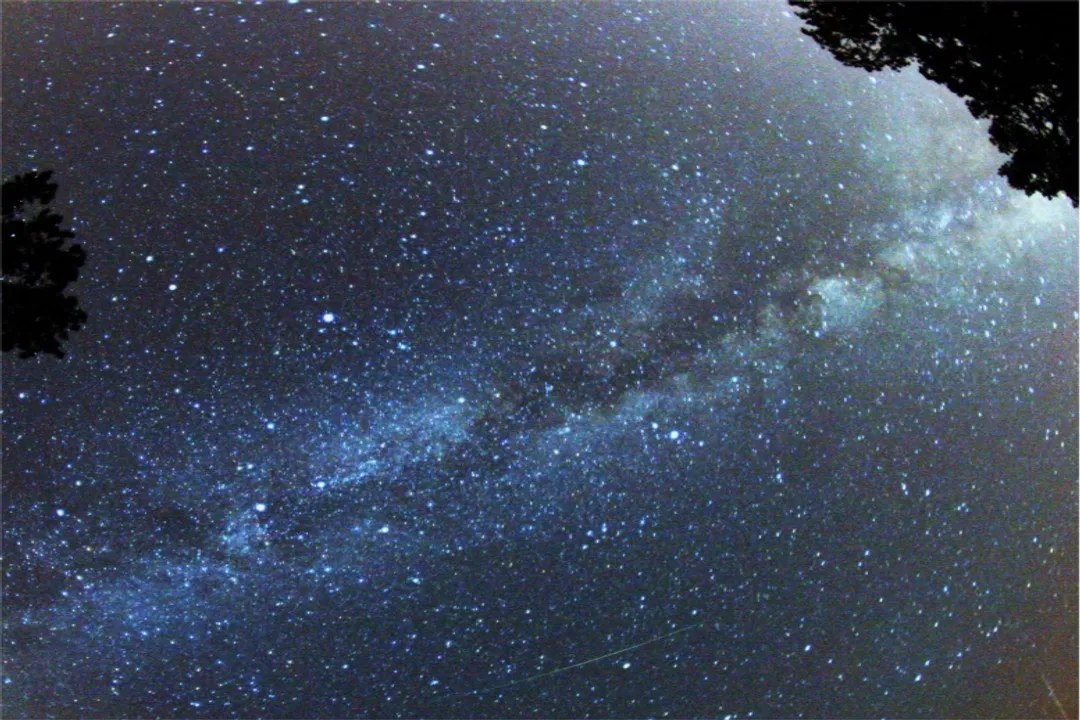
The mechanism powering stellar light is nuclear fusion. [6] In the star's superheated, dense core, extreme pressure forces hydrogen nuclei to combine, creating helium nuclei. [6] This transformation results in a slight reduction of total mass, and according to Einstein’s famous equation, , this lost mass is released as an enormous amount of energy, primarily in the form of high-energy photons, specifically gamma rays. [1][7]
This energy doesn't immediately escape. The interior of a star is so dense that a photon undergoes a random walk, taking thousands to millions of years to finally emerge from the surface, which astronomers call the photosphere. [7] During this long migration outward, the high-energy gamma rays interact repeatedly with the surrounding plasma, losing energy and shifting their wavelength profile until they exit as the visible light, infrared, and ultraviolet radiation we observe. [1] In essence, the light leaving the star is an ancient, heavily moderated version of the energy created at its heart. [7]
# Color Temperature
The color we perceive when looking at a star is a direct indicator of its surface temperature. [1] This is a crucial piece of information astronomers use to classify stars. Very hot stars, with surface temperatures exceeding 10,000 Kelvin, shine with a brilliant blue or blue-white light. [1] As the temperature drops into the intermediate range, like our Sun, the light shifts toward yellow or white. Cooler stars, perhaps only a few thousand degrees at the surface, emit light dominated by the red end of the spectrum. [1]
| Stellar Color | Approximate Surface Temperature (Kelvin) | Example |
|---|---|---|
| Blue | > 25,000 K | Rigel |
| White | 7,500 K – 10,000 K | Sirius |
| Yellow | 5,000 K – 6,000 K | The Sun |
| Orange/Red | < 5,000 K | Betelgeuse |
| [1] |
This principle holds true because stars approximate what physicists call a blackbody radiator, meaning the spectrum of light they emit is overwhelmingly dictated by their temperature. [1] This contrasts sharply with planets, such as Mars or Jupiter, which do not generate their own light; they are only visible to us because they reflect the light that has traveled to them from a star, namely our Sun. [4][5]
# Light travel
The light streaming from distant stellar furnaces must traverse the vacuum of space to reach our telescopes or eyes. [4] The speed of light in a vacuum is the universal speed limit, approximately 299,792 kilometers per second. [1] Even at this staggering velocity, the vastness of interstellar and intergalactic distances means that the light we see from other stars is inherently a look into the past. [1]
Consider our own Sun: its light takes about eight minutes and twenty seconds to reach Earth. [1] If the Sun were to suddenly wink out, we would not know it for over eight minutes. For closer stars, the difference is more dramatic. Proxima Centauri, the nearest star system to our own, sends light that takes over four years to arrive at our location. [1] If you observe a star appearing just as a point in the sky, you are seeing its light as it was when the Neanderthals walked the Earth, perhaps even before the first multicellular life evolved on our planet, depending on the star's distance. [1] It is a profound testament to scale that we can use simple measurements of this ancient arrival time to calculate the distance to these objects. [1]
# Apparent point source
One common observation is that stars—all stars other than the Sun—appear as mere pinpricks of light, even through powerful telescopes, whereas the Sun appears as a distinct disk. [3] This difference is entirely down to perspective and distance, not actual size.
The Sun is our nearest star, so its angular diameter—how wide it appears in the sky—is large enough for us to resolve it as a surface, allowing us to see features like sunspots. [3] However, most stars are many light-years away, meaning their apparent angular size is far too small for even the best ground-based telescopes to resolve into a disc shape; they remain technically unresolved point sources of light. [3] For instance, the apparent brightness of a star is proportional to the square of its distance, meaning even a star with a huge true size, if far enough away, will appear just as faint and small as a much smaller, closer star. [9]
An interesting side effect of observing distant point sources is the twinkling effect, or scintillation. While the star itself is a steady emitter, the light beam must pass through Earth's turbulent atmosphere. [1] As pockets of varying temperature and density in the air move, they refract the light slightly and randomly, causing the star’s apparent position and brightness to shift rapidly, giving it the characteristic twinkle. [1] If you could observe a star from above our atmosphere, such as from the International Space Station, the light would arrive steadily, without that familiar atmospheric shimmer.
While the light we receive is generally a continuum of electromagnetic waves produced by fusion, not all light from every star reaches us successfully. Interstellar dust and gas clouds—nebulosity—can absorb, scatter, or redden the light from stars situated behind them, meaning what we observe is a highly processed record of the star's true output. [9]

# Stellar Energy Output
The total energy a star radiates per second is called its luminosity, which is an intrinsic property depending mainly on its mass and stage of life. [7] Our Sun has a luminosity of about watts. [7] The vast majority of stars are far less luminous than the Sun; red dwarfs, the most common type of star, emit far less energy. [7] Conversely, extremely massive stars can be millions of times brighter than the Sun, briefly shining with incredible intensity before ending their lives in spectacular supernova events. [7]
When comparing the actual energy output (luminosity) to the energy we measure here on Earth (apparent brightness), we are essentially performing a form of cosmic arithmetic. If we assume a star is radiating energy equally in all directions, we can set up a relationship based on the inverse square law of light intensity. If Star A appears 100 times dimmer than Star B, but we know Star B is twice as far away as Star A, we can deduce that Star A must be intrinsically less luminous than Star B by a factor of $100 / (2^2)$, or times less luminous. [9] This kind of quick mental comparison—factoring in the distance bias—is essential for any amateur astronomer trying to gauge which celestial objects are truly massive and which are merely close neighbors.
It’s also helpful to remember that what we call visible light is only a small fraction of a star's total emission. A star emits across the entire electromagnetic spectrum—radio waves, microwaves, infrared, visible light, ultraviolet, X-rays, and gamma rays. [1] Modern astronomy relies heavily on instruments that detect these invisible wavelengths because they reveal different physical processes occurring inside the star or its surrounding environment. For example, X-rays often signal extremely hot gas or material swirling into a compact object like a black hole orbiting the star.
# Observing the Starlight
To truly appreciate the properties of starlight, one must move beyond what the naked eye can perceive. A simple pair of binoculars or a small telescope drastically changes the experience. While the nearest stars still appear as points, the apparent magnitude (brightness) increases significantly, allowing observation of stars too faint for unaided vision. [3] Furthermore, for stars that are relatively close and large, like the brightest stars in our sky, specialized instruments can sometimes resolve a faint, small disk, though this requires significant aperture and ideal atmospheric conditions. [3]
The light received from a star carries information about its composition due to absorption lines in its spectrum. When the continuous spectrum of light passes through the cooler outer layers of the star, specific wavelengths are absorbed by elements like hydrogen, helium, or calcium. [7] These dark lines act as a unique chemical fingerprint, allowing scientists to determine the chemical makeup of stars billions of light-years away. [7] By analyzing these spectral fingerprints, we confirm that the building blocks of stars across the galaxy are fundamentally the same as those found here on Earth. [2] This consistency in spectral data across vast cosmic distances offers profound confirmation of the uniformity of physical laws throughout the observable universe, a concept that grounds all of modern astrophysics.
In summary, starlight is the electromagnetic signature of a massive, sustained nuclear reaction occurring inside a sphere of plasma. [6][7] It is a finite packet of energy, launched across the void, that tells us the star's temperature, its chemical composition, and the vast distance separating us from its ancient, brilliant fire. [1]
Related Questions
#Citations
What is the Light From Stars?
Starlight
Why Do Stars Look Like Points of Light Rather than a ...
Video: What Causes a Star to Shine Brightly?
What is a star? - Cool Cosmos - Caltech
ELI5: Why do stars, including the sun, shine? What makes ...
Star Basics
Star Light, Star Bright
Why don't we receive light from all the stars in the universe?