Where does the light of a star come from?
The light reaching us from the distant cosmos, the very illumination that defines the night sky, originates from an astonishingly powerful, continuous process occurring deep within the stellar interiors. A star is fundamentally a gigantic sphere of extremely hot gas and plasma, primarily composed of hydrogen, with smaller amounts of helium and traces of other elements. [2][6][8] This celestial body does not merely glow from residual heat; it generates its own intense energy through a controlled, self-sustaining reaction at its heart. [5][6]
# Core Reaction
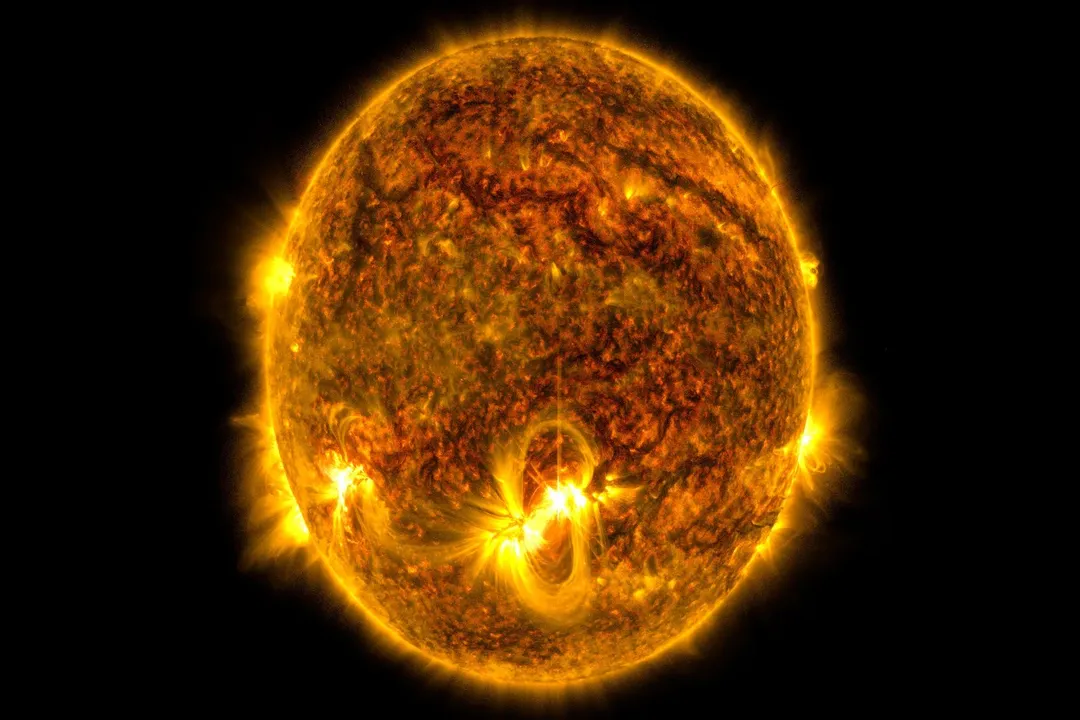
The source of this stellar luminosity is nuclear fusion happening in the core. [1][5][6] The immense gravity of a star compresses its matter to extraordinary degrees, leading to core temperatures measured in the millions of degrees. [5][7] Under these extreme conditions, the nuclei of lighter elements, predominantly hydrogen, are forced together—or fused—to create heavier elements, specifically helium. [1][6]
This conversion process is exothermic, meaning it releases substantially more energy than it consumes. [8] This released energy manifests as heat and radiation, including high-energy photons, such as gamma rays, which are the immediate products of the fusion chain reaction. [1][8] For a star like our Sun, this process involves fusing hydrogen into helium, often via mechanisms like the proton-proton chain reaction. [1] This constant, violent creation of energy is what prevents the star from collapsing entirely under its own crushing gravitational weight, establishing a necessary equilibrium. [2][8]
# Photon Transit
Once the energy is created in the core, it begins a torturous, protracted trip to the surface, where it can finally escape as the starlight we perceive. [8] The journey is far from direct. The photons are immediately absorbed and then re-emitted by the dense stellar material surrounding the core. [8]
This process of absorption and re-emission occurs repeatedly as the energy moves through the star’s interior layers, such as the radiative zone and the convective zone. [1][8] Because the stellar material is so packed, a single photon can take an astonishingly long time to navigate this internal maze. For our Sun, this initial escape from the core to the visible surface can require well over one hundred thousand years. [8]
Here is a critical distinction in stellar mechanics that often gets overlooked: the light reaching our eyes has been traveling through the vacuum of space for a relatively short time—just minutes or years, depending on the star's distance—but the energy packet itself has already lived for millennia inside the star. [7][8] It is a significant difference between the time scale of internal transport and the time scale of external observation. Think of the star’s interior as a massive, dense traffic jam where energy creeps along, only to be released onto the interstellar highway where it rockets forward at the speed of light. [7]
# Surface Glow
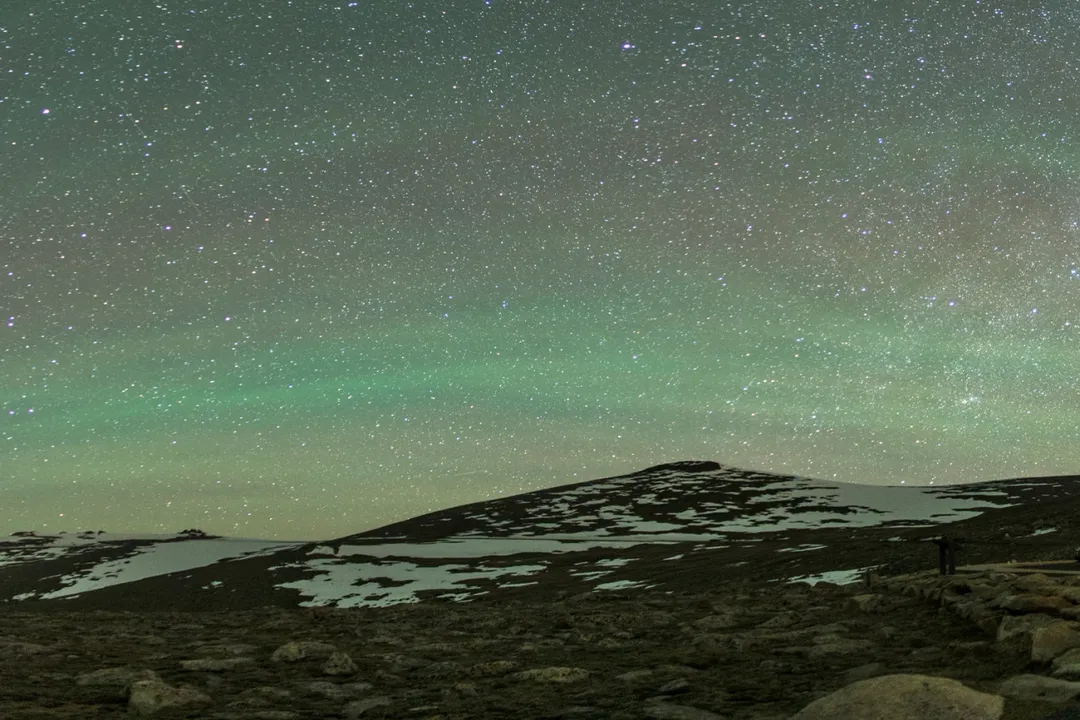
When the photons finally reach the star's outer layers, they have undergone a drastic transformation. The initial, highly energetic gamma rays have lost a tremendous amount of energy through countless scattering events. [8] By the time they escape the surface—the photosphere—they have cooled down sufficiently to be emitted primarily as visible light wavelengths, which our eyes detect. [8]
The character of this visible light—its color—is a direct indicator of the star's surface temperature. Cooler stars tend to emit light at the redder end of the spectrum, giving them a reddish hue. Conversely, hotter, more massive stars burn hotter and appear blue. [6] Our own Sun, a stable main sequence star, sits in the middle, appearing yellowish-white. [2][6] In fact, when astronomers average all the starlight across the observable universe, the resulting composite color has been given the specific name Cosmic Latte. [3]
# Stellar Economy
The star's mass is the single greatest determinant of how quickly it burns through its fuel and, consequently, how brightly and for how long it shines. [1] Massive stars have a much stronger gravitational force pulling inward, meaning they must generate substantially more outward pressure to maintain hydrostatic equilibrium. [2]
This necessity forces the massive stars into a life of extravagance. They fuse their core hydrogen at a frenetic, high rate, resulting in immense luminosity—they are extremely bright—but this rapid consumption means their lifespans are relatively short, often lasting only a few million years. [1][2] On the other hand, low-mass stars are frugal consumers. They burn dimmer and cooler, conserving their hydrogen supply across timescales that can extend to trillions of years, significantly longer than the current age of the universe. [1][2] This relationship presents an interesting cosmic trade-off: the most spectacular, brilliant lights in the night sky are also the shortest-lived, while the dimmest embers persist the longest. [1]

# Observing the Light
The light we measure when looking at a star is the accumulated electromagnetic radiation that has successfully traversed the vast emptiness between stars. [2][4] While the light emitted by stars is "astounding in volume," the space separating them is so incredibly empty that the photons are not significantly diffused or mingled into a haze. [4]
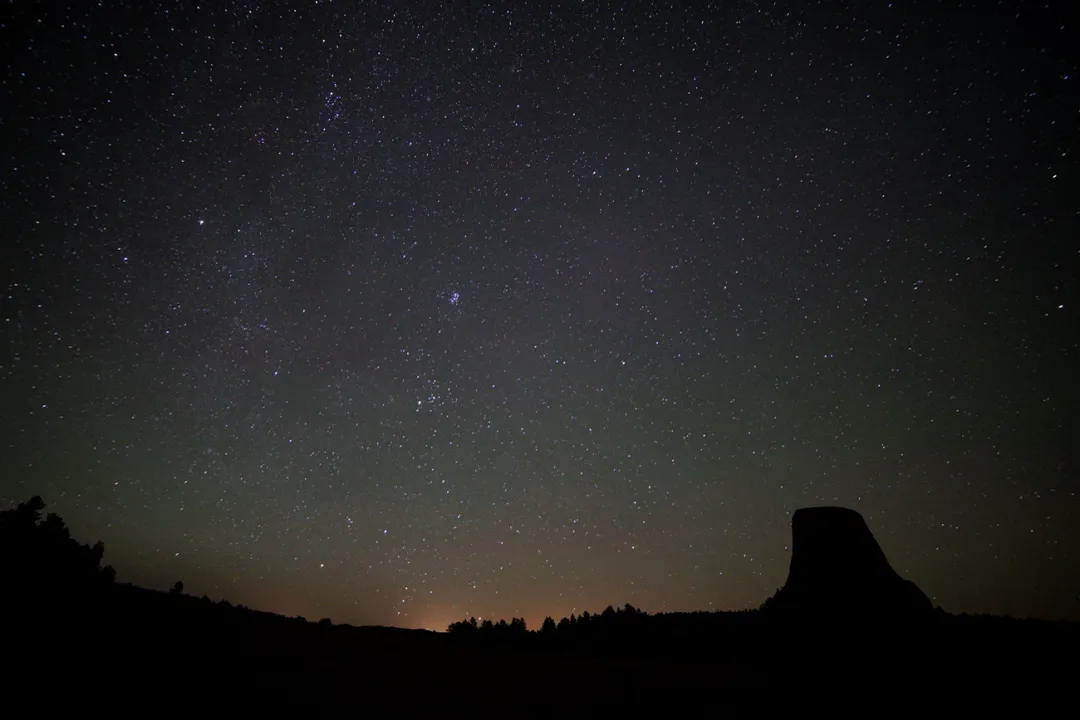
On average, the interstellar space between a nearby star and Earth contains very few particles—perhaps only one hydrogen atom per cubic meter of volume. [4] This relative emptiness means that the light from relatively closer stars has a much lower chance of being blocked or scattered by intervening interstellar gas and dust compared to light from more distant sources. [4] This lack of diffusion is why we perceive individual stars as distinct, sharp points of light, rather than a continuous, overlapping glow, a phenomenon which helps resolve questions like Olbers' Paradox regarding why the night sky is dark. [3][4]
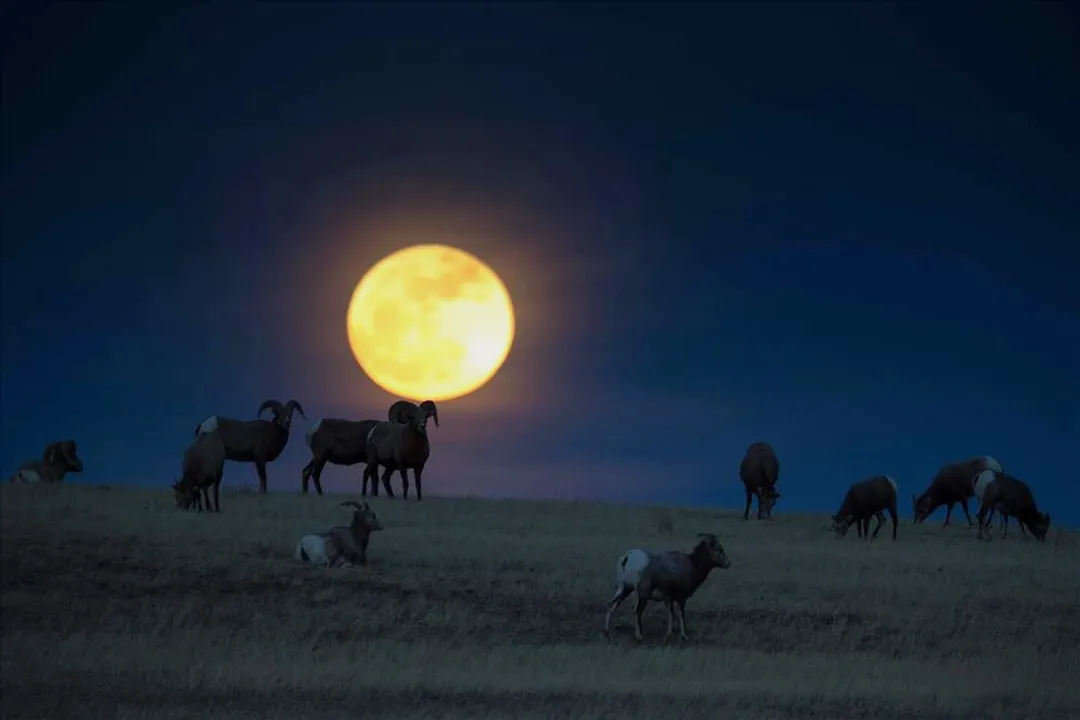
It is worth noting that not every bright object we see at night is generating its own light. The Moon, for example, shines because it reflects sunlight. [3][5] Similarly, planets like Venus, Mars, and Jupiter appear bright because they are illuminated by our nearby star, the Sun. [5] Starlight, conversely, is emitted light, making it a fundamental record of astrophysics happening light-years away. [3] Through analyzing this starlight via spectroscopy, astronomers can determine a star’s composition, temperature, and age, treating the incoming photons as historical data packets from the deep past. [1][3] The light that hits our eyes from a star a million light-years away is literally a snapshot of what that star looked like a million years ago—some of those ancient stars may no longer exist in their current form. [7]
#Videos
How Do Stars Produce Light? - Physics Frontier - YouTube
Related Questions
#Citations
Why Do Stars Look Like Points of Light Rather than a Uniform Haze ...
Video: What Causes a Star to Shine Brightly? - Study.com
Starlight - Wikipedia
Star Basics - NASA Science
What is a star? - Cool Cosmos - Caltech
ELI5: Why do stars, including the sun, shine? What makes the light?
What is the Light From Stars? - Universe Today
How Do Stars Produce Light? - Physics Frontier - YouTube
Natural Light in Night Sky - National Park Service