Where do most stars come from?
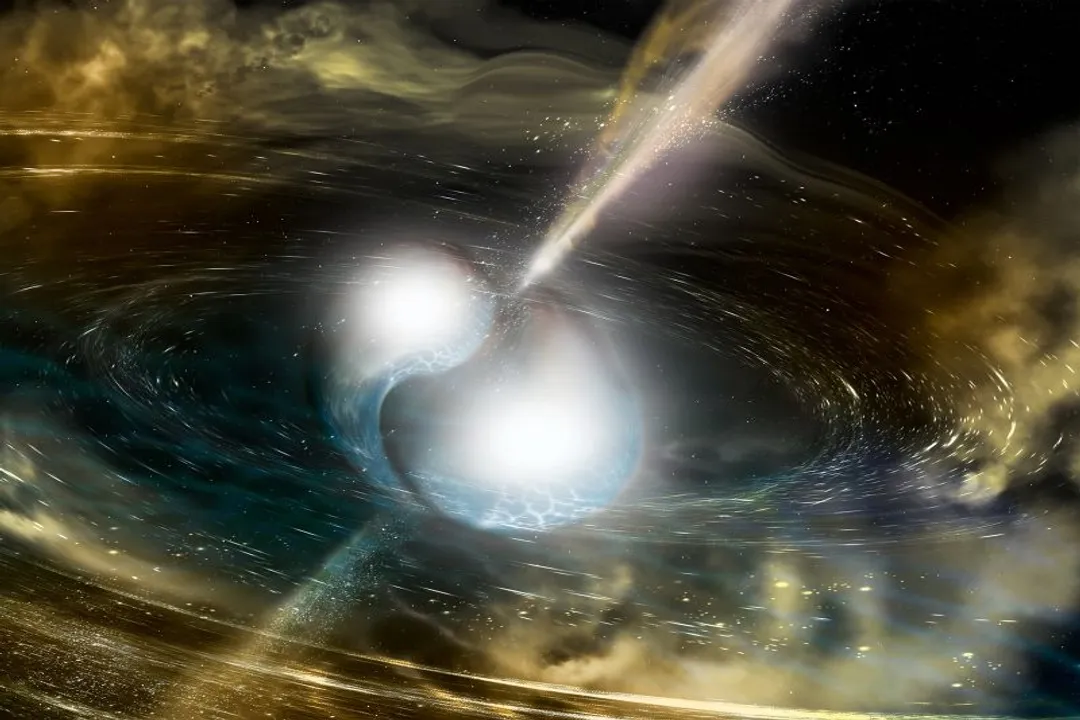
The birthplace of stars is not a single, fiery location but rather vast, cold, and incredibly dense regions scattered throughout our galaxy and others. These stellar nurseries are clouds of gas and dust, often stretching for hundreds of light-years, where the relentless force of gravity slowly begins to gather matter until the conditions are right for nuclear fusion to ignite. [7][2] Understanding where stars come from requires looking at the interstellar medium, the sparse material floating between existing stars, rather than looking for a specific address in space.
# Cosmic Ingredients
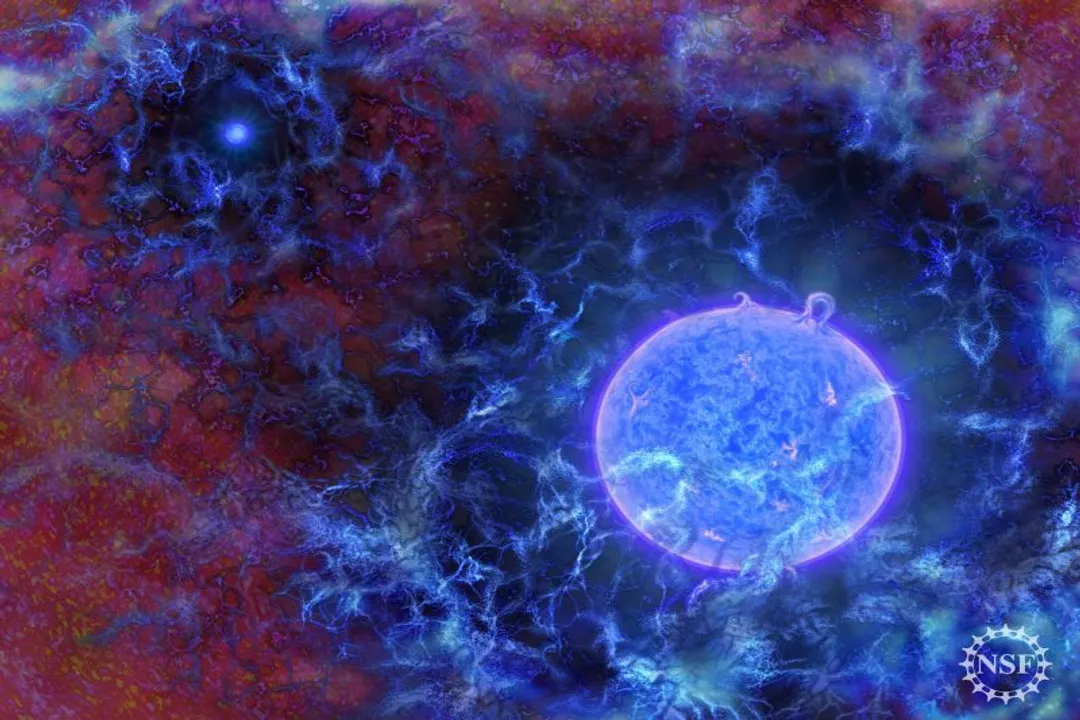
The raw material for stellar creation is primarily hydrogen and helium gas, mixed with trace amounts of heavier elements referred to by astronomers as "metals". [2][6] These ingredients aggregate into massive structures known as Giant Molecular Clouds (GMCs). [2] These clouds are frigid, often maintaining temperatures around 10 Kelvin (about -263 degrees Celsius), which is vital because cold temperatures allow the gas pressure to drop, making it easier for gravity to take over. [2]
A GMC is truly enormous. While our Sun is a relatively average star, the clouds that birth them can contain masses millions of times that of the Sun, and they span hundreds of light-years across. [2] For perspective, if the Sun were just one grain of sand, a GMC would be an entire beach. [5] Despite their immense size, these clouds are still extremely tenuous compared to anything we experience on Earth; even the densest parts are far less dense than the best vacuum achievable in a laboratory. [2]
It’s important to remember that this stellar material is recycled. Stars live, die, and expel their processed material back into space through stellar winds or cataclysmic explosions like supernovae. [4] Therefore, the "metals"—elements like carbon, oxygen, and iron—that constitute planets and life itself were forged inside previous generations of stars before becoming available for the next generation. [6][4] The star you see in the sky today is, quite literally, made of star stuff that has been through several cycles of cosmic recycling. [4]
# Gravity's Role
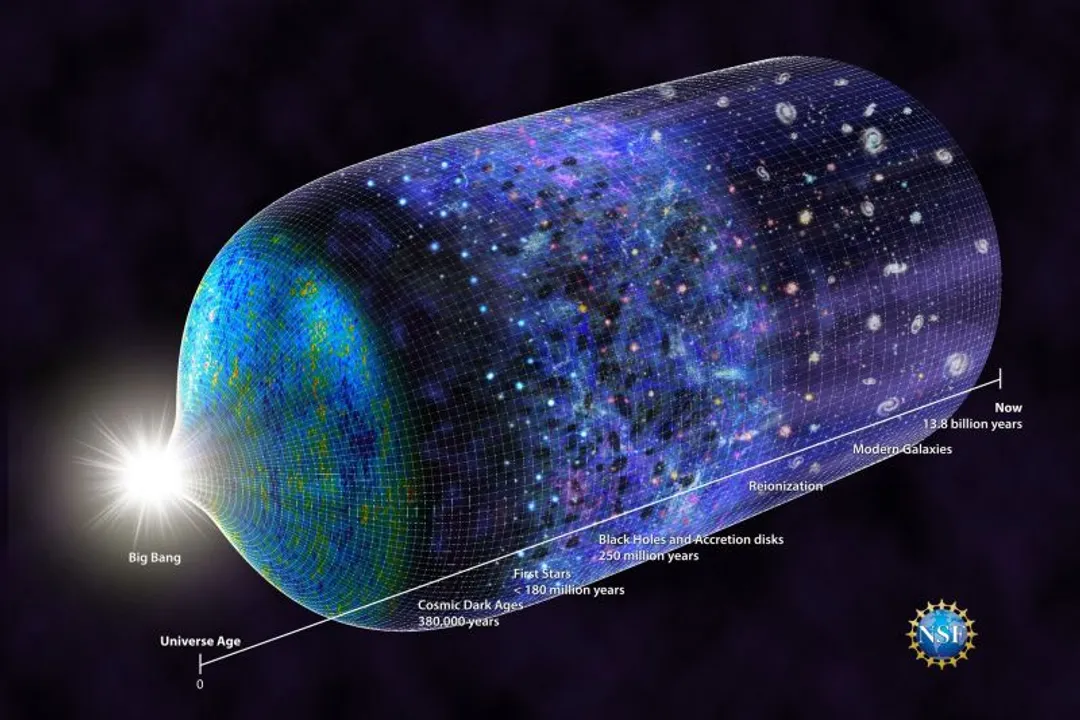
Within these immense, cold clouds, a delicate balance exists between the inward pull of gravity and the outward push from the internal gas pressure and turbulence. [2] Star formation begins when this balance is tipped. Something must perturb the cloud—perhaps a passing shockwave from a nearby supernova, or the pressure from the radiation of massive, newly formed stars nearby. [2] This disturbance causes regions within the GMC to become locally denser, triggering gravitational collapse. [2]
This process is often explained using the Jeans instability, a theoretical threshold where a cloud fragment becomes massive enough that its internal pressure can no longer resist its own self-gravity. [2] Once this threshold is crossed, the region begins an inexorable collapse, fragmenting into smaller, denser clumps known as dense cores. [2] It is these dense cores, perhaps only a light-year or two across, that will eventually birth individual star systems. [2]
An interesting observation that stems from this process is the common occurrence of binary or multiple star systems, especially among larger stars. [5] The fragmentation process naturally leads to multiple cores collapsing near one another, suggesting that the very mechanism designed to form one star often sets up the conditions to form two or more simultaneously within the same local region of the collapsing cloud. [5]
If we consider the sheer volume of space involved, it's striking how inefficient the overall process is. A typical GMC might take tens of millions of years to convert a significant portion of its mass into stars. [2] Given that the entire cloud spans light-years, visualizing the slow-motion collapse across those astronomical distances helps illustrate the patience required in cosmic creation. A massive cloud begins the process, but the final star doesn't "turn on" until a much smaller, localized core reaches critical density—a scale difference of millions in mass and thousands in physical size between the starting point and the ignition point. [2][7]

# Protostar Ignition
As a dense core collapses, it spins faster due to the conservation of angular momentum, much like a spinning ice skater pulling in their arms. [2] This spinning motion prevents all the material from falling directly onto the center, causing the gas to flatten into a rotating accretion disk surrounding the central, increasingly hot object—the protostar. [2]
The protostar phase is characterized by rapid growth as material from the disk continues to feed the central mass. [2] Crucially, the infall of matter generates enormous heat. Although fusion hasn't started yet, the core becomes incredibly hot due to gravitational contraction. [2] During this phase, the young object often ejects powerful bipolar outflows or jets from its poles, clearing away some of the surrounding gas and dust that would otherwise obscure it. [2] These jets are a signature of an active protostar, demonstrating that it is actively accreting mass while simultaneously regulating the inflow. [2]
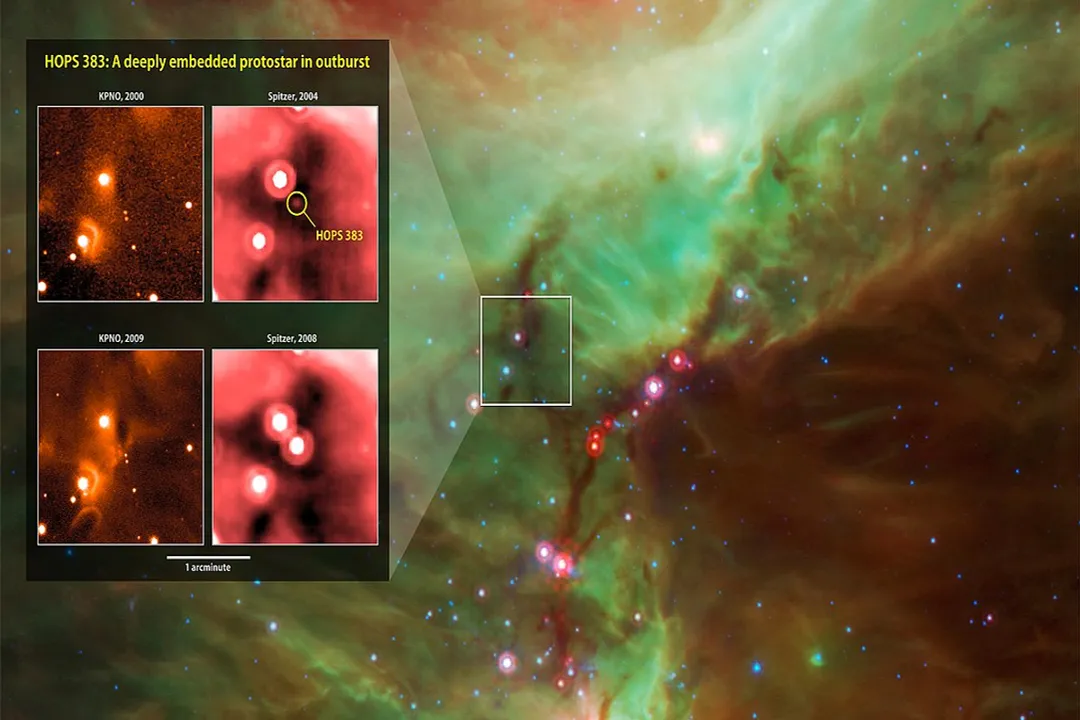
The visual evidence of these early stages is often obscured by the thick envelopes of dust and gas surrounding the protostar. [7] This is why infrared-sensitive instruments, like NASA's retired Spitzer Space Telescope, were essential tools for studying star formation. [7] Infrared light penetrates the dust that visible light cannot pass through, allowing astronomers to peer into these cloudy, warm nurseries. [7]
# Stellar Nurseries
The visible, spectacular remnants of recent star formation are often seen in nebulae—the remaining gas and dust clouds, illuminated or energized by the newly born stars within them. [7] These are the famous stellar nurseries that capture public imagination.
Famous examples include regions like the Orion Nebula, which is one of the closest and most active sites of star formation to Earth. [7] These regions are vivid laboratories showing stars at various stages of life, from the earliest protostars to young, bright blue stars that have recently cleared away their natal cocoons. [7]
When we look at the entire galactic population, the majority of stars are thought to form in these immense GMCs. [1] The environment is key; stars are not born in isolation but rather in clusters, a direct consequence of the fragmented collapse within the molecular cloud. [2] This means that nearly every star you see in the night sky, unless it is an old, solitary star that has drifted far from its birthplace, likely started life packed close to hundreds or thousands of siblings. [2]
If we were to catalogue the stellar output of a large GMC, we would see a range of masses, from the very small, dim red dwarfs (low-mass stars) to the giant blue-white stars (high-mass stars). [2] The distribution tends to favor lower-mass stars, following a pattern known as the Initial Mass Function (IMF), meaning fewer massive stars form compared to less massive ones. [2]

# Stellar Offspring
A star officially "forms" when the core temperature and pressure become high enough to sustain stable hydrogen fusion—the process where hydrogen atoms combine to form helium, releasing vast amounts of energy. [2] Once fusion ignites, the outward pressure from this energy perfectly counteracts the inward pull of gravity, achieving hydrostatic equilibrium. [2] At this moment, the object leaves the protostar phase and becomes a main-sequence star. [2] Our own Sun is currently in this stable phase. [2]
The immediate environment surrounding the new star continues to evolve. The accretion disk, which fed the protostar, often evolves into a protoplanetary disk, the site where planets, moons, and asteroids will eventually form. [2] Thus, the process that makes a star also sets the stage for the formation of an entire solar system.
Looking at the material that makes up our own world provides a humbling context for this cycle. The calcium in our bones, the iron in our blood, and the silicon in the rocks underfoot were all created inside ancient stars and scattered across the galaxy when those stars ended their lives. [6] We are direct descendants of this process; the material for our existence was cooked in the fiery cores of long-dead suns, later gathered into a cold cloud, collapsed by gravity, and finally reignited into our own star. [6] It is a continuous process of cosmic birth, death, and rebirth dictated by the laws of physics operating on an almost unimaginable scale. [4]
#Videos
Where Do Stars Come From? 4K - YouTube
How Did we Get Here? The Origin of Stars and Planets with Joan ...
Related Questions
#Citations
Star Formation | Center for Astrophysics | Harvard & Smithsonian
Star formation - Wikipedia
Where Do Stars Come From? 4K - YouTube
Where did stars come from if we're all made of star stuff? - Quora
Why are most large stars binary? : r/AskPhysics - Reddit
The stars within us | NSF - U.S. National Science Foundation
Where Are Stars Made? NASA's Spitzer Spies a Hot Spot
Everything you wanted to know about stars - National Geographic