What distinguishes the persistence of a dust tail from an ion tail?
Answer
The dust tail remains in orbit long after the comet has passed
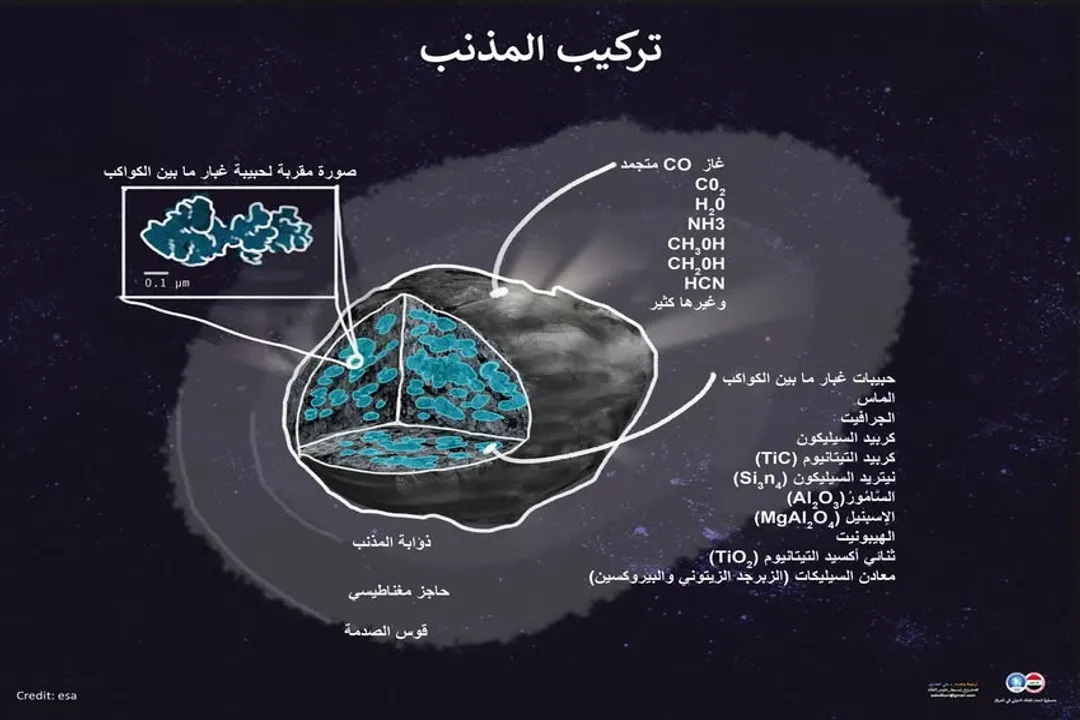
The dust tail consists of solid particles that, once released, follow the orbital path of the comet and remain in space as debris. This material can persist in orbit for thousands of years, eventually dispersing into the zodiacal cloud, and is the source material for meteor showers. In sharp contrast, the ion tail consists of ionized gases that are transient and rely on the constant interaction with solar radiation and solar wind to maintain their structure. Once this interaction weakens or the comet moves away, the ion tail dissipates quickly, lacking the physical longevity of the solid dust components.
#Videos
Nobody Understands This About Comets
Related Questions
What primary substances make up the nucleus of a comet?What physical force is primarily responsible for the formation and shape of a comet dust tail?Why does a comet dust tail typically appear yellowish-white to observers?How does the ion tail of a comet differ in appearance and behavior from the dust tail?What celestial phenomenon is caused by Earth passing through the debris of an old comet dust tail?What is the process called when a comet's solid ices turn directly into gas?What types of materials are primarily found in the dust tail of a comet?How does particle size influence the distribution of material in a comet dust tail?Why do scientists analyze the chemical composition of comet dust trails?What distinguishes the persistence of a dust tail from an ion tail?