What characterizes the interior composition of Uranus and Neptune compared to Jupiter and Saturn?
Answer
A much greater proportion of heavier elements locked up in what scientists term "ices".
Uranus and Neptune are classified as Ice Giants because their internal structure deviates significantly from Gas Giants like Jupiter and Saturn. While Jupiter and Saturn are predominantly composed of light elements, mainly hydrogen and helium, the Ice Giants feature a substantial internal component made up of heavier elements. These heavier elements are condensed into exotic states referred to as "ices" due to the intense pressures and temperatures found deep within their structures. This larger fraction of heavier elements is the defining characteristic separating the two categories of outer planets.
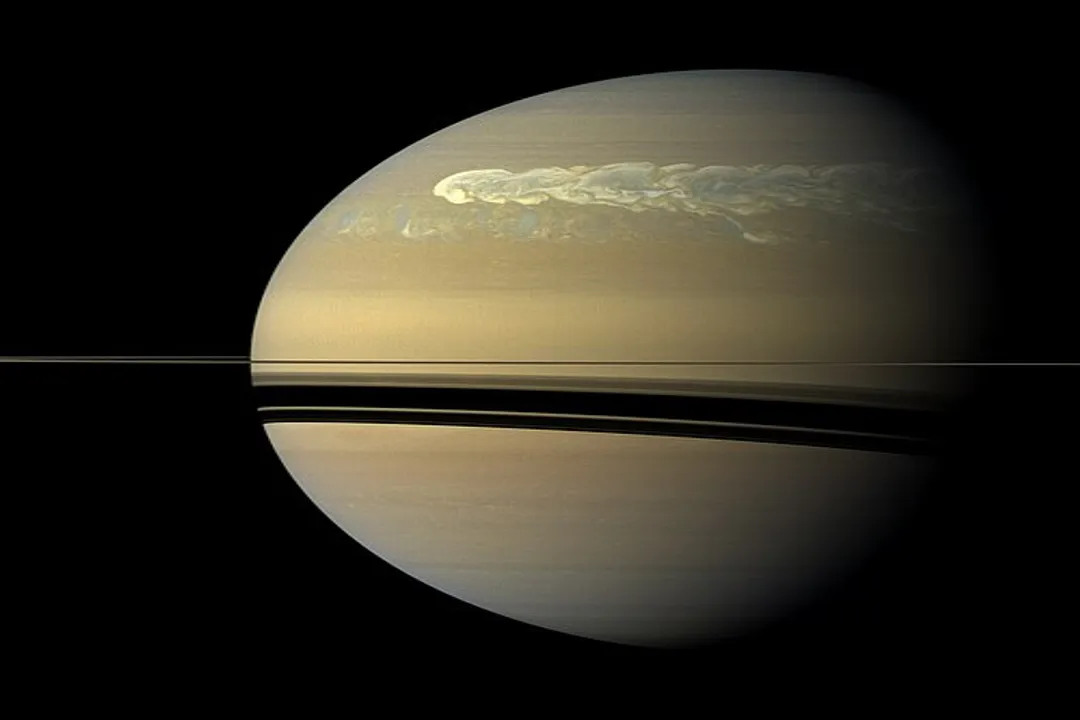
Related Questions
What characterizes the interior composition of Uranus and Neptune compared to Jupiter and Saturn?What specific volatile ices primarily constitute the hot, dense fluid mantle surrounding the core of Uranus and Neptune?What elements classify Saturn as a gas giant, similar to Jupiter, rather than an ice giant?What feature of Saturn is most closely associated with the description of ice and dust content?How do the volatile ices in the mantle of Uranus and Neptune exist under immense internal pressure and temperature?Why are Saturn's rings extremely bright and reflective when compared to the faint ring systems of Uranus and Neptune?What specific orbital characteristic distinguishes Uranus among the Ice Giants?What substances are included in the broad definition of 'ice' used in planetary science for the outer solar system giants?What characterizes the faint, dark rings of Neptune, contrasting with Saturn's bright structure?When considering the bulk structure, which classification is used to define Uranus or Neptune as being 'most defined by ice overall'?