What feature of Saturn is most closely associated with the description of ice and dust content?
Answer
Its spectacular, massive ring system orbiting the planet.
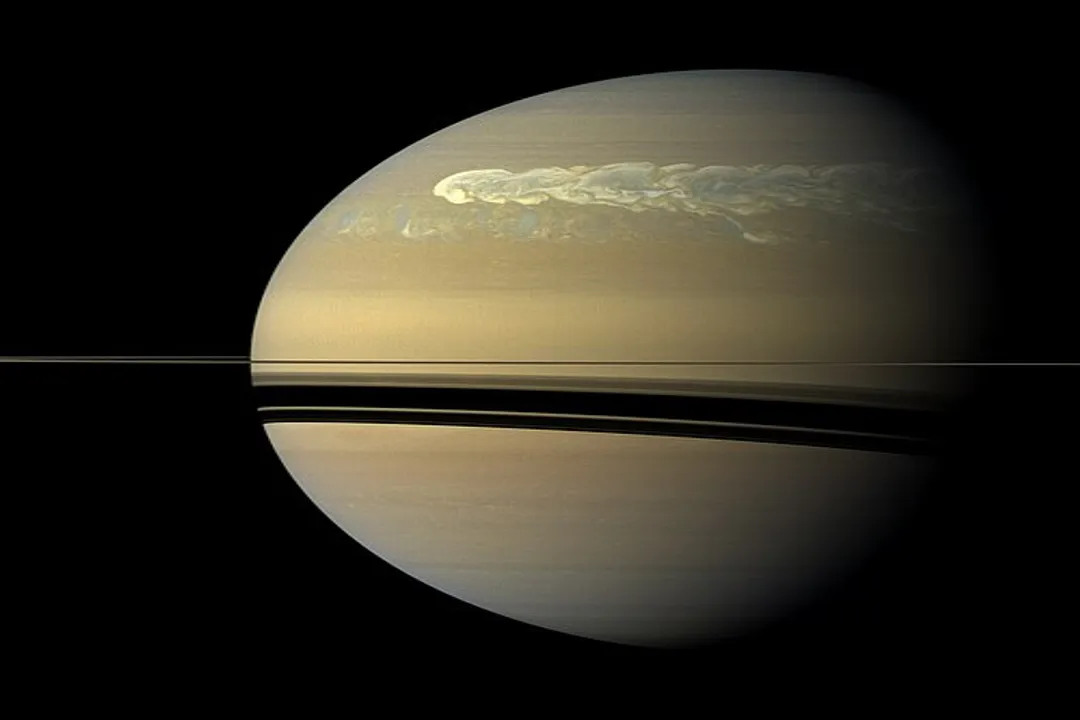
While the bulk composition of Saturn is hydrogen and helium, the aspect of the planet most directly linking it to the term 'ice and dust' is its elaborate and highly visible ring system. This structure, often described as the jewel of the solar system, is comprised of billions of individual orbiting particles. The vast majority of this orbiting material is composed of water ice, ranging from microscopic particles up to small boulders, often mixed with some rocky or dusty material. This massive structure orbiting the gas giant is the primary icy feature associated with Saturn.
Related Questions
What characterizes the interior composition of Uranus and Neptune compared to Jupiter and Saturn?What specific volatile ices primarily constitute the hot, dense fluid mantle surrounding the core of Uranus and Neptune?What elements classify Saturn as a gas giant, similar to Jupiter, rather than an ice giant?What feature of Saturn is most closely associated with the description of ice and dust content?How do the volatile ices in the mantle of Uranus and Neptune exist under immense internal pressure and temperature?Why are Saturn's rings extremely bright and reflective when compared to the faint ring systems of Uranus and Neptune?What specific orbital characteristic distinguishes Uranus among the Ice Giants?What substances are included in the broad definition of 'ice' used in planetary science for the outer solar system giants?What characterizes the faint, dark rings of Neptune, contrasting with Saturn's bright structure?When considering the bulk structure, which classification is used to define Uranus or Neptune as being 'most defined by ice overall'?