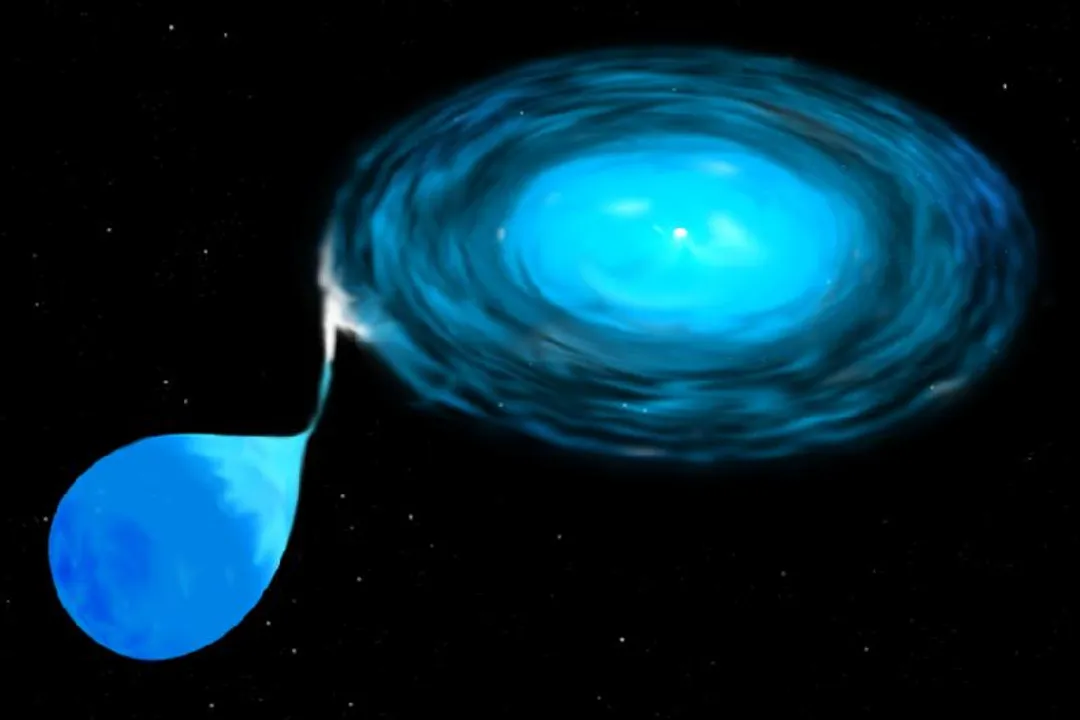
What distinguishes a recurring nova from a terminal Type Ia supernova?
In a nova, the white dwarf survives; in a Type Ia, it is destroyed.
Both novae and Type Ia supernovae involve thermonuclear ignition on the surface of a white dwarf star within a binary system, but the resulting outcome is fundamentally different based on the amount of mass involved. In a standard nova event, only the surface layer of newly accreted hydrogen ignites, producing a brilliant but temporary flash of light. Crucially, the white dwarf itself remains intact and capable of repeating the process over vast timescales. In contrast, a Type Ia supernova occurs when the white dwarf accretes enough mass to exceed the Chandrasekhar limit, leading to the complete, catastrophic detonation and total obliteration of the star, ensuring the event is a singular, final cataclysm with no central remnant remaining.