What is a supernova also called?
A supernova is one of the most dramatic and energetic events in the cosmos, marking the violent end of a star's life. [1][5] While the term itself is definitive, understanding what a supernova is also involves grasping its various classifications, which serve as alternative descriptors based on its physical mechanism. [3][4] These violent stellar deaths are instrumental in cosmic evolution, scattering heavy elements across interstellar space. [1][5]
# Stellar Demise
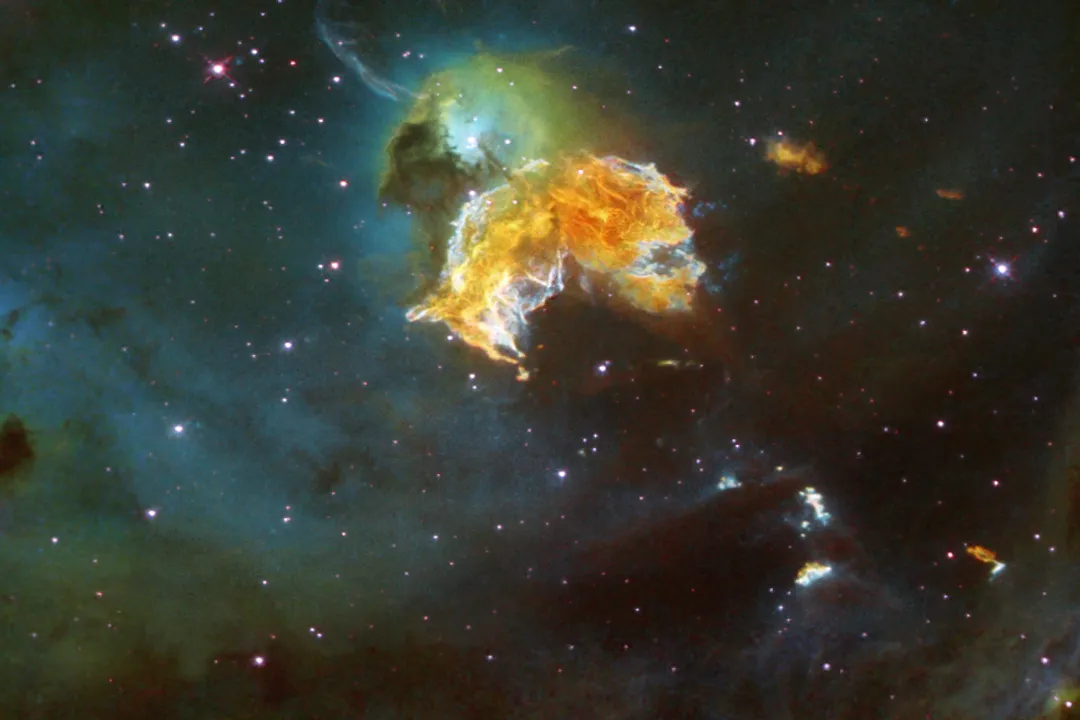
The most straightforward, if less technical, way to describe this event is as an exploding star. [5] This spectacular outburst releases an enormous amount of energy in a very short period. [1] Astronomers classify these explosions based on the star type involved and the resulting light signature, which helps map the star's evolutionary path. [1][3] The terms used to describe a supernova are intrinsically linked to how the star died—whether it was due to a runaway thermonuclear reaction or the catastrophic collapse of a massive core. [1][5]
# Primary Types
When scientists discuss supernovae, they typically divide them into two main categories initially: Type I and Type II. [1][3] These classifications are based on spectral analysis—specifically, the presence or absence of hydrogen lines in the resulting spectrum of light emitted during the explosion. [1] If the spectrum lacks hydrogen lines, it is generally classified as a Type I supernova. [1] If hydrogen lines are present, it is classified as a Type II. [1] This initial spectral split directs researchers toward the underlying progenitor star system and the specific physical mechanism responsible for the blast. [1][3]
# Hydrogen Absent
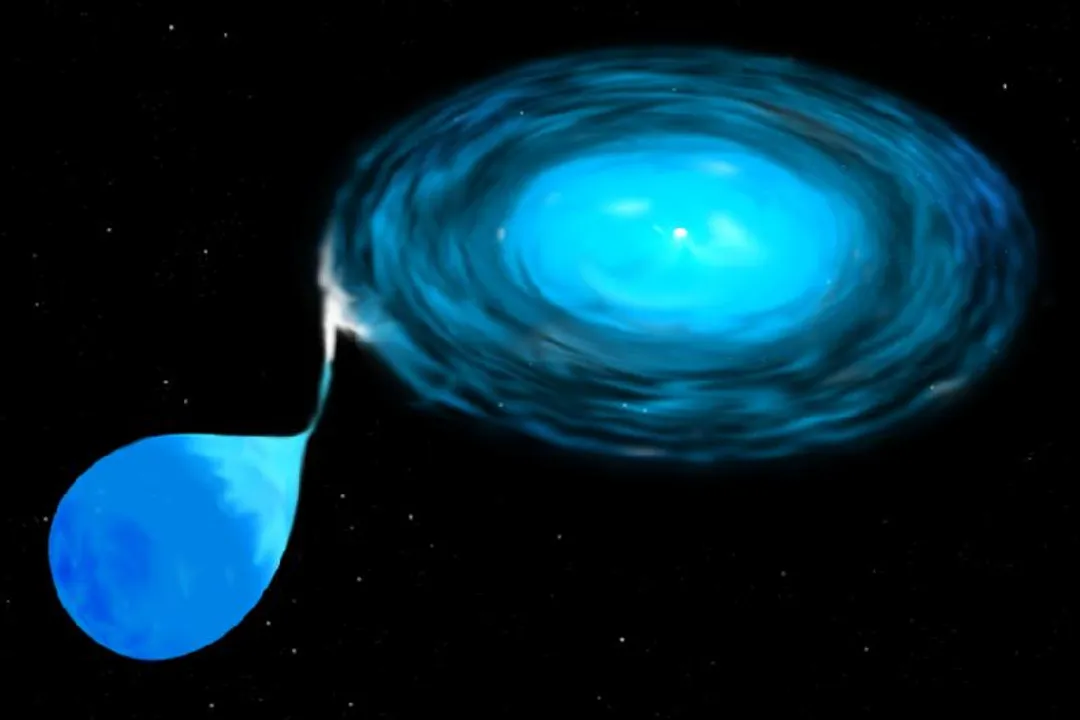
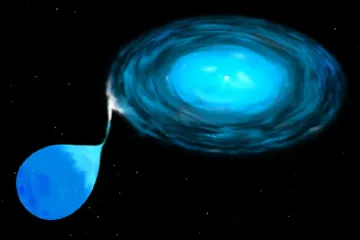
Type I supernovae are characterized by the lack of hydrogen signatures in their light profiles. [1] However, this category is further subdivided, most notably into Type Ia. [1][2] The Type Ia event involves a white dwarf star existing within a binary system, where it continuously accretes matter from its companion star. [1][2] As the white dwarf accumulates mass and approaches a critical threshold—the Chandrasekhar limit, calculated to be around $1.4$ times the mass of our Sun—it becomes unstable and undergoes a runaway thermonuclear explosion, obliterating the entire star. [1][2] Because the progenitor white dwarf is theorized to start at a relatively uniform mass before detonation, Type Ia supernovae are incredibly valuable; they act as standard candles in cosmology, allowing astronomers to measure vast cosmic distances with surprising accuracy. [1][2]
# Hydrogen Present
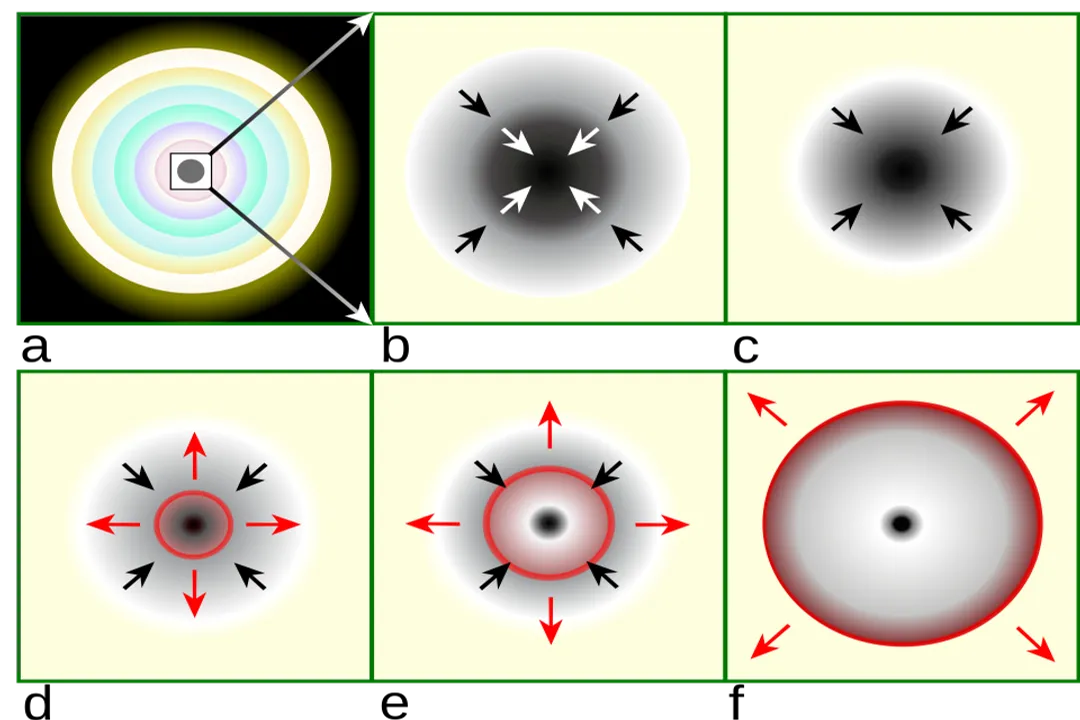
In contrast, Type II supernovae always show clear evidence of hydrogen in their spectra. [1] These explosions result from the death of a single, very massive star—one significantly larger than our Sun—that has exhausted its nuclear fuel. [1][5] When the core fusion ceases, gravity overwhelms the outward pressure, causing the core to collapse suddenly inward in a fraction of a second. [1][5] This collapse halts abruptly when the matter reaches nuclear density, forming an incredibly dense neutron star or, if the star was sufficiently massive, a black hole. [1][5][6] The outer layers of the star then rebound off this newly formed compact object in a spectacular explosion, which is why a Type II supernova is frequently referred to by its mechanism: a core-collapse supernova. [6]
It is interesting to note that the primary classification system (Type I vs. Type II based on spectral hydrogen lines) is an observational distinction, whereas the mechanism (thermonuclear detonation vs. core-collapse) is the physical explanation. [1] For the general reader, realizing that "Type Ia" is just a spectral fingerprint for "white dwarf destruction" and "Type II" is the spectral fingerprint for "massive star collapse" helps connect the naming convention directly to the stellar evolution physics that causes the light show. Furthermore, astronomers also identify Type Ib and Type Ic supernovae, which are spectrally like Type I (lacking hydrogen) but result from the core-collapse process in massive stars that have somehow shed their outer hydrogen envelope (Ib) or both their hydrogen and helium envelopes (Ic) before their final demise. [1]

# Extreme Explosions
Beyond the fundamental Type I and Type II designations, the sheer scale of power released during these stellar cataclysms leads to other descriptive terms, though these are often less formal scientific classifications. [7] Very energetic supernovae, often associated with the core-collapse mechanism, are sometimes referred to as hypernovae. [7] This term generally applies to events that release significantly more kinetic energy than a standard supernova, sometimes exceeding joules. [7] Another related, though distinct, violent cosmic event that might be confused with a standard supernova is a kilonova, which results specifically from the merger of two neutron stars. [7] While a supernova marks a star's end, a kilonova is an event of stellar collision/merger, though both phenomena produce intense light and scatter newly forged heavy elements. [7]
While sources describe the types, considering the relative energy output provides context for why these terms matter. A typical Type Ia supernova releases about joules of energy, sufficient to briefly outshine an entire galaxy. [1] A standard Type II core-collapse event is similar in scale, but the label hypernova implies an energy release perhaps ten to one hundred times greater than this already staggering baseline. [7] It helps to visualize that the jump from a regular nova—which might briefly only match the Sun's total luminosity—to a supernova (outshining billions of suns) is immense, an increase in power output that spans many orders of magnitude based on the physics involved.
# Distinguishing Novae
It is crucial to differentiate a supernova from a simpler, though still dramatic, event called a nova. [3][4] A nova, meaning "new" in Latin, is also a thermonuclear event occurring in a binary system involving a white dwarf, much like a Type Ia supernova. [4] The fundamental difference lies in the final outcome: in a nova, the white dwarf survives because only the surface layer of accreted hydrogen ignites, causing a bright but relatively short-lived flash. [4] The star remains intact and can repeat the process over time. [4] Conversely, a supernova, particularly a Type Ia, involves the complete destruction of the white dwarf, resulting in a one-time, final cataclysm. [3][4] If we think of stellar endpoints, a supernova is terminal; a nova is a temporary, recurring brightening episode. [4]
# Stellar Graveyards
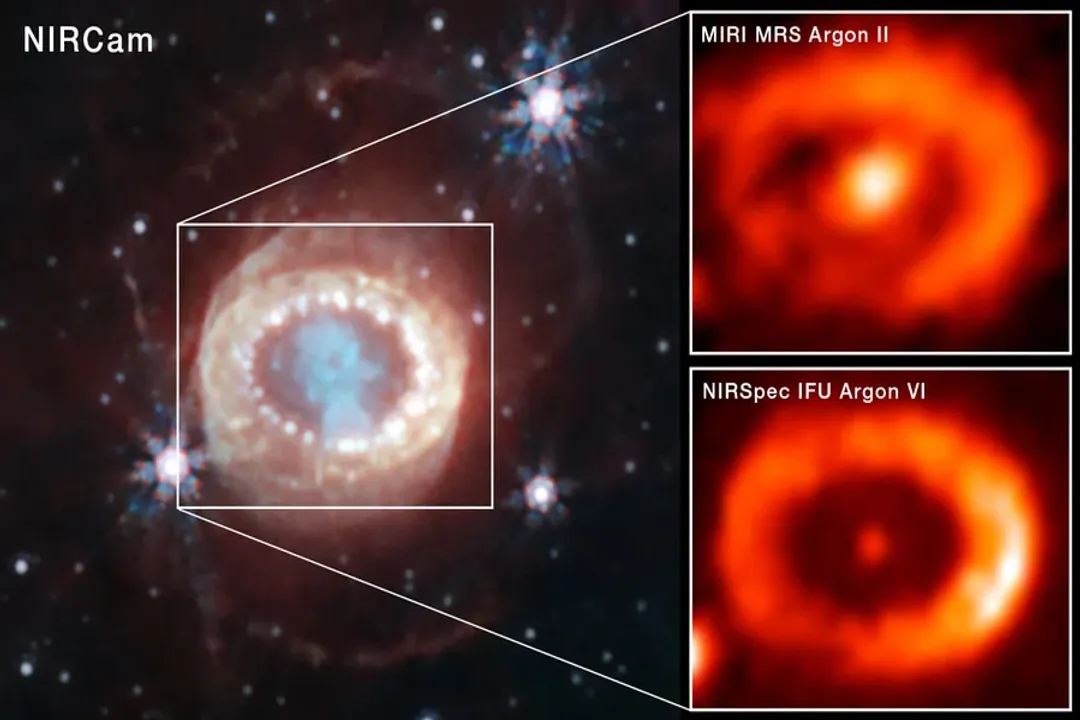
Whether the explosion was a Type Ia (which leaves no central stellar object) or a Type II core-collapse (leaving behind a neutron star or a black hole), the immediate aftermath of a supernova is a rapidly expanding shell of gas and dust known as a supernova remnant. [9] These remnants are vital to astrophysics, as they contain the heavy elements—like the carbon that forms organic molecules and the iron necessary for planetary cores—that were synthesized during the star's life or forged during the explosion itself. [5][9] The study of these evolving clouds, which can persist for thousands of years, reveals the chemical enrichment history of the galaxy and provides direct evidence of the energy transfer processes occurring during the collapse and rebound. [9]
Related Questions
#Citations
Supernova - Wikipedia
Types of Supernovae - | The Schools' Observatory
What is the difference between a supernova and a hypernova?
Novas Vs. Supernovas: What's The Difference? - Adler Planetarium
What Is a Supernova? | NASA Space Place – NASA Science for Kids
Supernova explosions - Las Cumbres Observatory
nova, kilonova, supernova, hypernova — but these aren't just ...
What Is a Supernova? Definition, Types, and Famous Examples
Supernovas & Remnants | Center for Astrophysics
What is a supernova? | Ask Dr. Universe - Washington State University