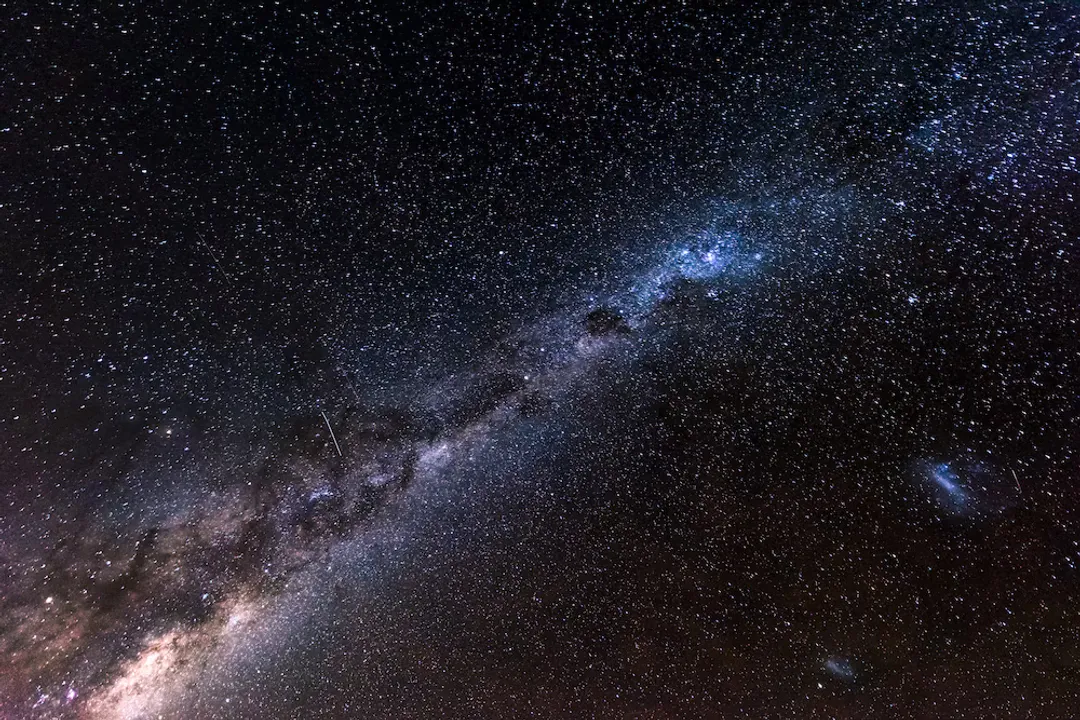
What contradictory physical characteristics might observers see in luminous Dark Stars?
Potentially large mass and very luminous output with cool surface temperatures
Observing a Dark Star presents an apparent contradiction according to standard stellar evolution physics. These hypothetical objects are predicted to be incredibly massive, potentially hundreds or even thousands of times the mass of the Sun, and must be highly luminous to counteract such immense gravity. However, due to their internal support mechanism being less intense per unit volume than core fusion, they are predicted to possess relatively cool surface temperatures compared to what is normally expected for a star radiating that much energy. An object that is too large and too cool for its observed brightness—unless powered by exotic internal processes—would be a strong indicator pointing toward the dark matter hypothesis.