Do immortal stars exist?
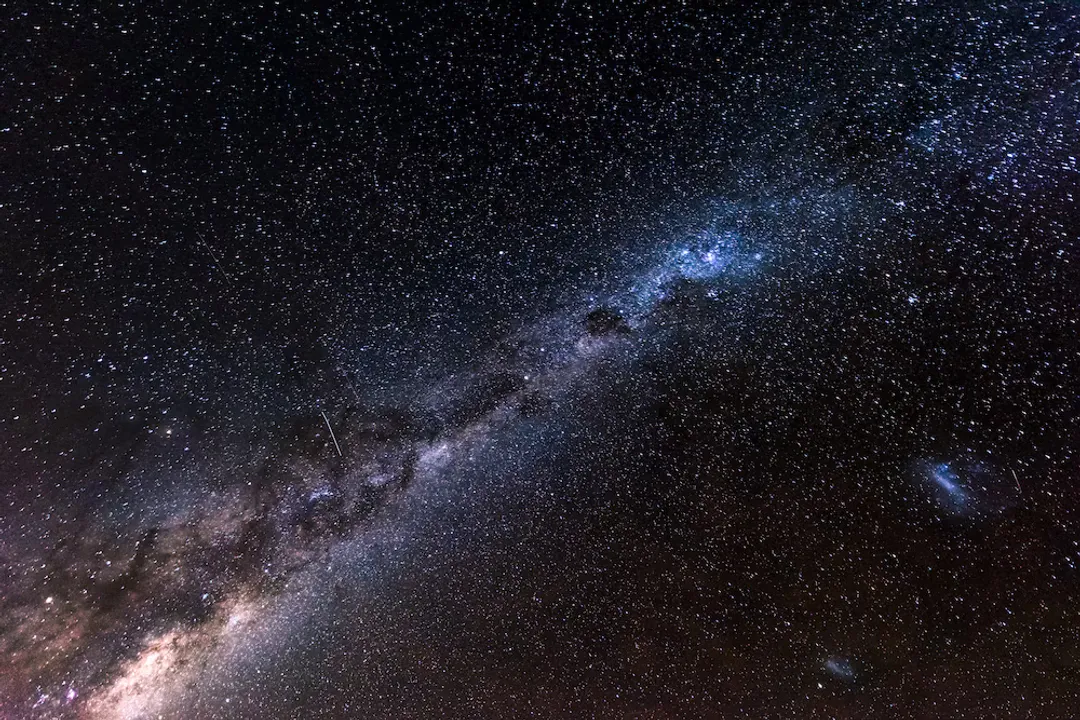
The very notion of a star, for most people, is tied to a cosmic clock ticking down to an inevitable end—a slow consumption of fuel leading to a dramatic death or a cold fade-out. Stars, after all, are enormous nuclear furnaces, fusing lighter elements into heavier ones over billions of years. But what if some stars defied this simple narrative? What if a star, born in the universe's infancy, is still shining today, not because its hydrogen lasts forever, but because it has access to an entirely different, seemingly endless energy reservoir? This concept, often framed around theoretical objects called Dark Stars, suggests that immortality, in a stellar sense, might be achievable through a diet of dark matter. [6][8]
# Stellar Lifespan
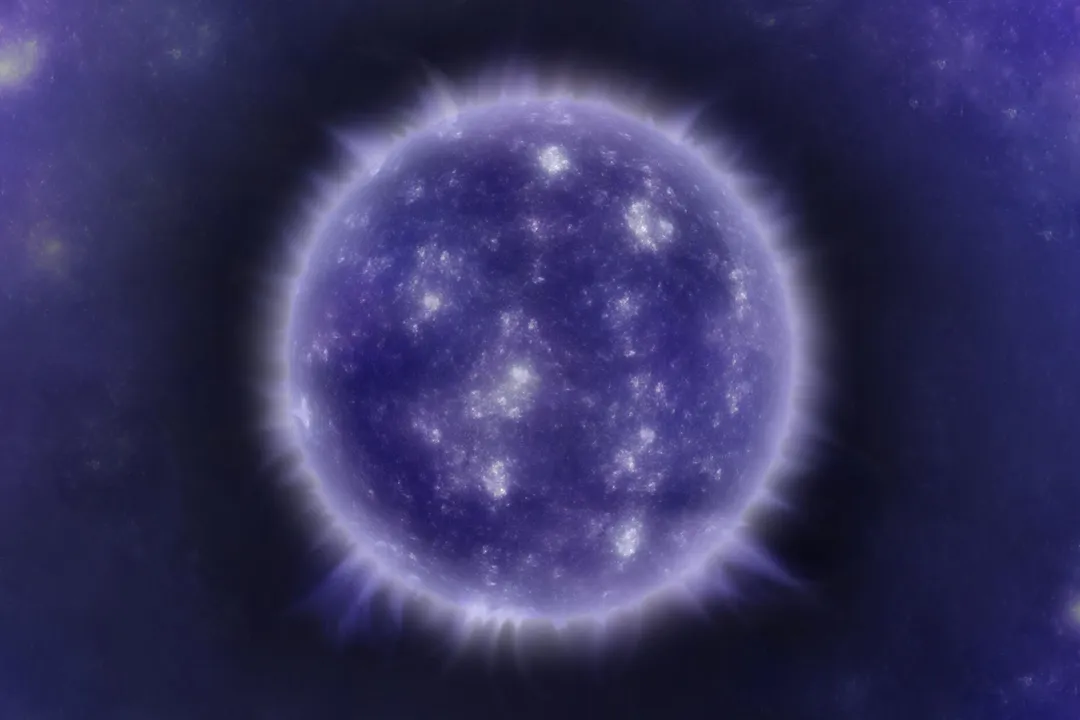
A typical star, like our Sun, spends the majority of its life fusing hydrogen into helium in its core. This process releases immense energy, creating outward pressure that perfectly counteracts the inward crush of gravity, keeping the star stable. [6] Once the core runs out of hydrogen, the star exhausts its main sequence life. It swells into a red giant, perhaps fuses helium, and eventually sheds its outer layers, leaving behind a white dwarf, neutron star, or black hole—a definite end to its active life. The fuel source, the hydrogen, is finite, dictating the star's lifespan. [6]
# Dark Fuel
The idea of an "immortal" star hinges on replacing or augmenting this limited thermonuclear energy with something much more abundant and long-lasting: dark matter. [6] Theoretical models suggest that if enough dark matter particles accumulate in a star's core, they could annihilate or decay, releasing energy that could prevent the star from collapsing or cooling down over vast timescales. [1][2][6][8]
These hypothetical objects, the Dark Stars, are thought to have formed extremely early in cosmic history, perhaps before the first conventional stars ignited. [5][8] In the very early universe, gas clouds collapsed, but if the dark matter concentration was high enough, the dark matter annihilation within the core could have provided enough outward pressure to keep the protostar inflated and hot, preventing the core temperature from reaching the necessary threshold for hydrogen fusion to begin. [5][8] Essentially, the dark matter acts as a prolonged heating element, keeping the star alive long after it should have faded or ignited fusion.
The specific energy release depends heavily on the nature of the dark matter particle, often hypothesized to be a WIMP (Weakly Interacting Massive Particle). [6] The energy released through annihilation or decay then becomes the dominant power source, effectively bypassing the consumption of normal stellar fuel. [6] If this energy source is stable and the dark matter supply remains sufficient, the star’s life could stretch into many times the current age of the universe, making it effectively immortal on human timescales. [6]

# Ancient Relics
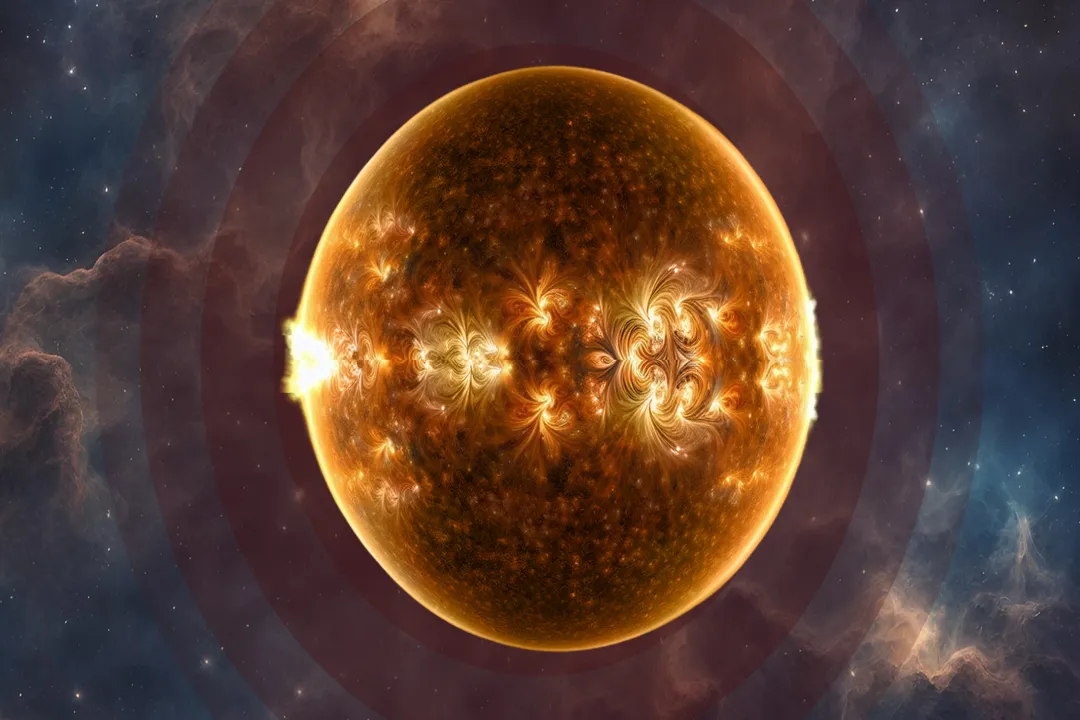
The search for these dark matter-powered stars often centers on looking for the oldest objects in the cosmos, as they would have had the longest time to form and sustain themselves in this manner. [5] If Dark Stars exist, they represent a bridge between the universe's earliest structures and the modern stellar population we observe today. [5][8]
When considering how much dark matter is needed to power such an object, one realizes the scale of the problem. For a star to remain supported primarily by dark matter annihilation, the rate of energy generation must balance the rate of gravitational energy loss, which is a finely tuned equilibrium dependent on the star's mass and the density of the dark matter halo it inhabits. [1] A star with a mass similar to the Sun, powered only by dark matter, would require a massive concentration of dark matter particles, potentially requiring a dark matter density in the core that is significantly higher than what is currently assumed for typical stellar environments. [1] This implies that the most robust candidates for Dark Stars would likely be very massive stars formed in regions with exceptionally dense dark matter concentrations, such as the center of a galaxy. [1][8]
# Galactic Core
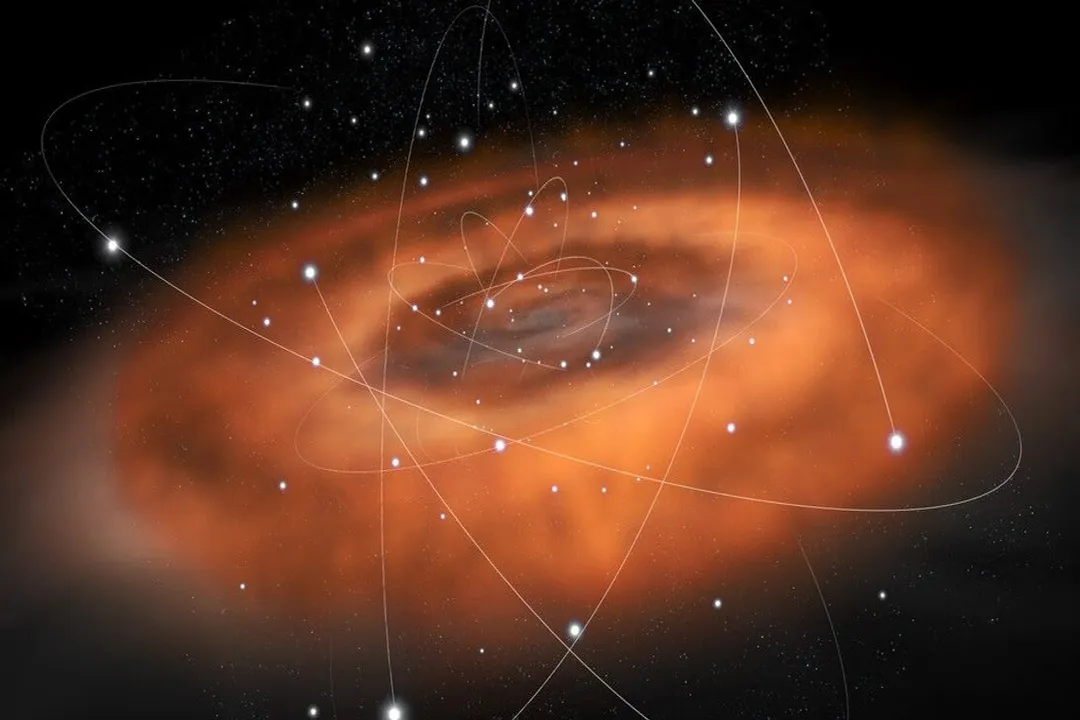
The center of our own Milky Way galaxy, surrounding the supermassive black hole Sagittarius A*, is considered the most promising place to hunt for these strange stellar forms. [1][2][8] This region is known to possess an extremely dense environment, both in terms of stars and, theoretically, dark matter. [1][8] A recent theoretical study suggested that a population of these effectively immortal stars might be residing near the galaxy's core, sustained by this unique dark matter energy source. [1][8] This makes the observation of stars in this dense region critical for confirming or refuting the Dark Star hypothesis. [2][8]
The claim that such stars have been found near the Milky Way's center implies a direct detection or strong indirect evidence supporting their existence in this specific high-density environment. [1][3][8] If confirmed, it wouldn't just be a discovery about stellar evolution; it would be a direct confirmation of fundamental particle physics—the annihilation or decay of dark matter particles—in a macroscopic object. [6]
# Observational Signatures
Telling a Dark Star apart from a first-generation, metal-free star (Population III star) that has simply survived or an ordinary, old star cluster is a considerable challenge for astronomers. [5] Dark Stars would likely be quite large, potentially hundreds or even thousands of times the mass of the Sun, and very luminous, yet they might possess relatively cool surface temperatures compared to the luminosity they emit. [5]
The physics suggests that a Dark Star, being supported by a diffuse energy source throughout its volume rather than concentrated in a tiny fusion zone, would have a different internal structure and thus a different surface manifestation than a standard star of the same mass. [5] For an observer looking at the galactic center, these objects might simply appear as very bright, perhaps slightly cooler, giants. [5] A key diagnostic tool, which astronomers would have to employ rigorously, would involve detailed spectroscopic analysis. A normal star's light reveals its chemical makeup, primarily hydrogen and helium with trace metals. A Dark Star, however, might show spectral features consistent with its vast age and history, potentially lacking the typical signatures of sustained hydrogen burning or exhibiting the cooling characteristics predicted for a dark matter-dominated interior. [5]
A deeper look into the observational requirements offers an interesting analytical angle: since the Dark Star hypothesis suggests the energy source is an internal annihilation process rather than a core fusion process, the star might achieve a stable, non-fusing equilibrium across a much larger volume than a normal star. This difference in energy distribution should manifest in surface gravity and effective temperature profiles that cannot be replicated by any known stellar evolutionary track, offering a definitive "fingerprint" for this exotic class of object. [1] Simply put, they might be too big and too cool for their observed luminosity unless dark matter is at work.
# Cosmic Archaeology
Confirming the existence of these stars moves the search from pure theory into the realm of cosmic archaeology. [5] If the objects observed at the Milky Way's center are indeed Dark Stars, they offer a unique time capsule. [5] They are remnants from the earliest epochs, potentially predating the formation of the first true, fusion-powered stars that enriched the early universe with heavier elements. [5] Studying their light and properties would give us direct insight into the conditions, particle densities, and physical processes that dominated the universe mere millions of years after the Big Bang, before the metal-free Population III stars even had a chance to shine. [5]
For an astronomer on Earth, the practical tip involves shifting focus from "how old is it" (which is hard to determine directly) to "how is it generating energy." If the candidate stars near Sagittarius A* do not conform to standard nuclear physics models—showing long-term stability without the expected mass loss or luminosity decay curves of their normal counterparts—the dark matter hypothesis gains significant traction. [1][6] This is less about finding a new object and more about finding an object that refuses to die according to the established rules of stellar nucleosynthesis. [6]
The search for these "immortal" objects, powered by the universe's most mysterious component, remains a significant frontier in astrophysics. Whether they are massive, ancient relics clinging to life via particle annihilation or simply a theoretical construct, their potential confirmation would revolutionize both our understanding of stellar life cycles and our most fundamental theories of particle physics. [1][2][6]
Related Questions
#Citations
'Immortal' stars at the Milky Way's center may have found an endless ...
'Immortal stars' could feast on dark matter in the Milky Way's heart
Team discovers 'immortal' dark matter stars | Telescope Live
'Immortal' stars at the Milky Way's center may have found an endless ...
Stars from the Beginning of the Universe Still Exist in Our Galaxy
A Diet of Dark Matter Could Be Making Some Stars Effectively Immortal
Dark branches of immortal stars at the Galactic Center | Phys. Rev. D
Dark matter could make our galaxy's innermost stars immortal
The Life and Times of Immortal Stars - NASA ADS