What characteristic of the internal environment makes nebulae counterintuitive despite their appearance?
Answer
The material density is extraordinarily low, meaning most of the volume is empty space
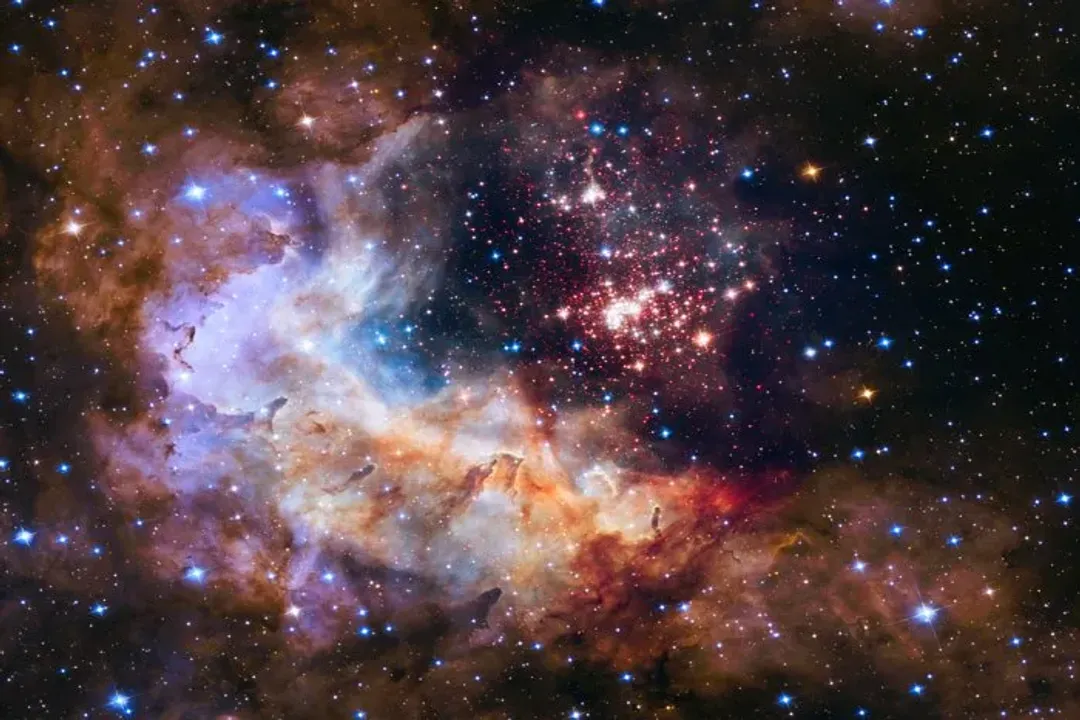
A critical, often counterintuitive aspect of nebulae is their incredibly low material density, even in regions actively forming stars. While visually they resemble dense clouds, the particle density in star-forming areas might only reach a few hundred to a few thousand particles per cubic centimeter. This particle count is comparable to, or even higher than, the best laboratory vacuums achievable on Earth. Consequently, despite the visual impression of thickness, the vast majority of a nebula's immense volume consists of nearly empty space, with the observable material being widely dispersed.
#Videos
JWST Shows Planetary Nebulae Are Way Weirder Than We Thought
Related Questions
What is the Latin word from which the term nebula is derived?What are the primary ingredients contained within vast nebula reservoirs?What specifically energizes the gas in an emission nebula causing it to glow?How does a reflection nebula become visible to observers?What temperature must a collapsing core reach to ignite sustained hydrogen fusion?What type of nebula results from the catastrophic death of a star much more massive than the Sun?What phenomenon creates a planetary nebula structure around an aging, Sun-like star?What characteristic of the internal environment makes nebulae counterintuitive despite their appearance?Which element emission is often mapped to the blue/green color in composite scientific images?What key process characterizes a Reflection Nebula according to the organizational chart?