Which element emission is often mapped to the blue/green color in composite scientific images?
Answer
Oxygen
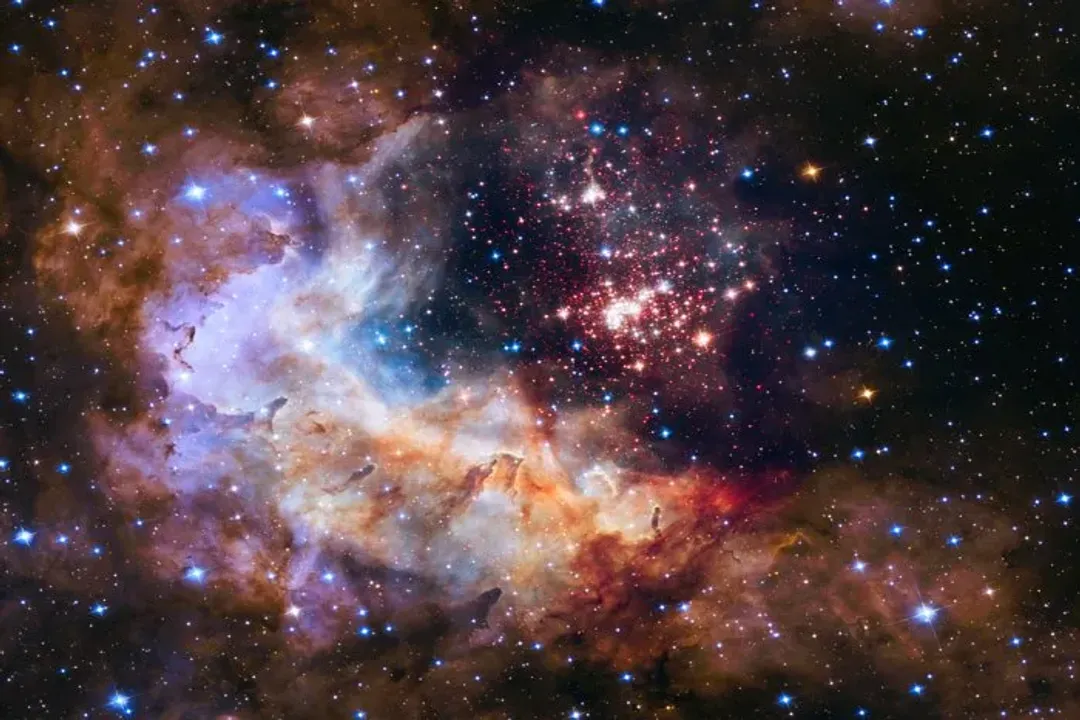
The vibrant colors seen in astronomical images of nebulae are often not what the human eye would perceive naturally but are assigned systematically by scientists to translate raw data into chemically meaningful visualizations. This process involves mapping specific element emissions, detected through particular filters, to visible color ranges. For instance, hydrogen-alpha emissions are frequently mapped to red, while sulfur emissions might be assigned red or orange hues; critically, oxygen emissions are commonly mapped to the blue or green parts of the visible spectrum to aid in distinguishing the chemical composition across the structure.
#Videos
JWST Shows Planetary Nebulae Are Way Weirder Than We Thought
Related Questions
What is the Latin word from which the term nebula is derived?What are the primary ingredients contained within vast nebula reservoirs?What specifically energizes the gas in an emission nebula causing it to glow?How does a reflection nebula become visible to observers?What temperature must a collapsing core reach to ignite sustained hydrogen fusion?What type of nebula results from the catastrophic death of a star much more massive than the Sun?What phenomenon creates a planetary nebula structure around an aging, Sun-like star?What characteristic of the internal environment makes nebulae counterintuitive despite their appearance?Which element emission is often mapped to the blue/green color in composite scientific images?What key process characterizes a Reflection Nebula according to the organizational chart?