What is happening in the nebula?
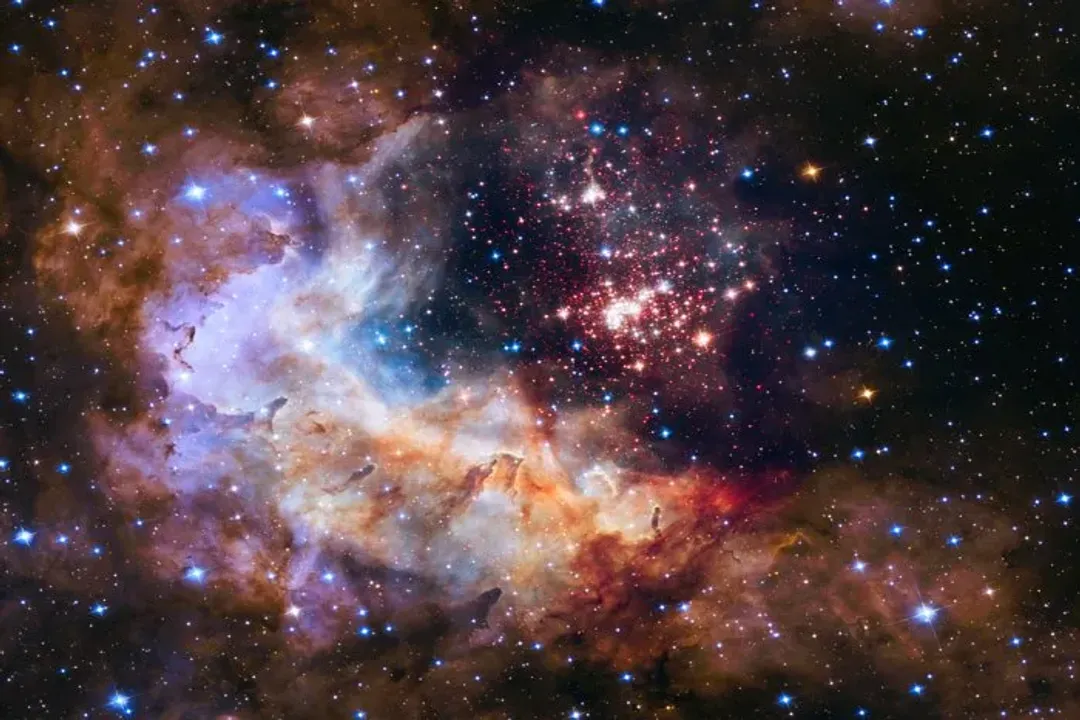
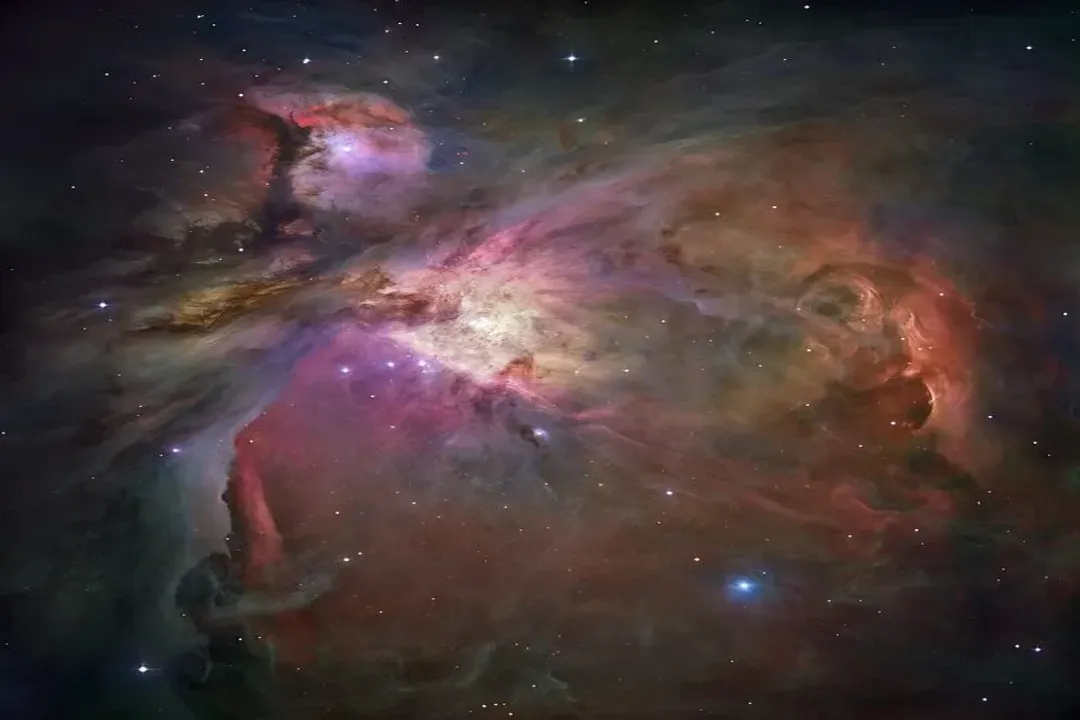
Vast clouds of gas and microscopic dust drifting through the immense spaces between stars are what we call nebulae. These are not just static, featureless patches in the night sky; they are dynamic environments where the universe's fundamental cycles—creation and destruction—are actively playing out. A nebula, derived from the Latin word for "mist" or "fog," appears diffuse and ethereal, yet it holds the raw material for entire stellar populations or the ghostly remnants of stars that have already met their end. Understanding what is happening within them requires looking past the visible light and grasping the extreme physics governing these cosmic laboratories.
# Cosmic Structures
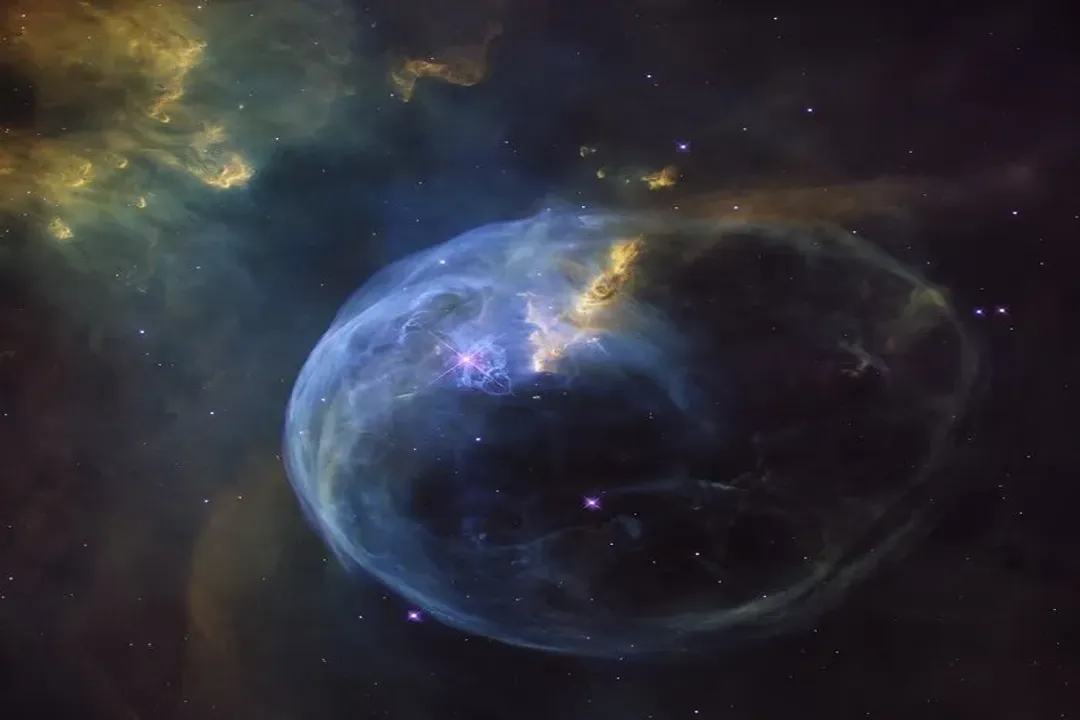
The sheer scale of these interstellar clouds is difficult to comprehend. They are enormous reservoirs, sometimes spanning hundreds of light-years, containing the necessary ingredients—mostly hydrogen and helium, along with trace amounts of heavier elements and solid dust particles—to build stars and planets. Nebulae are classified based on how they interact with light, which speaks directly to the processes occurring inside them.
For instance, an emission nebula is characterized by gas that is energized, or ionized, by intense ultraviolet radiation emanating from extremely hot, newly formed stars located nearby. This energy causes the gas to glow in specific colors, revealing its elemental makeup. Conversely, a reflection nebula does not produce its own light; instead, we see it because the dust within the cloud scatters the light from nearby stars, much like how Earth's atmosphere makes the sky blue. Then there are dark nebulae, which are so dense with dust that they obscure the light from objects positioned behind them, appearing as dark silhouettes against a brighter backdrop.
# Star Genesis
The most dramatic activity in many nebulae revolves around stellar birth, leading some to be famously dubbed "stellar nurseries". Inside these vast molecular clouds, gravity is the primary sculptor. Over long timescales, slight inhomogeneities in the gas and dust density begin to pull matter together. As a region grows more massive, its gravitational pull increases, causing a runaway collapse.
This infall of material compresses the core, causing its temperature and pressure to skyrocket. This phase continues until the core becomes hot and dense enough—around fifteen million degrees Celsius—to ignite sustained nuclear fusion of hydrogen into helium. At this moment, a new star is born, and its powerful outflow of energy and stellar wind begins to sculpt the remaining nebula material around it, sometimes carving out vast, beautiful cavities in the cloud. The process is not instantaneous; it involves accretion disks, protostars, and jets, all occurring over millions of years within these dusty cocoons.
# Stellar Demise
The story doesn't end with birth; nebulae are also integral to the recycling of cosmic material through death. The fate of a dying star dictates the type of nebula created. When stars much more massive than our Sun reach the end of their lives, they meet a catastrophic end as a supernova explosion. This violent event blasts the star's outer layers, along with all the heavy elements it forged during its lifetime, outward at tremendous speeds. The expanding shockwave and heated gas form a supernova remnant nebula, enriching the interstellar medium with elements like carbon, oxygen, and iron—the building blocks for future stars, planets, and life.
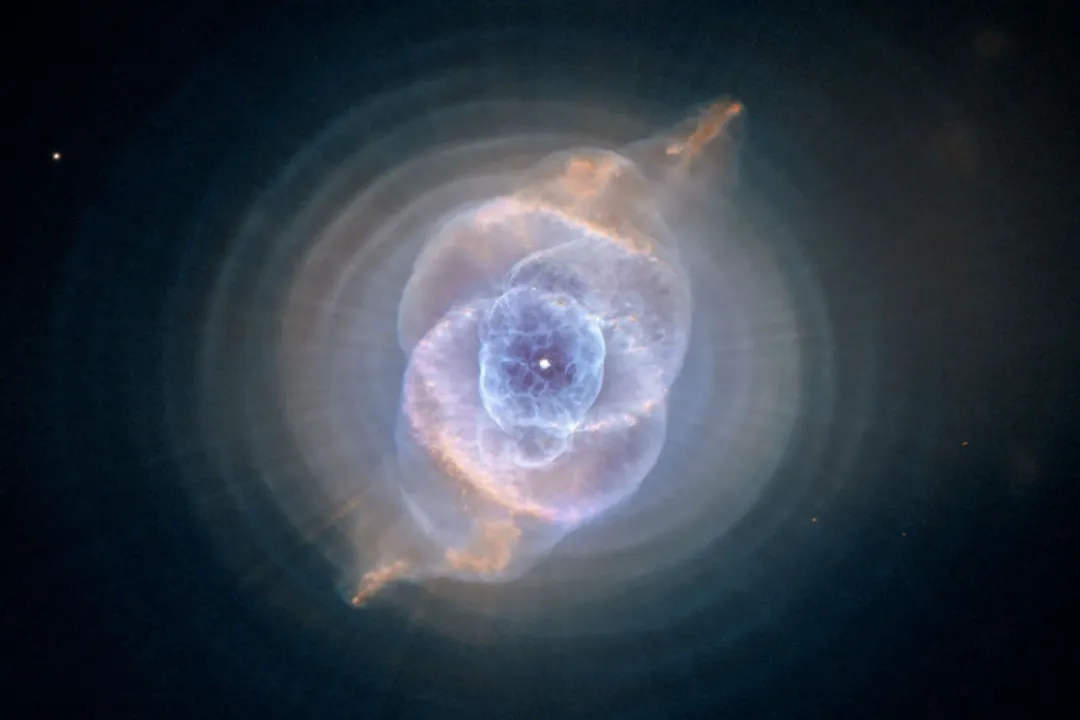
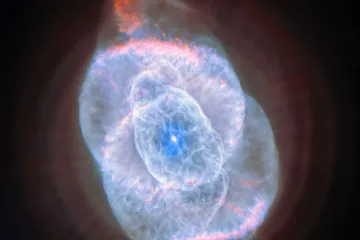
For lower-mass stars, like our own Sun, the death is gentler. As these stars swell into red giants and then shrink, they gently puff away their outer atmosphere in slow-moving stellar winds. This expelled shell of gas glows as the super-hot, shrinking stellar core, now a white dwarf, bathes the surrounding material in ultraviolet light, creating a structure known as a planetary nebula. These nebulae are relatively short-lived phenomena, lasting only tens of thousands of years before the gas dissipates entirely.
# Internal Environment
To truly grasp what is happening inside, one must appreciate the counterintuitive nature of the nebula's environment. While visually stunning, the material density within most nebulae is extraordinarily low. In the densest star-forming regions, the particle density might only be a few hundred to a few thousand particles per cubic centimeter. Compare this to the best laboratory vacuum achievable on Earth, which might have only a few thousand particles per cubic centimeter, but often significantly less in highly controlled settings. This means that despite looking like thick clouds, the vast majority of a nebula’s volume is empty space.
The processes within are a tug-of-war between gravity, which pulls matter inward to form stars, and the pressure generated by radiation and stellar winds, which push material outward. Temperatures can vary wildly; the dense cores where stars form can be relatively warm (perhaps 10-20 Kelvin), while the surrounding interstellar medium can be much colder. These temperature gradients drive complex gas flows and turbulence within the cloud.
# Visual Dynamics
The spectacular shapes observed are a direct result of these physical interactions. The energy poured out by bright, massive stars acts like an erosive force, blowing bubbles and leaving behind dramatic walls and pillars of cooler, denser gas and dust that resist the erosion. Stellar winds constantly push and drag the material, creating long, filamentary structures.
While we rely on visible-light images, often from instruments like the Hubble Space Telescope, which have revolutionized our view of these clouds, the true story involves multiple wavelengths. Scientists use infrared light to peer through the obscuring dust to see the developing protostars hidden within the dark cores.
While we often see brilliant colors, it's important to remember that the colors are usually assigned based on the element emission detected through specific filters. For instance, images often map hydrogen-alpha emissions to red, sulfur to red/orange, and oxygen to blue/green, which helps scientists distinguish the chemical composition in these vast, otherwise faint structures. This color mapping is a critical step in translating raw data into a chemically meaningful image.
# Formation Comparison
To organize the variety of events happening, it’s helpful to contrast the primary drivers behind the most common visible nebulae types:
| Nebula Type | Primary Cause | Key Process Happening |
|---|---|---|
| Emission Nebula | Nearby hot, young stars | Gas is ionized and glows (star birth) |
| Reflection Nebula | Nearby star light | Dust scatters starlight (no internal emission) |
| Planetary Nebula | Aging Sun-like star | Outer layers are puffed away by stellar winds |
| Supernova Remnant | Death of a massive star | Shockwave expands material into space |
Thinking about the scale, if one of these massive stellar nurseries were placed near Earth, the increased ultraviolet radiation could severely impact our atmosphere, yet because they are light-years away, the processes occurring within them are entirely benign to our local environment. This vast spatial separation is crucial for understanding the timeline of cosmic events versus local stellar stability. The movement within these clouds is slow by human standards—measured in thousands or millions of years—but it is constant, driven by subtle pressure differences and gravitational instabilities that will eventually lead to the next generation of celestial objects.
#Videos
JWST Shows Planetary Nebulae Are Way Weirder Than We Thought
Related Questions
#Citations
Hubble's Nebulae - NASA Science
What is the inside of a nebula like? : r/askscience - Reddit
JWST Shows Planetary Nebulae Are Way Weirder Than We Thought
Nebula
Nebulas: Uncovering the Cosmic Circle of Life | How the Universe ...
Planetary Nebulas - Center for Astrophysics | Harvard & Smithsonian
Space Place in a Snap: What Is a Nebula? - NASA+
All about nebulae and supernovae - - The Astronomy Enthusiast
Nebula - ESA/Hubble