What temperature must a collapsing core reach to ignite sustained hydrogen fusion?
Answer
Fifteen million degrees Celsius
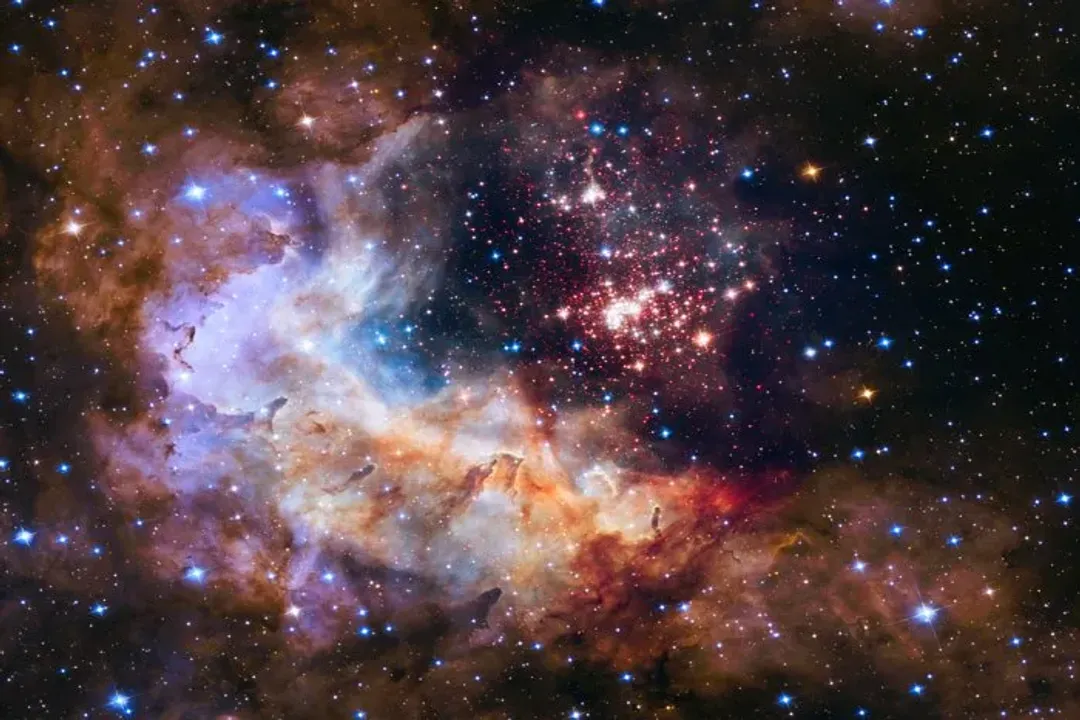
The dramatic process of star birth hinges upon reaching critical conditions within the collapsing core of a molecular cloud. As gravity pulls matter inward over millions of years, the material becomes increasingly compressed, causing the temperature and pressure to rise dramatically. This infall continues until the core becomes sufficiently hot and dense—specifically reaching approximately fifteen million degrees Celsius—at which point sustained nuclear fusion of hydrogen into helium commences, signaling the true birth of a new star.
#Videos
JWST Shows Planetary Nebulae Are Way Weirder Than We Thought
Related Questions
What is the Latin word from which the term nebula is derived?What are the primary ingredients contained within vast nebula reservoirs?What specifically energizes the gas in an emission nebula causing it to glow?How does a reflection nebula become visible to observers?What temperature must a collapsing core reach to ignite sustained hydrogen fusion?What type of nebula results from the catastrophic death of a star much more massive than the Sun?What phenomenon creates a planetary nebula structure around an aging, Sun-like star?What characteristic of the internal environment makes nebulae counterintuitive despite their appearance?Which element emission is often mapped to the blue/green color in composite scientific images?What key process characterizes a Reflection Nebula according to the organizational chart?