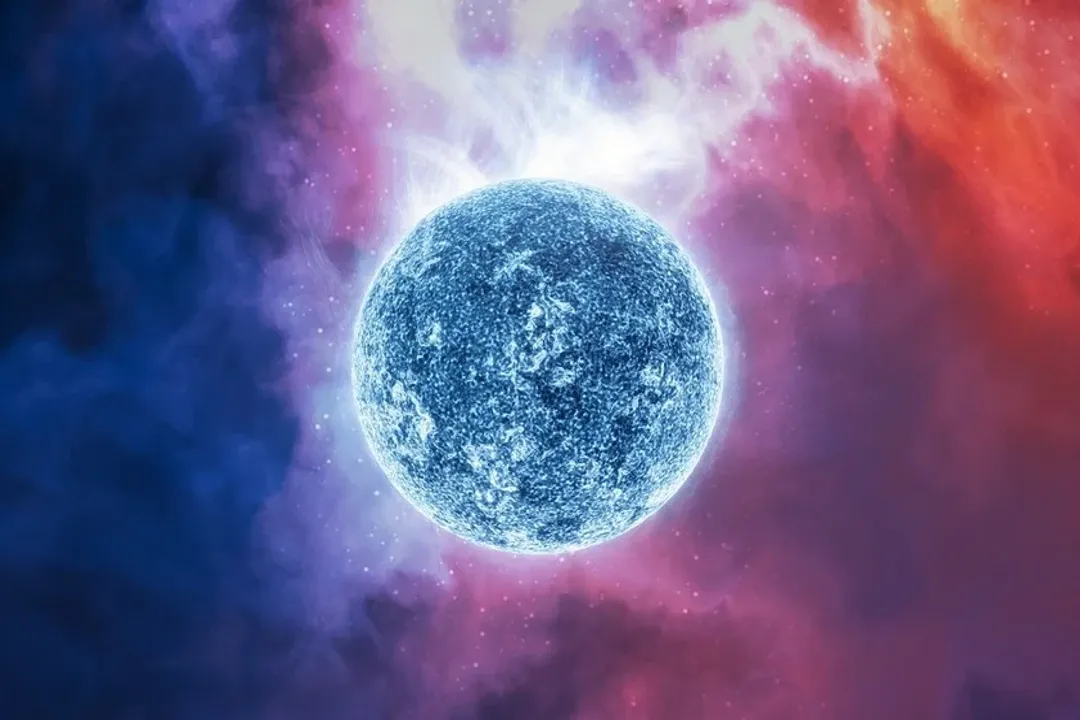
What capability do massive stars possess after hydrogen depletion that low-mass stars lack?
Continuing to fuse heavier elements sequentially in their cores
The initial mass of a star dictates the extremity of the gravitational compression it experiences, which in turn sets the central temperature and determines the subsequent nuclear pathways available. Low-mass stars only reach conditions sufficient to fuse hydrogen into helium in the core; once this fuel is gone, core fusion stops, leading them toward becoming a white dwarf. In contrast, stars that begin with significantly greater mass experience much higher core temperatures and pressures. This allows them to continue fusing progressively heavier elements sequentially within their cores—for instance, burning helium into carbon, and subsequently carbon into elements like neon—creating complex, nested shells of active fusion that support the star for a shorter overall lifespan.