How long should stargazers allow their eyes to adjust to complete darkness before counting meteors during the Geminid peak?
Answer
20 to 30 minutes
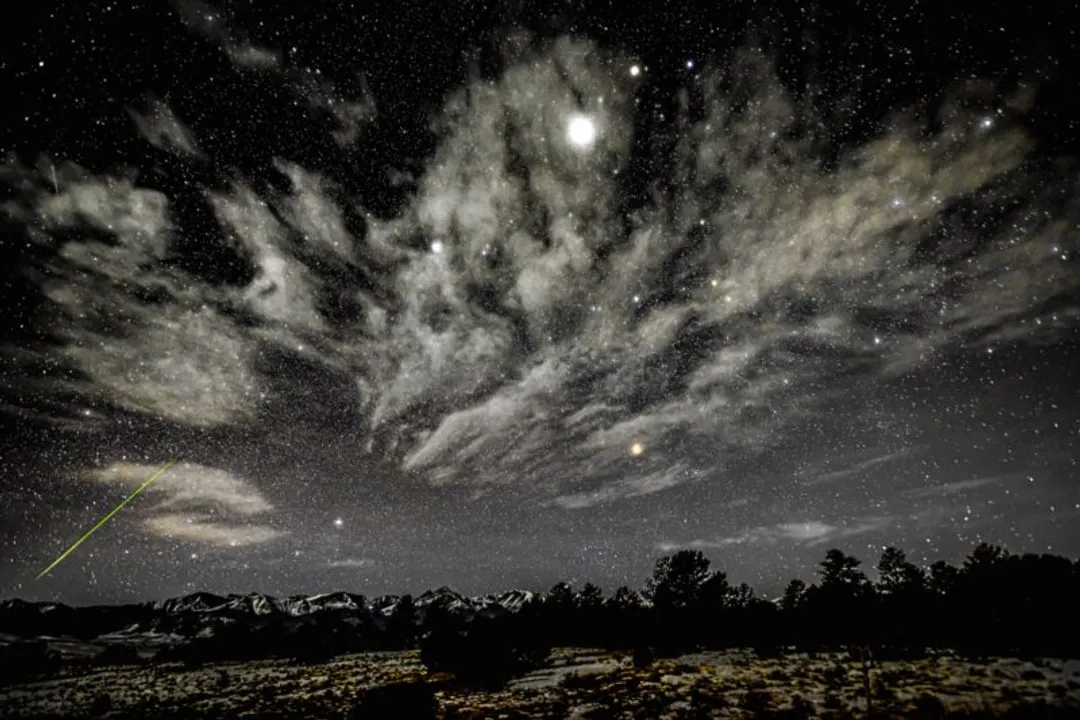
Achieving maximum light sensitivity in dark conditions is critical for seeing fainter meteors, especially when trying to establish accurate counts or appreciate subtle activity. This process requires the pupils to fully dilate, which is not instantaneous. Observers must commit to remaining in complete darkness, devoid of artificial light sources like white-light flashlights or phone screens, for a duration spanning 20 to 30 minutes to ensure their night vision is fully developed.
#Videos
Geminid Meteor Shower 2025: Viewing Guide - YouTube
Related Questions
What specific asteroid is the source of the debris stream for the Geminid meteor shower?What is the typical peak date window for the consistent reliability of the Geminid meteor shower?Why is viewing the Geminids after midnight often crucial for maximizing visible streaks?What specific viewing equipment should observers avoid using for meteor showers like the Geminids?What viewing position relative to the radiant point yields the most visually appealing Geminid meteors, often called Earth-grazers?How long should stargazers allow their eyes to adjust to complete darkness before counting meteors during the Geminid peak?Which specific map system is recommended for identifying viewing areas that minimize the impact of artificial light pollution?Which constellation hosts the radiant point from which the Geminid meteors appear to emerge?What practical preparation involving temperature and hydration should observers undertake for a stationary, cool December viewing session?Which California destination is frequently suggested for its preserved night sky quality for viewing the Geminids?What strategy do viewers in the Los Angeles region often employ to escape the urban light dome?