How long has the G-type main-sequence star known as the Sun been in its current phase?
Answer
About 4.6 billion years
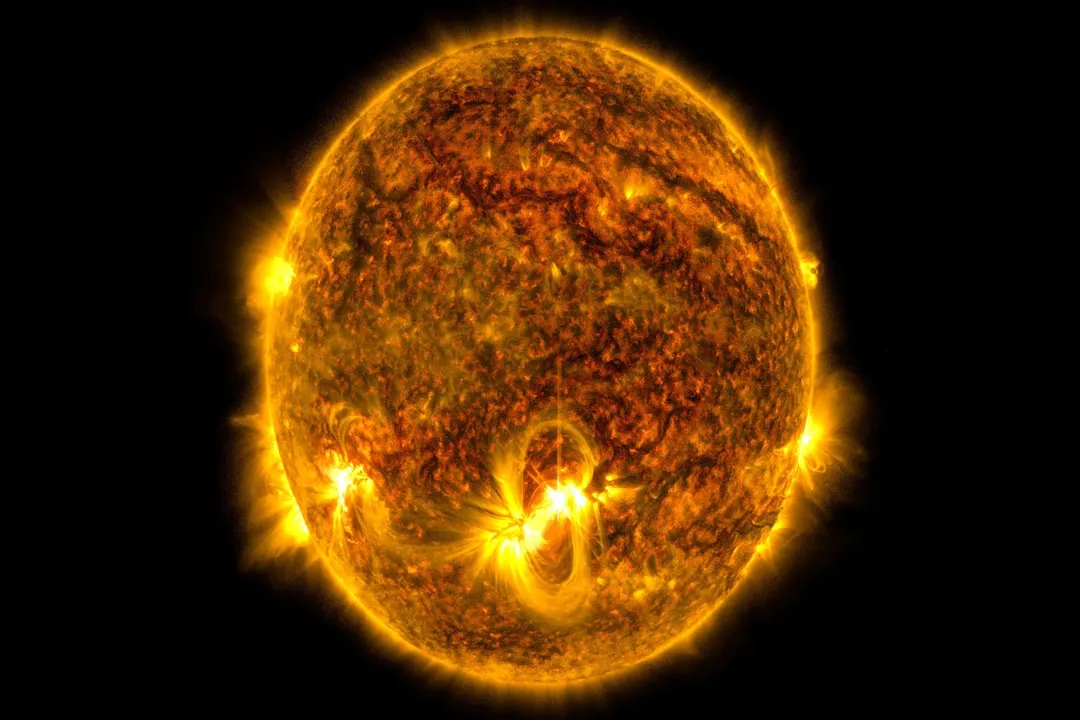
The Sun is specifically identified as a G-type main-sequence star, meaning it is currently in the longest phase of its existence where it steadily generates energy by converting hydrogen into helium in its core via the Proton-Proton Chain. The text provides a specific timeline for this ongoing phase. The Sun has already spent approximately 4.6 billion years in this state of hydrostatic equilibrium and is projected to continue this steady fuel consumption for an additional estimated 5 billion years before beginning its transition into later evolutionary stages.
Related Questions
What is the minimum mass required for an object to sustain core hydrogen fusion and be classified as a true star?What two opposing forces define the state of hydrostatic equilibrium in a star?Which primary nuclear reaction pathway is used by smaller stars like our Sun to fuse hydrogen into helium?What elements act as catalysts during the CNO Cycle for energy generation in massive stars?Approximately how long can it take for a photon created in the Sun's core to reach the photosphere?Why does the formation of iron in very massive stars halt the normal energy generation process?What is the energy source for a faint white dwarf after a low-mass star exhausts its hydrogen fuel?How long has the G-type main-sequence star known as the Sun been in its current phase?What approximate amount of hydrogen does the Sun convert into helium every second to sustain its output?What ability is fundamentally missing in brown dwarfs, preventing them from being classified as true stars?