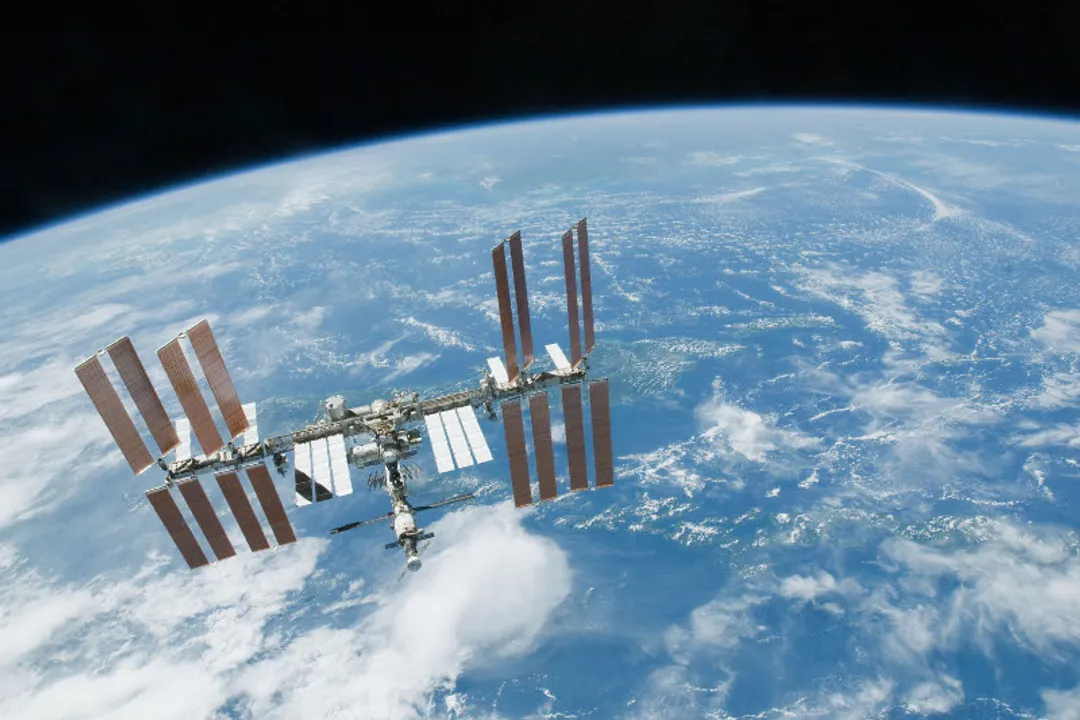
Why does the space surrounding the Earth appear black to an observer in orbit?
Answer
There are virtually no gas molecules to scatter incoming photons toward the observer.
Space appears black because it is a near-perfect vacuum; without particles to intercept and scatter sunlight or starlight toward the eye, light travels in a straight line from its source.
Related Questions
What color is the sky when astronauts look away from the planet in orbit?What is the scientific name for the phenomenon that makes Earth's sky blue from the ground?Why does the space surrounding the Earth appear black to an observer in orbit?Which light wavelengths are scattered most efficiently by tiny air molecules like nitrogen and oxygen?Where is the blue color visible to an astronaut viewing the Earth?What would the sky look like during the day if Earth had no atmosphere, similar to the Moon?What defines the astronaut's visual experience regarding light intensity in orbit?How does the brain interpret the blue atmospheric layer when viewed from orbit, as opposed to on Earth?What terrestrial visual phenomenon causes the brain to interpret the consistent blue sky as the default setting?If an astronaut on the International Space Station is in the Earth's shadow, what is the appearance of the sky?