Which pre-main-sequence phase is marked by strong stellar winds and bipolar outflows?
Answer
T Tauri phase
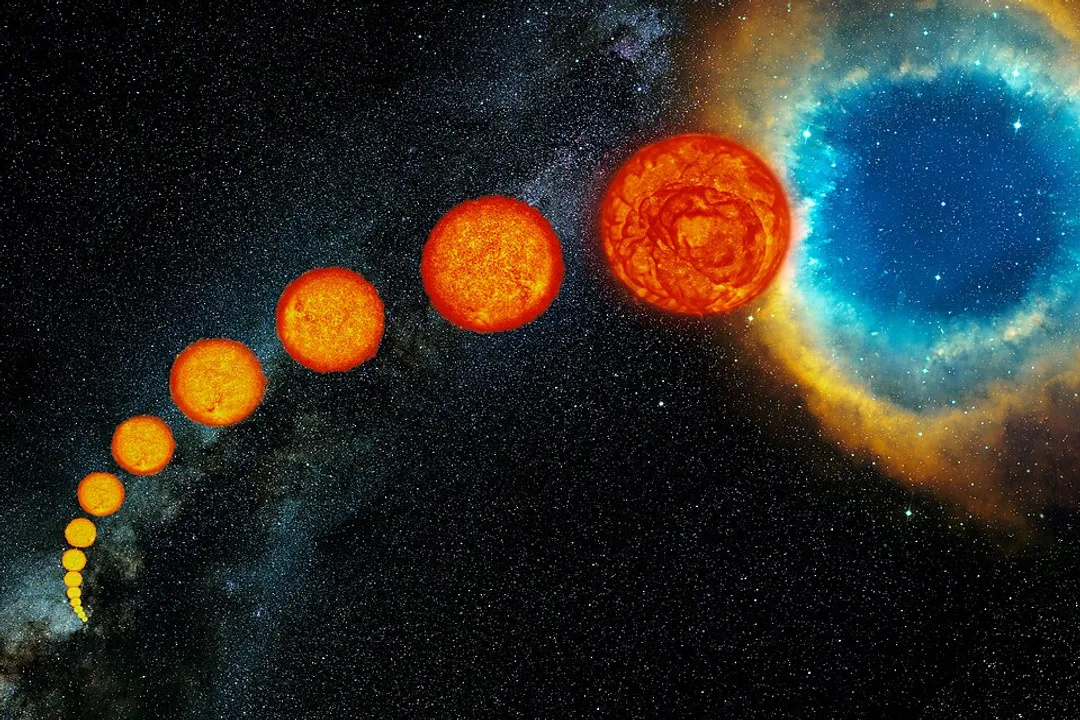
Before reaching the stable hydrogen-burning state, a contracting object like a solar-mass star passes through recognizable substages, including the T Tauri phase. This stage is characterized by energetic activity, specifically the generation of powerful stellar winds and the ejection of material along bipolar outflows. These winds play a functional role in the star's development by effectively sweeping away the thick envelope of remaining gas and dust that had cocooned the developing protostar, finally allowing visible light from the increasingly hot interior to escape into space.
Related Questions
What are the immense clouds of gas and dust where stars originate called?What critical factor determines the duration of a star's cosmic incubation period?What external event can trigger the initial fragmentation and implosion of a dense core?What is the name given to the early, contracting object formed as infall gas heats up?Approximately how long does the journey take for a one solar mass star to reach the main sequence?How much faster is the formation time for high-mass stars ($>8 M_{ ext{sun}}$) compared to solar-mass stars?Which pre-main-sequence phase is marked by strong stellar winds and bipolar outflows?What energy form is created when gravitational potential energy of infalling gas converts during collapse?What core condition must be met to achieve the sustained state of a main-sequence star?What fraction of the Sun's active life ($ ext{ extasciitilde}10$ Billion Years) is accounted for by its formation period ($ ext{ extasciitilde}50$ million years)?