Which observatory studies supernova remnants (SNRs) to understand explosion physics?
Answer
Chandra X-ray Observatory
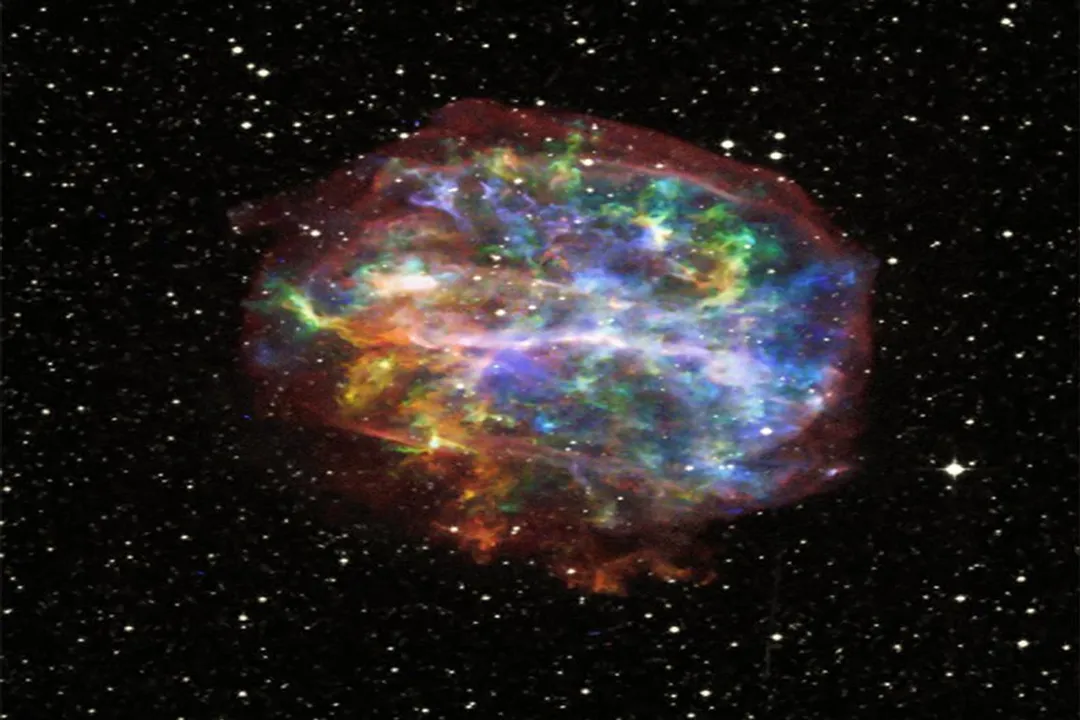
The violent death of a massive star through a Type II supernova results in the creation of vast, expanding clouds of ejected gas and dust known as supernova remnants (SNRs). Observatories are employed to study these remnants to decipher the intricate physics that governed the colossal explosion and the subsequent evolution of the high-speed material hurled into space. Specifically, the Chandra X-ray Observatory is mentioned as an instrument used to study these SNRs, often detecting the high-energy signatures associated with the energetic processes that took place during the stellar death event.
#Videos
The Evolution of Red Supergiants to Supernovae - YouTube
Related Questions
What is the final productive fusion stage before the iron core develops?What is the consequence of fusing iron in the stellar core?What value, known as the Chandrasekhar limit, defines the critical core mass?What specific repulsive force ultimately halts the catastrophic core collapse?What event immediately precedes the outward shockwave generation in a Type II supernova?What mechanism is responsible for re-energizing the stalled initial shockwave during a Type II supernova?What key feature characterizes the spectrum of a Type II supernova?During core collapse, from what approximate size does the iron core shrink in milliseconds?What fate might a star experience if its final inert core mass settles just under the Chandrasekhar limit?Which observatory studies supernova remnants (SNRs) to understand explosion physics?