What key feature characterizes the spectrum of a Type II supernova?
Answer
The presence of hydrogen lines.
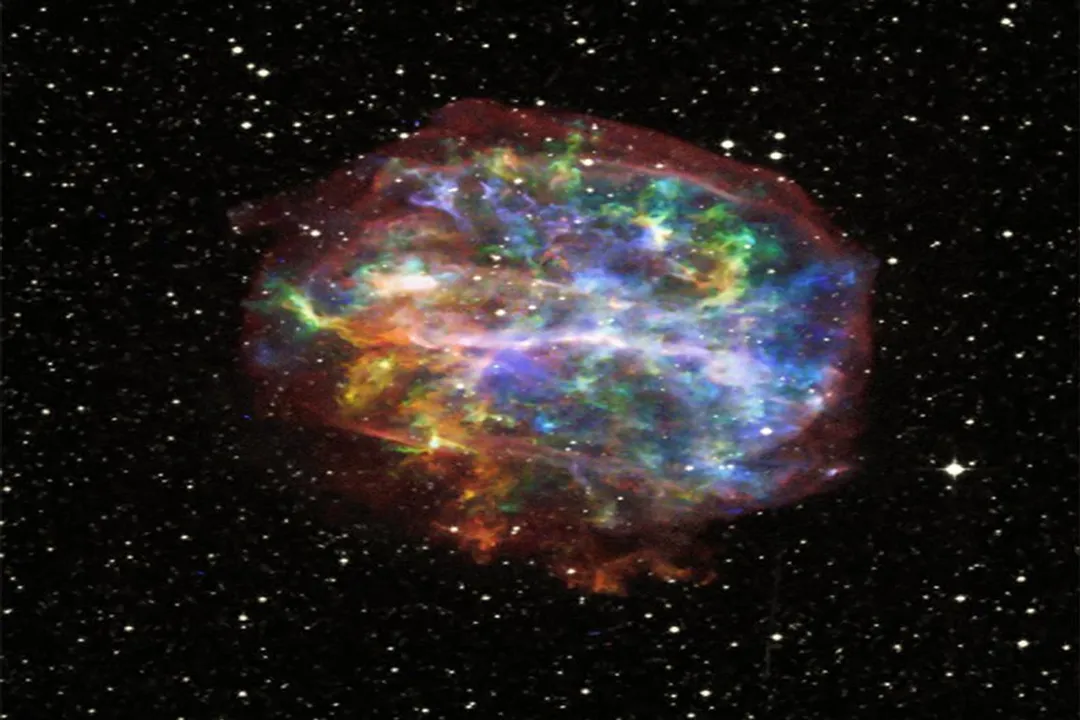
The classification of a supernova as Type II is specifically linked to its observable spectral signature. A Type II supernova exhibits the presence of hydrogen lines within its spectrum when observed by telescopes. This spectral feature is highly significant because it confirms that the dying star retained its outermost envelope of hydrogen until the very moment of the explosion. In contrast, Type Ia supernovae, which result from white dwarfs exceeding their limit in binary systems, typically lack hydrogen lines in their spectra, indicating that their hydrogen envelopes were lost prior to the catastrophic detonation.
#Videos
The Evolution of Red Supergiants to Supernovae - YouTube
Related Questions
What is the final productive fusion stage before the iron core develops?What is the consequence of fusing iron in the stellar core?What value, known as the Chandrasekhar limit, defines the critical core mass?What specific repulsive force ultimately halts the catastrophic core collapse?What event immediately precedes the outward shockwave generation in a Type II supernova?What mechanism is responsible for re-energizing the stalled initial shockwave during a Type II supernova?What key feature characterizes the spectrum of a Type II supernova?During core collapse, from what approximate size does the iron core shrink in milliseconds?What fate might a star experience if its final inert core mass settles just under the Chandrasekhar limit?Which observatory studies supernova remnants (SNRs) to understand explosion physics?