What unexpected observation regarding outer stars led to the dark matter conclusion?
Answer
The stars were moving too fast based on visible matter.
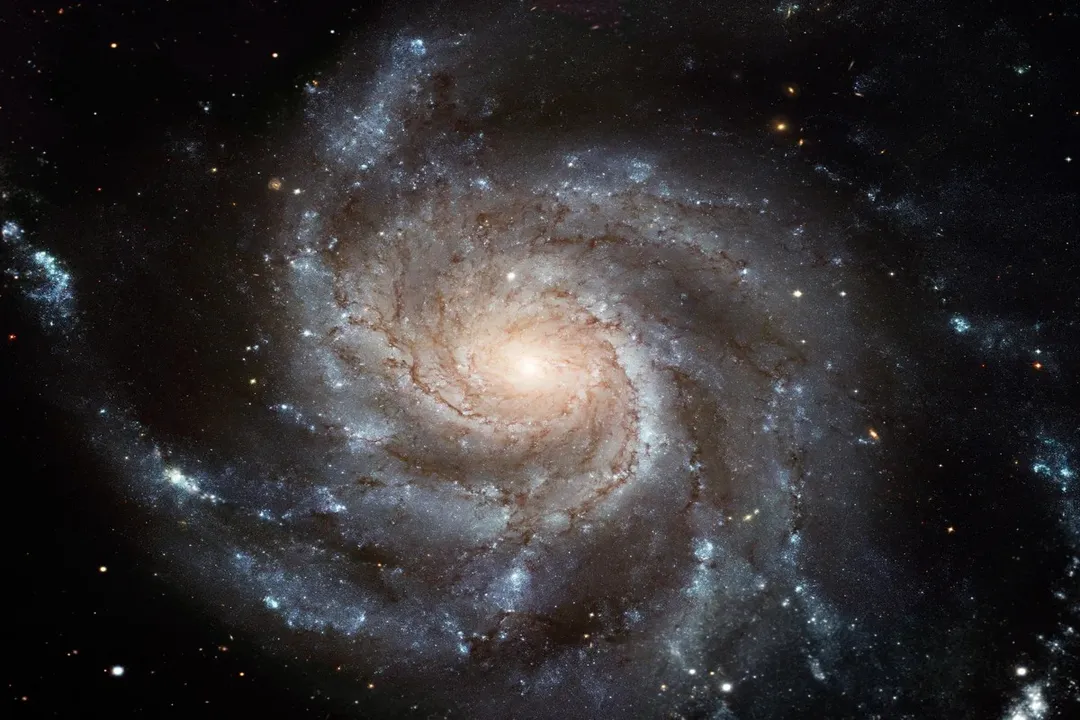
Astronomers observed the rotational speeds of stars and gas clouds in the outer regions of galaxies, far from the visible central bulge. When calculating the gravitational pull expected solely from the luminous matter—the light emitted by stars and gas visible through telescopes—the calculated attraction was insufficient to hold these objects in their measured orbits. The orbital velocity of these outer stars was significantly higher than predicted, meaning they possessed enough velocity to escape the visible galaxy's gravitational pull, yet they remained tightly bound, pointing to an unseen mass component.
#Videos
What Force Binds A Galaxy Together? - Physics Frontier - YouTube
Related Questions
What fundamental force acts as the cosmic glue holding stars, gas, and dust in galaxies?If gravity suddenly vanished, what immediate trajectory would stars follow within a galaxy?What dictates the precise velocity tuning for a star located far from the galactic center?For a system to remain gravitationally bound, how must the total kinetic energy compare to gravitational potential energy?What unexpected observation regarding outer stars led to the dark matter conclusion?Approximately what mass fraction of a large galaxy's total mass is estimated to be dark matter?Through what primary mechanism is the presence of dark matter inferred by astronomers?In the tetherball analogy for a galaxy's orbit, what acts as the distributed gravitational field 'string'?What structures represent the largest known gravitationally bound structures in the universe mentioned?How did dark matter likely initiate the formation of galaxies in the early universe?