Approximately what mass fraction of a large galaxy's total mass is estimated to be dark matter?
Answer
Around 80% or more
The discrepancy between the mass inferred from orbital dynamics and the mass visible via light emission led to the crucial realization that the majority of a galaxy's mass is invisible. For large galaxies, this unseen substance, dark matter, is estimated to contribute the vast majority of the gravitational influence, often cited as accounting for around 80% or more of the total mass. Conversely, the stars and visible gas components only account for approximately 10% to 20% of the total mass budget.
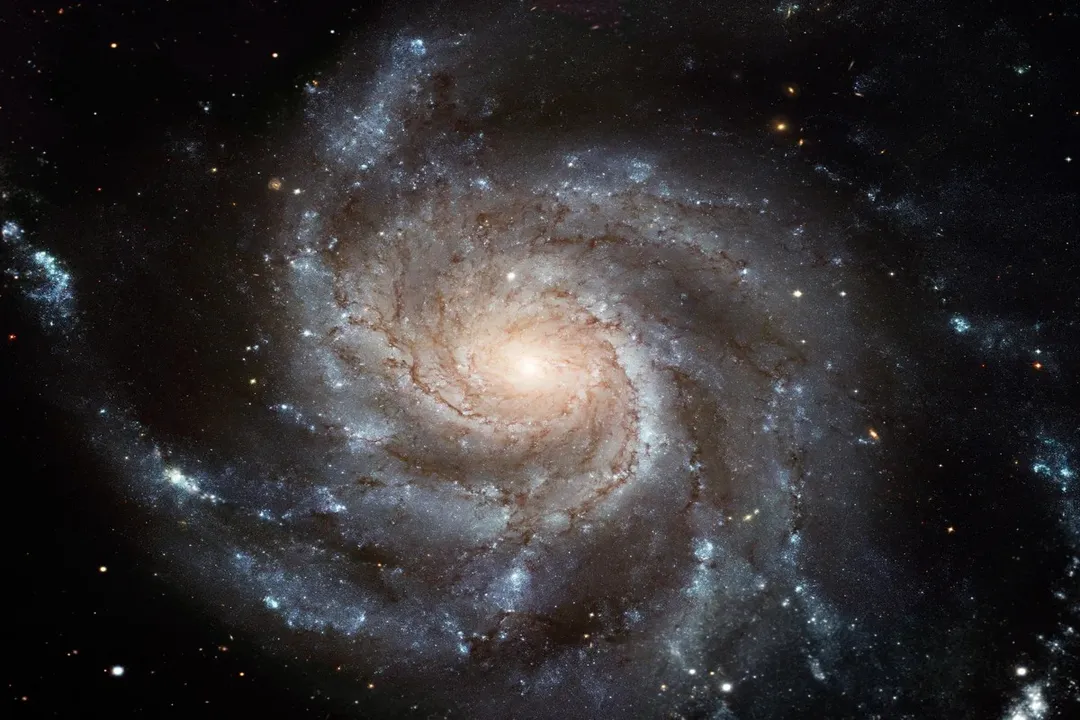
#Videos
What Force Binds A Galaxy Together? - Physics Frontier - YouTube
Related Questions
What fundamental force acts as the cosmic glue holding stars, gas, and dust in galaxies?If gravity suddenly vanished, what immediate trajectory would stars follow within a galaxy?What dictates the precise velocity tuning for a star located far from the galactic center?For a system to remain gravitationally bound, how must the total kinetic energy compare to gravitational potential energy?What unexpected observation regarding outer stars led to the dark matter conclusion?Approximately what mass fraction of a large galaxy's total mass is estimated to be dark matter?Through what primary mechanism is the presence of dark matter inferred by astronomers?In the tetherball analogy for a galaxy's orbit, what acts as the distributed gravitational field 'string'?What structures represent the largest known gravitationally bound structures in the universe mentioned?How did dark matter likely initiate the formation of galaxies in the early universe?