What materials primarily formed the terrestrial planets in the hotter inner region of the disk?
Answer
Rock and metal silicates
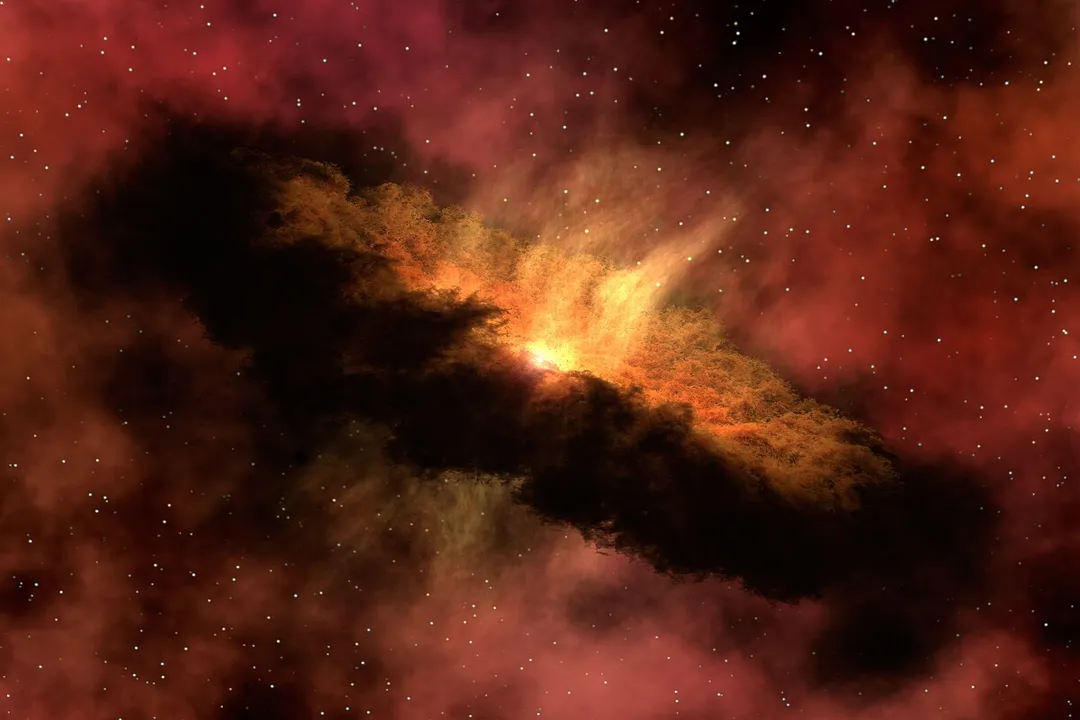
The temperature gradient within the protoplanetary disk dictated where different types of material could condense into solid form. In the inner regions, close to the intensely hot protosun, temperatures were too high for substances with low melting points to remain solid. Only materials capable of withstanding extreme heat could condense into building blocks. Consequently, the inner disk allowed for the condensation of refractory materials, primarily rock, silicates, and metals. These solid particles then accreted over time to form the small, dense, rocky terrestrial planets, such as Mercury, Venus, Earth, and Mars.
#Videos
The Mind-Blowing Link Between Supernova and Our Solar System
Related Questions
When did astronomers estimate the solar nebula's pivotal formation event occurred?What characterized the solar nebula before the violent collapse began?What catastrophic event is the prevailing consensus for triggering the solar nebula's collapse?How did the supernova shockwave primarily act to initiate the system's formation?What physical principle dictated the increased spin rate as the solar nebula contracted inward?What dense, hot core formed from the majority of the infalling material at the center of the nebula?What structure resulted from the inward fall and outward spin in the material orbiting the central condensing mass?What materials primarily formed the terrestrial planets in the hotter inner region of the disk?Beyond which boundary could lighter, volatile materials condense into solid ice grains necessary for giant planets?What primitive space rocks are considered time capsules containing unaltered building blocks from the solar nebula?