What is the primary trade-off regarding the size of the telescope's mirror?
Answer
It is limited by the size of the rocket fairing
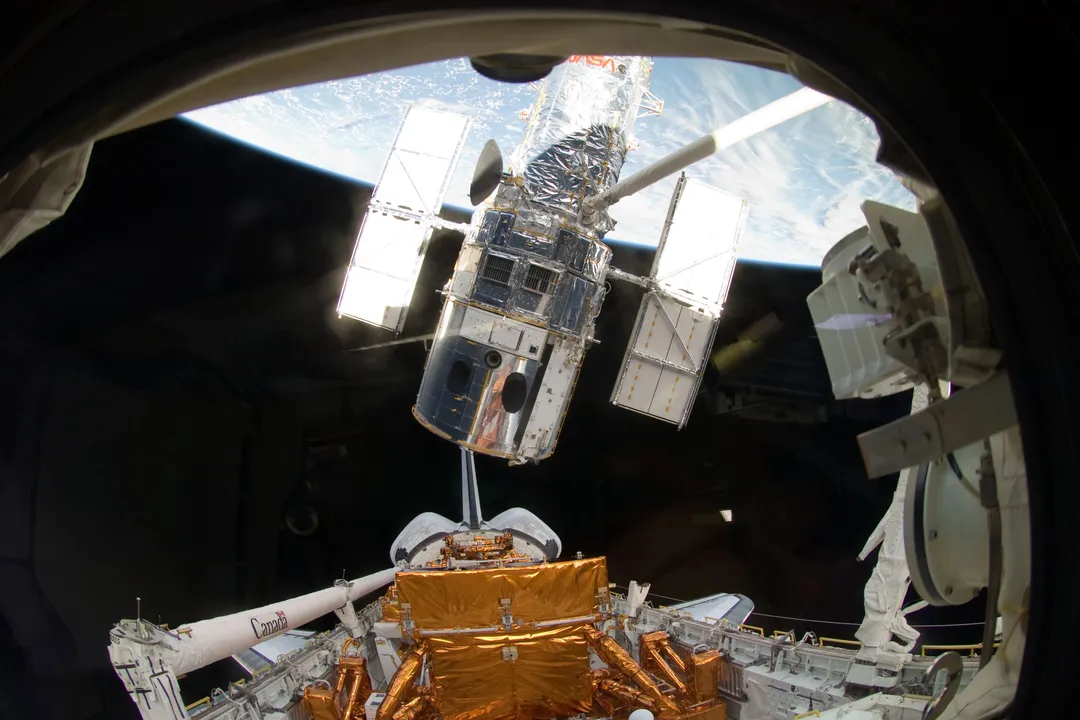
Ground-based observatories can utilize massive mirror arrays, sometimes exceeding 30 meters in diameter, because they are constructed on solid ground. In contrast, a space-based telescope must fit inside the fairing of a rocket for launch. This imposes a strict physical limit on the size of the primary mirror. The trade-off is that space-based systems prioritize the stability of a vacuum environment and the ability to access specific wavelengths of light, even if they must settle for a smaller light-gathering surface area compared to ground arrays.
Related Questions
What is the primary limitation ground-based observatories face when capturing light?Which specific wavelengths of light are largely blocked by the atmosphere?What specific value does the Hubble Constant measure in cosmology?How do Cepheid variables assist astronomers in measuring distance?What was the strategic reason for making Hubble a serviceable observatory?What major modification was performed on the telescope during the 1993 mission?What is the primary trade-off regarding the size of the telescope's mirror?Why does looking at distant galaxies act like a time machine?What is a key benefit of the modular instrument design used on the telescope?What was a significant outcome of the Deep Field imaging project?