What was the main purpose of the Hubble Space Telescope when it was launched into orbit?
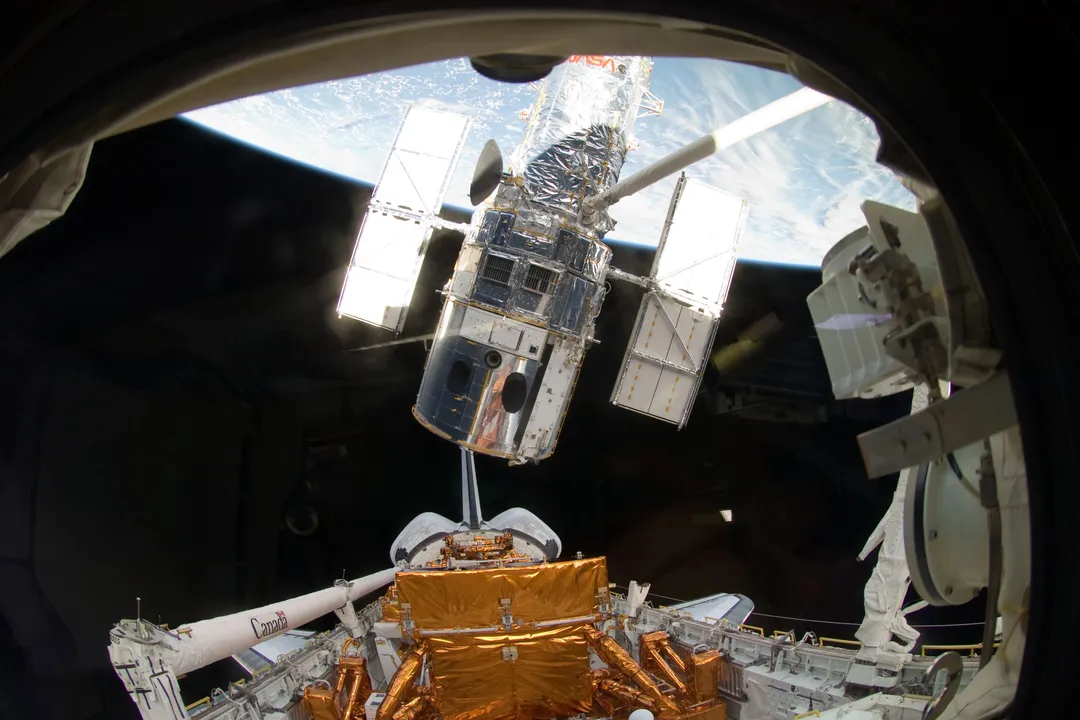
The launch of the Hubble Space Telescope in April 1990 marked a fundamental shift in how humanity observes the cosmos. [2][10] Before this moment, astronomers were perpetually limited by the physical constraints of Earth-based observatories. While ground telescopes can be enormous and are relatively easy to repair, they are forced to peer through the thick, turbulent, and light-absorbing layers of the atmosphere. [1][4] The primary motivation for placing a telescope into orbit was to escape this chaotic "filter," allowing scientists to achieve a clarity of vision that was previously impossible. [2][9]
# Atmospheric Distortion
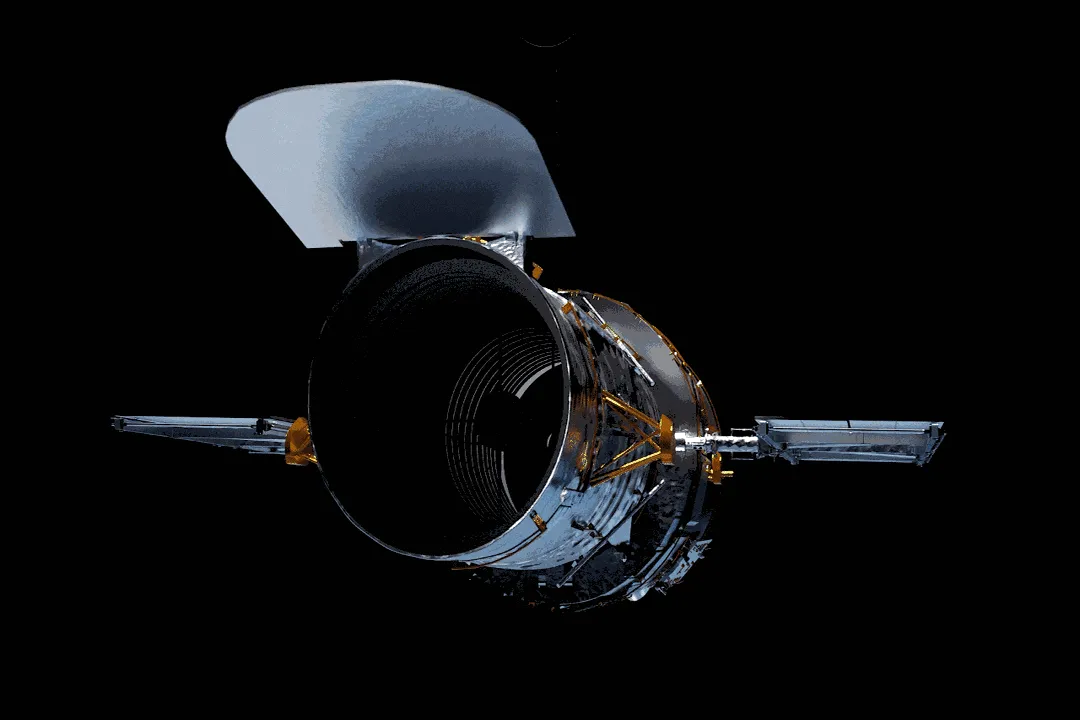
The atmosphere is a chaotic medium for light to pass through. Even on a clear, dark night, the air is in constant motion, with varying temperatures and densities causing starlight to bend and twinkle. [5] For an astronomer attempting to resolve fine details on a distant galaxy, this turbulence—known as "seeing" in the scientific community—acts like looking at an object at the bottom of a swimming pool. [1] The image becomes jittery and blurred, preventing telescopes from reaching their theoretical maximum resolution. [7]
By positioning Hubble above this layer, the telescope operates in a vacuum. [2] It does not have to contend with the shifting pockets of air that plague land-based counterparts. This lack of atmospheric turbulence allows the telescope to produce images of unprecedented sharpness. [8] When researchers compared the capabilities of ground-based observations to the early results from Hubble, the difference was stark; the space-based images revealed structural details in nebulae and galaxies that were entirely washed out or smoothed over by the effects of the atmosphere. [9]
# Spectral Access
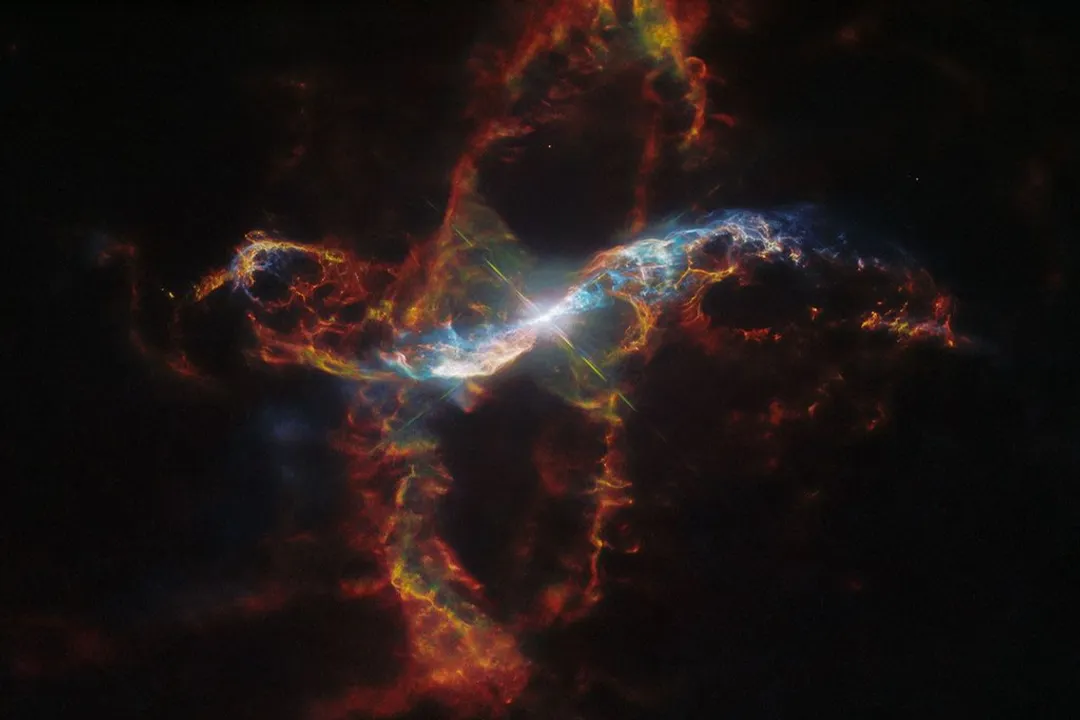
Beyond merely sharpening images, a crucial goal of the mission was to open windows into wavelengths of light that the atmosphere blocks entirely. [1][5] The Earth’s atmosphere is highly selective, absorbing most ultraviolet and infrared radiation before it can reach the surface. [4] These wavelengths are vital for understanding the life cycles of stars and the composition of distant celestial objects. [5]
Ultraviolet light, for instance, provides data on hot, energetic stars and the process of star formation. [5] Infrared light can penetrate through dense clouds of dust that otherwise hide the centers of galaxies. [5] By placing the telescope in orbit, NASA and its partners gained access to these hidden portions of the electromagnetic spectrum. [2] This allowed for a transition from simple visible-light astronomy to a broader, more nuanced study of the universe’s composition. [8]
# Universal Expansion
One of the most ambitious scientific goals for the telescope was to determine the precise rate at which the universe is expanding. [1] This value, known as the Hubble Constant, is a key component in calculating the age and size of the universe. [5] Before the telescope arrived in orbit, estimates for the age of the universe varied wildly, sometimes by billions of years, because measurements of distances to remote galaxies were imprecise. [7]
Hubble was designed to serve as a high-precision ruler for the cosmos. [9] By observing specific types of variable stars called Cepheid variables—which act as "standard candles" because their luminosity is tied to their pulsation period—scientists could calculate distances to galaxies with far greater accuracy than ever before. [5] Refining the Hubble Constant was not just an exercise in measurement; it was a way to test the fundamental models of cosmology. [2][7] The telescope’s ability to resolve these stars at vast distances turned the debate over the age of the universe into a high-precision science. [7]
# Maintenance Strategy
The decision to place the telescope in orbit rather than launching it and letting it operate autonomously without intervention was a significant strategic choice. [6] Unlike deep-space probes that are sent on one-way trips, Hubble was designed to be serviceable by astronauts using the Space Shuttle. [2] This decision was driven by the realization that such a complex, expensive instrument would likely require updates, repairs, or the replacement of instruments as technology advanced. [6][8]
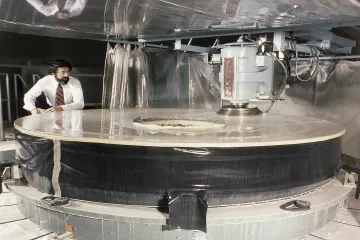
This operational model fundamentally changed the lifecycle of space observatories. It created a paradigm where the mission could evolve. [7] While the initial 1990 deployment was marred by a spherical aberration in the primary mirror, the design allowed for a corrective optics package to be installed in 1993. [2] This fix transformed the telescope from a crippled asset into the premier astronomical tool of the era. [7] This servicing model proved that hardware in orbit was not a fixed, static entity, but something that could be improved over decades. [8]
# Comparison Analysis
To understand why the mission required such specific engineering, it is helpful to contrast ground-based systems with space-based ones.
| Feature | Ground-Based Observatories | Hubble Space Telescope |
|---|---|---|
| Primary Limitation | Atmospheric turbulence | Orbital maintenance costs |
| Wavelength Range | Visible, Radio, some IR | UV, Visible, near-IR |
| Mirror Size | Can be very large (up to 30m+) | Limited by rocket fairing size (2.4m) |
| Repair/Upgrades | Relatively easy | Requires shuttle/mission access |
| Image Stability | Varies with air conditions | Consistent and stable |
This table highlights the trade-off. Ground observatories can utilize massive mirror arrays because they do not need to fit inside a launch fairing, but they always fight the atmosphere. [6] Hubble accepted a smaller mirror size in exchange for the stability of a vacuum environment, prioritizing image quality and spectral breadth over raw light-gathering surface area. [4][9]
# The Service Benefit
A frequently overlooked aspect of the mission’s original purpose was how it would force the development of specialized space-servicing technology. [2] The requirement that Hubble be maintained by humans in orbit necessitated the invention of complex tools, techniques for EVA (Extravehicular Activity), and modular instrument design. [8]
This was not merely a logistical necessity but a strategic advantage. It meant that the scientific capabilities of the telescope were not locked in at the time of launch. When newer cameras or spectrographs were developed, they could be swapped in to replace older models. [7] This essentially allowed the mission to "age in reverse," becoming more capable as the years progressed, rather than becoming obsolete. [8] The lesson learned here—that modularity is better than redundancy—has been applied to subsequent orbital infrastructure projects. [6]

# Looking Backward
The telescope’s ability to "see" further, both in distance and time, fundamentally relies on the speed of light. Because light takes time to travel across the vast reaches of space, looking at objects millions of light-years away is effectively looking back into the history of the universe. [1] By providing clear, high-resolution views of these distant objects, the telescope acts as a time machine. [9]
Scientists realized that if they could look far enough, they could observe the universe in its infancy. [1] This objective required not just a large mirror, but the stability to stare at the same patch of sky for days on end to collect faint, ancient photons. [4][5] The ability to hold a steady gaze—a capability enhanced by the telescope's precise pointing control system—was just as important as the mirror itself. [2] This capability allowed for the creation of the famous "Deep Field" images, which provided a census of galaxies in the early universe, confirming that the cosmos looked very different in the past than it does today. [5][9]
Related Questions
#Citations
About Hubble
Hubble Space Telescope
What was the significance of the Hubble Space Telescope ...
Hubble Space Telescope | NIST
What was the reason for launching the Hubble Telescope ...
Celebrating 35 Years of Discovery: The Hubble Space ...
History: How Hubble Came About
Hubble Space Telescope: New Views of the Universe
NASA Launches the Hubble Space Telescope | History