What is a likely consequence for our solar system's orbital path during the merger?
Answer
Its position relative to the new galaxy's center could be significantly altered
While direct collision is unlikely, the gravitational field of the incoming galaxy will perturb the orbits of stars. The Sun's orbit around the supermassive black hole might be completely redefined, sending it farther out or closer to the core.
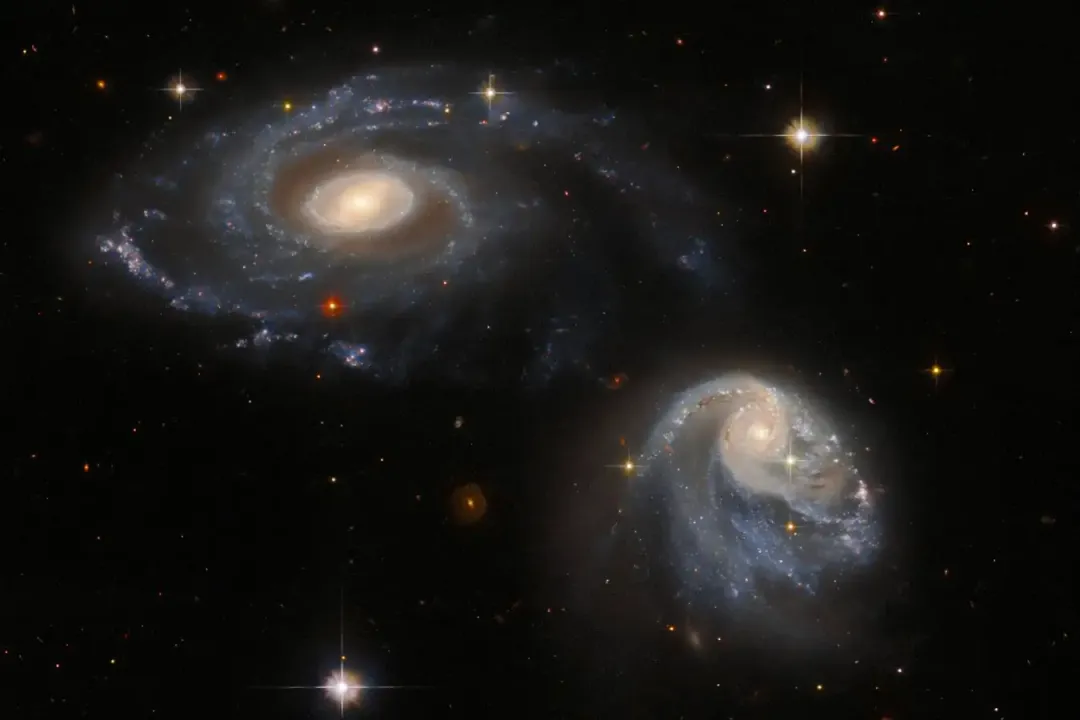
#Videos
How Would We Survive If the Milky Way Collided with Andromeda?
Related Questions
What is the primary physical outcome regarding individual stars during the Milky Way-Andromeda merger?At what approximate speed is the Milky Way approaching the Andromeda galaxy?What is the first major observable event expected during the galactic approach phase?Which component of the galaxies interacts much more frequently, often triggering massive star formation?What is the predicted final configuration of the merged Milky Way and Andromeda system?Which galaxy's gravitational influence will dominate the mechanics of the resulting merged structure?What is a likely consequence for our solar system's orbital path during the merger?According to the provided timeline comparison, which event poses a more near-term existential threat to Earth's surface habitability?Why would the light and heat from the merging stars not pose a significant thermal threat to Earth?What is the average separation between stars in our solar neighborhood compared to their physical size?If the Sun were the size of a grain of sand, how far away would the nearest star (another grain of sand) be?What is the approximate initial distance between the Milky Way and the Andromeda galaxy?