What evidence points toward later Martian epochs when surface water was likely highly saline?
Answer
The abundance of hydrated sulfate salts
Sulfate salts are left behind when water evaporates. Their widespread presence suggests that later surface water often had a high salt content (brine), which lowers the freezing point, allowing liquid to persist briefly under colder conditions.
Related Questions
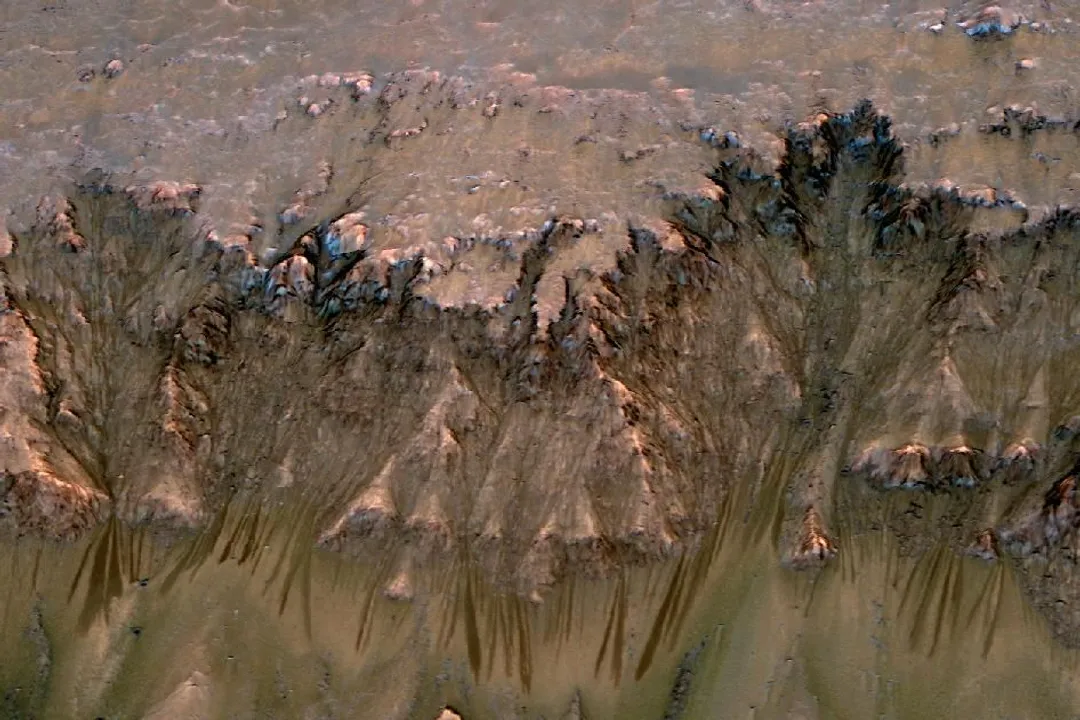
Which Martian landform feature suggests sustained precipitation or runoff over geological timescales?What characteristic of the water environment is strongly indicated by the presence of Martian clays (phyllosilicates)?What evidence points toward later Martian epochs when surface water was likely highly saline?Where is a significant fraction of Mars's original water supply currently confirmed to exist?What defines the modern, transient liquid water features known as Recurring Slope Lineae (RSLs)?How does the scale and nature of Martian outflow channels compare to major terrestrial flood features?What critical geological event is implied to have led to the surface pressure dropping below the triple point of water on Mars?Where are the Martian valley networks, indicative of slow carving, frequently located?What contrast in water chemistry is implied when comparing early clay deposits versus widespread later sulfate deposits?What does the sheer volume of ancient water required to carve large features suggest about the early Martian climate?