What event typically causes a star like our Sun to swell up and become much brighter late in its life cycle?
Answer
It exhausts its core hydrogen, leading to expansion as a red giant.
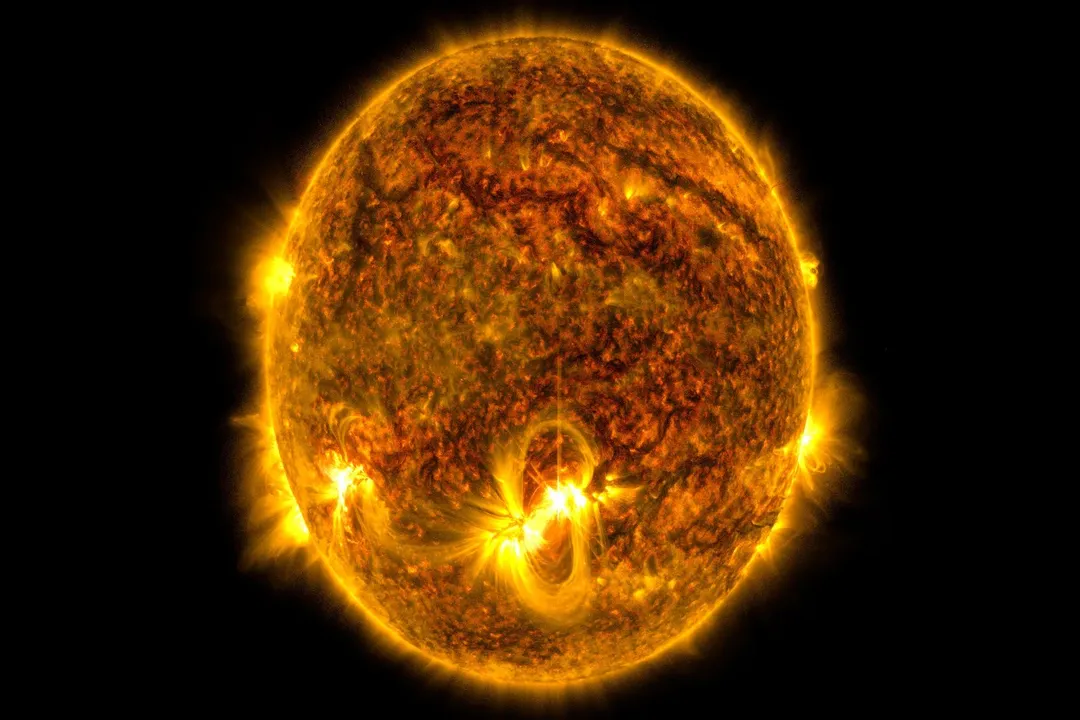
When a star shifts its life cycle after exhausting core hydrogen, it often expands dramatically, increasing its size and significantly inflating its luminosity, as seen when the Sun becomes a red giant.
#Videos
STAR BRIGHTNESS EXPLAINED - YouTube
What Determines the Brightness & Size of Stars? - YouTube
Related Questions
What three fundamental properties determine a star's apparent brightness as observed from Earth?In the precise, modern astronomical magnitude system, what relationship exists between the magnitude number and the object's brightness?What is the approximate apparent magnitude given for our own Sun?What concept differentiates apparent magnitude from absolute magnitude?Which factor is usually the single biggest determinant of which star wins the apparent brightness contest visible from Earth?Why does Rigel, a Blue Supergiant, manage to rank highly in apparent brightness despite being 860 light-years away?What physical aspects of a star determine its absolute brightness, known as luminosity?What event typically causes a star like our Sun to swell up and become much brighter late in its life cycle?What optical phenomenon causes a very bright star to visually appear larger than a dimmer neighbor?If a bright star appears distinctly orange or red, what is the most likely reason for its high apparent brightness?How much larger is the diameter of the red supergiant Betelgeuse compared to the Sun?According to the historical magnitude scale, what did a sixth magnitude star represent?