What causes the characteristic dark absorption lines seen in a star's spectrum?
Answer
Cooler gases in the star's outer atmosphere absorbing specific wavelengths
When a star's light is spread out by a spectrograph, it shows a continuous color band interrupted by dark lines known as absorption lines. These lines are created when light from the hotter interior passes through cooler gases situated in the star's outer atmosphere. These cooler gases absorb light at specific, unique wavelengths corresponding to the elemental composition of that gas (like hydrogen or helium), leaving behind a precise 'fingerprint' that astronomers use as a fixed reference point for measurement.
#Videos
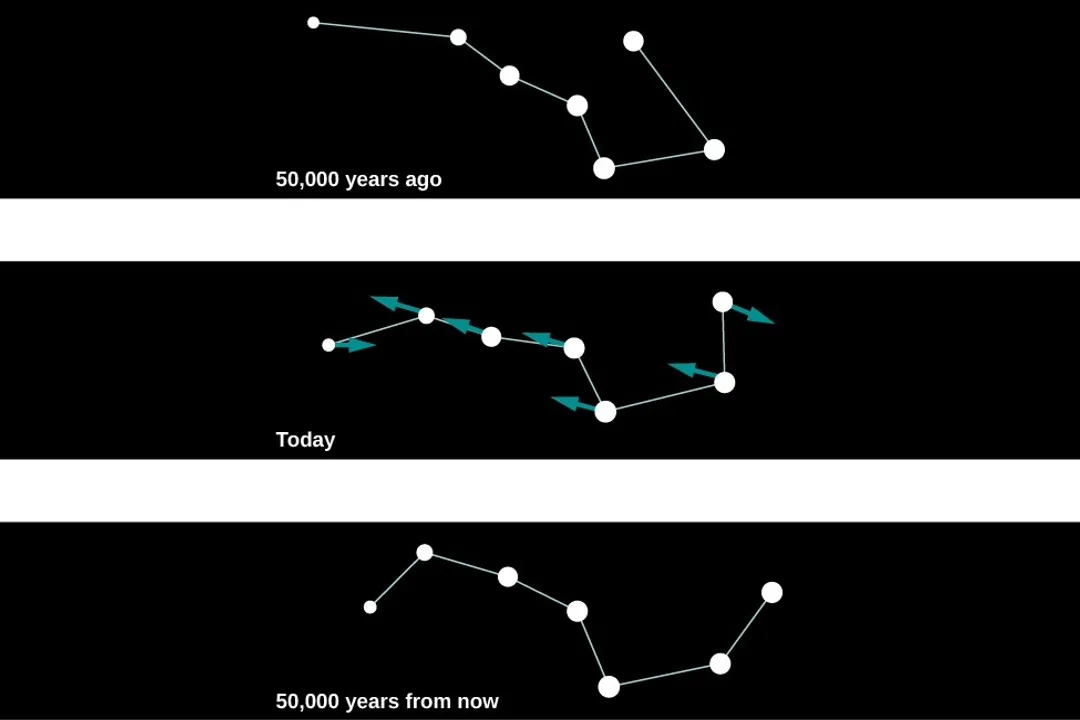
How Fast Do Stars Move Due To Proper Motion? - Physics Frontier
Related Questions
What physical principle allows analysis of light to determine stellar speed?What phenomenon describes light shifting toward the redder, longer wavelengths from a distant star?What is the formal term for the speed measured along a star's line of sight?What causes the characteristic dark absorption lines seen in a star's spectrum?What motion component does the Doppler measurement technique primarily fail to register on its own?How is the transverse velocity component, or proper motion, determined?Which theorem is utilized to combine radial velocity ($v_r$) and transverse velocity ($v_t$) for total speed?What happens to a star's light wavelengths when it is moving toward our planet?What is the reference frame for the radial velocity measured for a distant star?What provides the necessary fixed reference point for measuring the fractional spectral shift?