What allows complex life on Earth to evolve, according to hypotheses about Jupiter's protective work?
Answer
The fact that the rate of bombardment over four billion years was kept tolerable
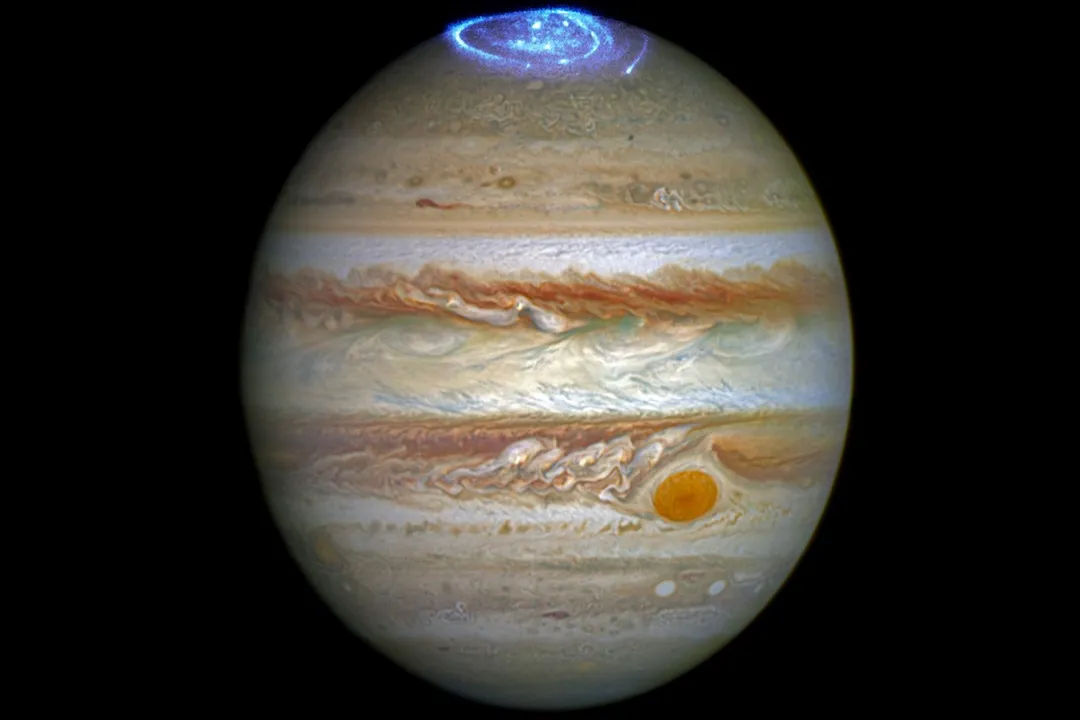
The existence of complex life on Earth is hypothesized to be directly contingent upon Jupiter's long-term guardianship. The early solar system was far more chaotic, characterized by numerous impacts. Jupiter's consistent action over billions of years—sweeping away hazardous objects—kept the frequency of large-scale impacts low enough for life to have the necessary continuous, relatively calm conditions required to evolve beyond simple forms. This stability, coupled with a steady solar energy input, is presented as a testament to Jupiter's role as a system stabilizer.
#Videos
What If Jupiter Never Existed? - YouTube
What If Jupiter Never Existed? - YouTube
Related Questions
How much more massive is Jupiter than all other planets combined?What is Jupiter's primary role described as when dealing with hazardous debris?What long-term orbital scenario might Earth face without Jupiter's gravitational guidance?What potentially catastrophic fate could Mercury face if Jupiter were removed?What is Jupiter largely responsible for creating regarding the Asteroid Belt configuration?What effect do Jupiter's strong resonances act as, concerning Mars and Earth's orbital periods?If Jupiter were removed, what change would occur to the objects in the Asteroid Belt?What concept does Jupiter's mass subtly affect the center of mass of the entire solar system around?What allows complex life on Earth to evolve, according to hypotheses about Jupiter's protective work?Which planet's removal causes less drastic repercussions for Earth's safety profile compared to Jupiter's?