Is Jupiter necessary for life on Earth?
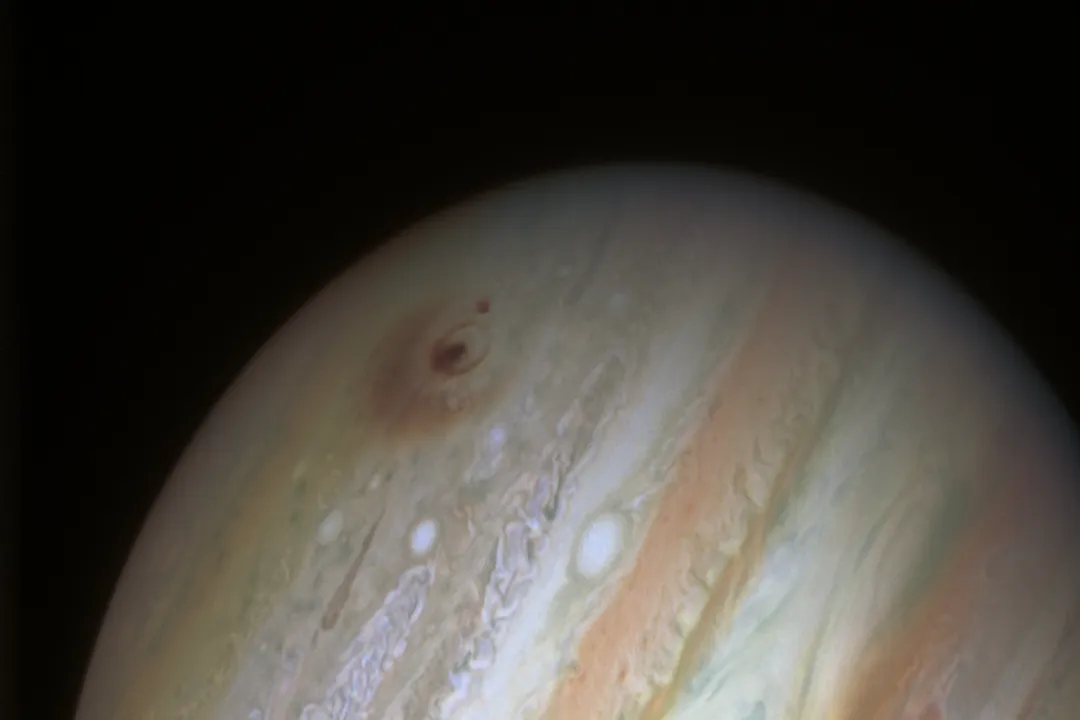
The question of Jupiter's role in our existence is far from settled, presenting a fascinating paradox where the solar system's giant might be both a shield and, at times, a subtle disruptor. [9] This massive world, holding more than twice the mass of every other planet in our solar system combined, exerts a gravitational influence that shapes everything from the asteroid belt to the delivery of impactors to our own home world. [3][10] To gauge its necessity for life, we must look at two distinct eras: the formation period and the subsequent billion-year history of stable evolution. [1][9]
# Gravitational Dominance
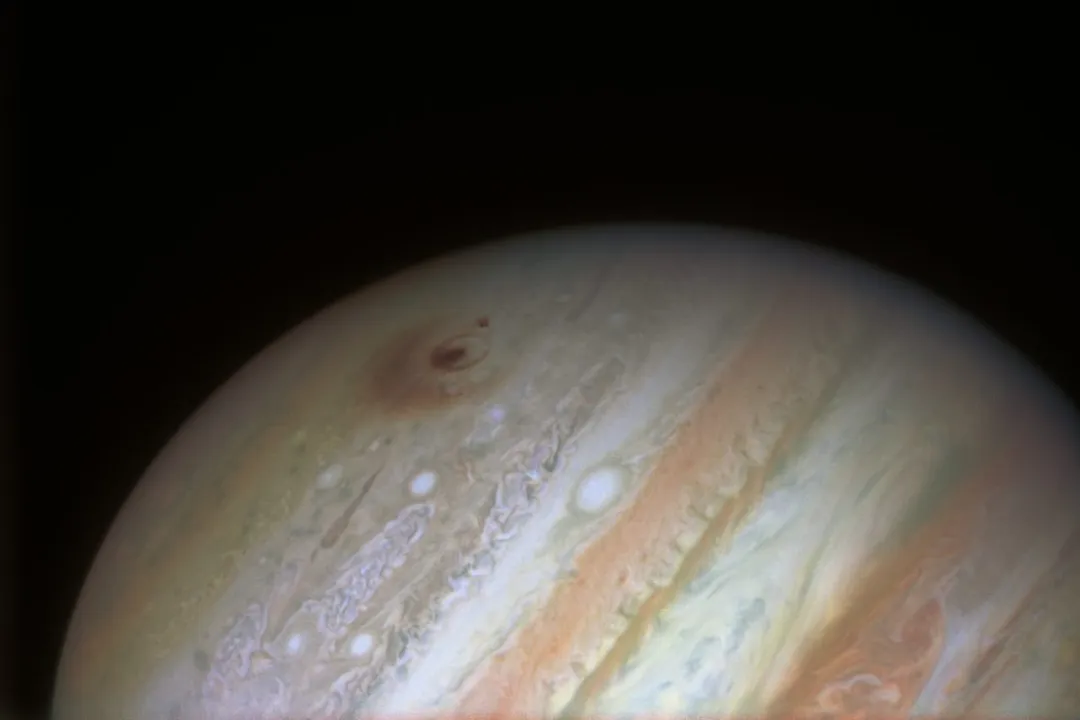
Jupiter is an undeniable force in the solar system's architecture. [10] Its sheer size dictates the movement of countless smaller bodies. [3] For a long time, the accepted view framed Jupiter as Earth’s steadfast protector, a benevolent giant sweeping the outer solar system clear of potentially catastrophic objects. [5][4] Think of it as the solar system's bouncer, whose massive presence deflects or captures long-period comets and asteroids that might otherwise be on a collision course with the terrestrial planets. [2] Without this massive gravitational presence, the orbital mechanics of the entire system would be thrown into disarray. [10]
The idea is simple: Jupiter's gravity pulls stray bodies out of the main asteroid belt or scatters them into the far reaches of the solar system, thereby reducing the long-term average rate of significant impacts on Earth. [1][4] If you picture the inner solar system as a peaceful courtyard, Jupiter acts as a massive guard dog patrolling the periphery, occasionally snatching a wandering threat. [4] This protective effect is often cited as a critical ingredient that allowed life on Earth to evolve past the early bombardment stage without constant sterilization events. [1]
# Formation Delivery System
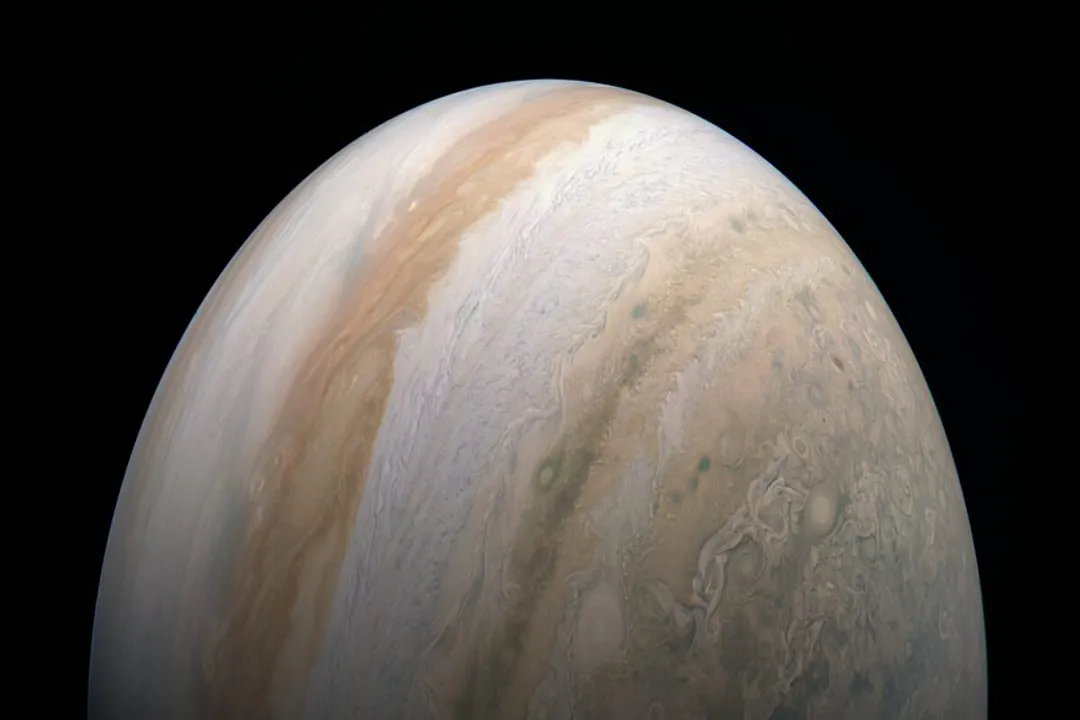
However, the narrative shifts dramatically when we look back to the very beginning of the solar system, roughly $4.6$ billion years ago. [8] Here, Jupiter’s role might flip from protector to supplier. Scientists debate whether Jupiter's gravitational influence was necessary to bring the building blocks of life to our planet. [8] During the chaotic early history of planet formation, Jupiter's powerful gravity may have been instrumental in deflecting icy comets and asteroids inward toward the young Earth. [8]
These specific objects carried vital volatile compounds, most importantly water, along with the organic molecules necessary for biology to begin its complex chemistry. [8] In this scenario, Jupiter wasn't just clearing paths; it was actively participating in the delivery service. A solar system without Jupiter's early migratory influence might have resulted in a much drier, less chemically diverse early Earth, potentially stalling abiogenesis before it even got started. [8] We can observe the current distribution of mass today: Jupiter alone accounts for over $90%$ of the mass of all planets combined. [3] Imagine removing that mass; the resulting orbital instability would fundamentally alter the distribution of planetesimals that eventually formed the rocky inner worlds. [10]
# Complexity and Contradiction
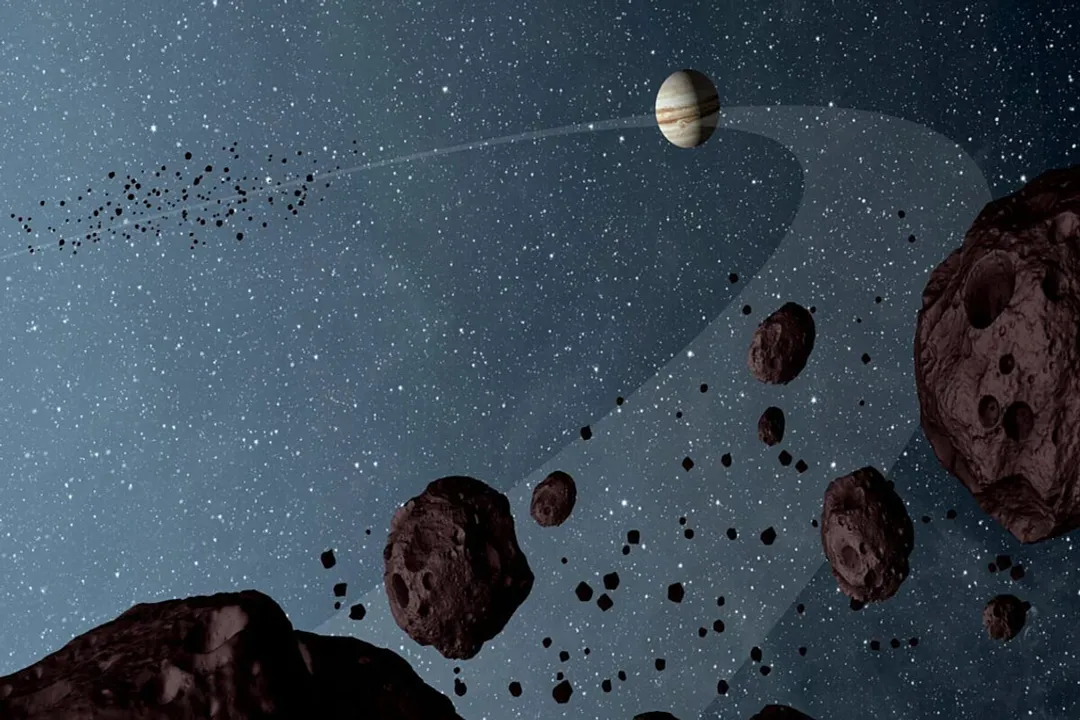
The nuanced reality is that Jupiter’s influence is not uniformly beneficial across all timescales. [9] While it certainly mitigates some impacts, its gravitational influence also generates others. [4] Research has indicated that Jupiter’s current orbital position may, counterintuitively, lead to a higher rate of impactors reaching Earth compared to a scenario where Jupiter was absent entirely. [9] This suggests that the stability of the inner solar system is less about sheer removal and more about the precise configuration of the giant planets' orbits. [9]
The key determinant appears to be when you remove Jupiter from the equation. If we hypothetically remove the planet today, the immediate effect would be a long-term decrease in the bombardment rate from Oort cloud objects, as those trajectories would no longer be perturbed by Jupiter's massive presence. [1] Conversely, removing it during the chaotic early solar system might have prevented the delivery of water and organic materials necessary for life's start. [8] This suggests that for Earth to support life now, Jupiter's continuous presence might be less critical than its presence billions of years ago. [1]
To visualize this dynamic, consider the sheer volume of material Jupiter manages. While an exact count is impossible, the asteroid belt alone contains millions of objects, yet Jupiter's gravity dwarfs that entire collection. [3] Its gravitational field acts like a funnel, redirecting streams of cometary material, some toward Earth, some away from it, and some toward the Sun. [4]
| Jupiter's Era of Influence | Primary Effect on Earth | Implication for Life |
|---|---|---|
| Early Solar System (Formation) | Delivery of volatiles (water, organics) via deflection [8] | Potentially necessary for initiating life [8] |
| Later/Current Solar System | Scattering long-period comets/asteroids [1][2] | Acts as a long-term shield against catastrophic impacts [1] |
# The Missing Planet Scenario
What if Jupiter had never formed, or formed much farther out? The consequences would be profound, impacting not just impact frequency but planetary evolution itself. [10] One common analysis suggests that without Jupiter's dominant gravity, the gravitational interactions between the remaining smaller planets, like Mars and the nascent Earth, would have been much more volatile. [10] This increased gravitational tug-of-war could have led to highly unstable, elliptical orbits for the inner planets. [10]
For life as we know it—requiring liquid water and a relatively stable climate over billions of years—orbital stability is paramount. [1] Extreme eccentricity in Earth's orbit would lead to massive, rapid swings in solar energy absorption, causing runaway greenhouse effects followed by deep freezes, making the sustained development of complex biology extremely difficult, if not impossible. [10] Furthermore, the material that forms the asteroid belt might have migrated inward much more aggressively, increasing bombardment severity until later stages. [4]
If we were to model a solar system where Jupiter's mass was instead distributed among smaller, Mars-sized objects beyond the orbit of Mars, the resulting gravitational environment would be significantly different. While this distribution might still scatter some material, it would lack the centralized, dominant influence needed to sculpt the orbits of the entire system consistently over eons. The resulting inner system would likely be characterized by constant, unpredictable orbital perturbations rather than the quasi-stable environment that allowed our geological and biological history to unfold over the last $3.8$ billion years. [1]
# Stability Versus Origin
The debate ultimately circles back to timing—a crucial point often overlooked when labeling Jupiter as simply "necessary" or "unnecessary". [9] It seems Jupiter has a dual mandate across cosmic time. In the first few hundred million years, its role as an inward-deflecting agent to deliver water and organics appears highly beneficial, perhaps even essential for starting life. [8] However, once life is established, particularly once it becomes complex, the priority shifts to survival through geological time. [1]
For survival, the constant bombardment of large asteroids poses an existential risk, as demonstrated by the event that ended the age of the dinosaurs. [2] Jupiter’s role in reducing the frequency of these extinction-level events provides the necessary long-term calm for evolution to proceed. [1] The Earth's magnetic field and atmosphere provide protection from smaller radiation sources, but only a giant planet can manage the trajectory of kilometer-sized threats from the outer system. [5]
Consider the concept of planetary system clearing. In the early solar system, collisions were frequent. [10] Jupiter's role in clearing space, either by capturing objects or flinging them out of the system entirely, helped usher in the quieter period we enjoy today. This transition from a dynamically hot, unstable system to a cooler, more predictable one is what truly enabled Earth's biosphere to flourish beyond single-celled organisms. It's the difference between a nursery constantly under siege and a protected environment where growth can occur. [1]
If you were tasked with designing a habitable solar system, you would likely need a massive outer planet, but you would need to specify its initial orbital path very carefully. If Jupiter had formed slightly farther out and migrated inward less aggressively—a theoretical scenario known as the "Grand Tack"—it might have delivered enough water without dramatically destabilizing the orbits of Earth and Mars in the process. This suggests that a giant planet is necessary, but perhaps our specific Jupiter, with its particular history of migration and current position, is only necessary as the long-term guardian, not necessarily the primary architect of our watery world. [8][9] The Earth needed the early nudge to get wet, and the later gravitational shield to stay alive. Removing Jupiter entirely means losing both aspects, and the consequences are likely fatal to sustained, complex life. [1][10]
Related Questions
#Citations
Without Jupiter, Home Alone | News - NASA Astrobiology Program
Jupiter Is a black sheep which protects all life on Earth
To what extent does the planet Jupiter actually "shield" the earth ...
Does Jupiter protect Earth from asteroids and comets?
Jupiter: The Mighty Guardian of Earth
This is how Jupiter has protected earth for millions of years. The ...
How Jupiter Helped Spawn Life On Earth - Forbes
Jupiter's complicated relationship with life on Earth | Spaceaustralia
What is the importance of Jupiter's presence in our solar system for ...