What happens on Earth during a solar flare?
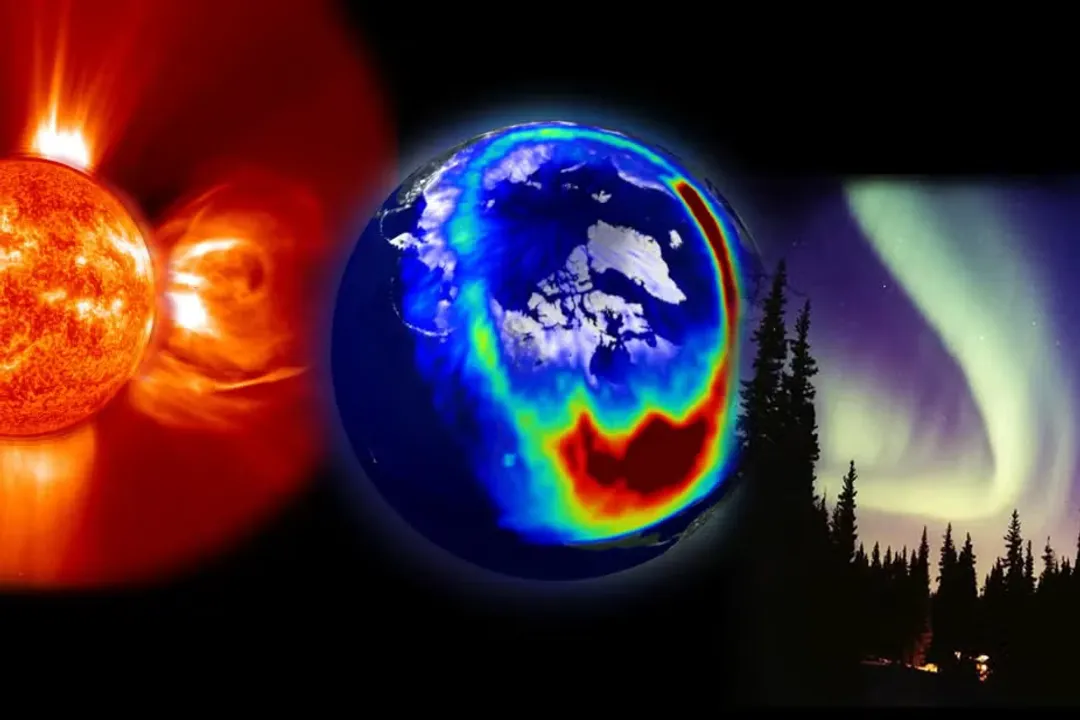
The Sun is not merely a static light source in our sky; it is a dynamic, turbulent engine of magnetic activity. Occasionally, the magnetic fields near sunspots tangle, snap, and reconnect, releasing a colossal burst of energy known as a solar flare. [1][3] When this happens, it accelerates particles and releases intense radiation across the electromagnetic spectrum, from radio waves to X-rays and gamma rays. [3][5] Because this event consists of light and radiation, the effects reach Earth at the speed of light, arriving in just about eight minutes. [7]
# Solar Flares
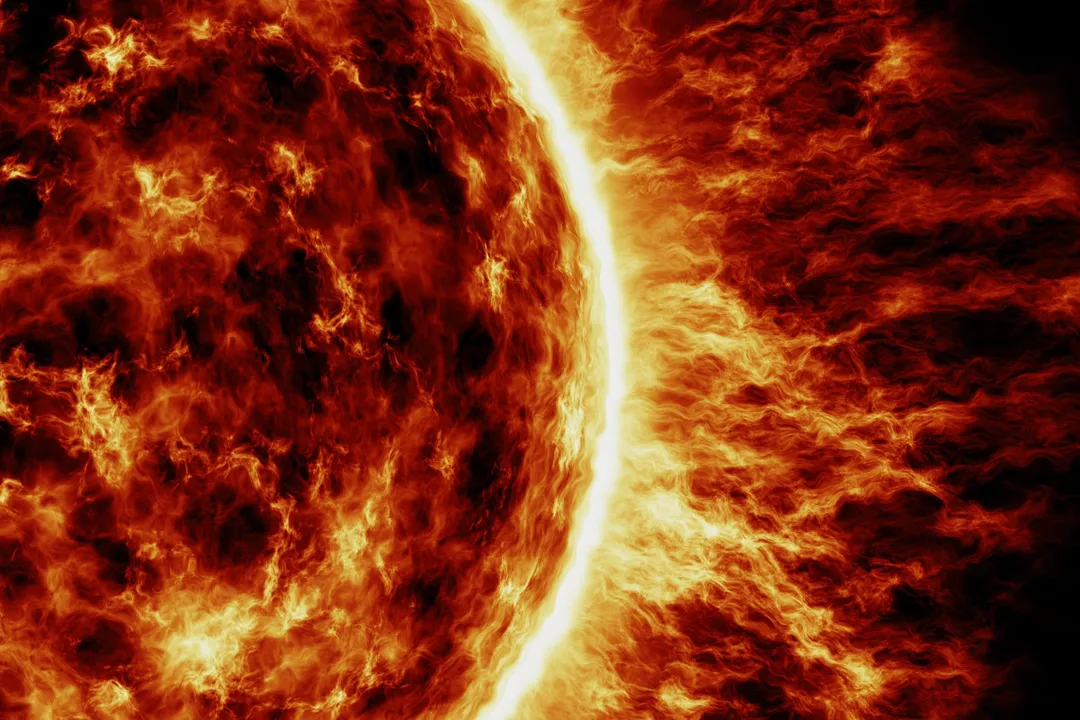
A solar flare is an intense, sudden release of electromagnetic energy. [3] These eruptions are categorized by their intensity, generally following a scale similar to earthquake magnitudes. The classification system uses letters: A, B, C, M, and X, with each letter representing a tenfold increase in energy output. [5]
| Class | Intensity | Effect on Earth |
|---|---|---|
| A | Weak | None noticeable |
| B | Low | Minimal |
| C | Small | Minor effects |
| M | Medium | Brief radio blackouts |
| X | Large | Major disturbances |
While we often worry about the Sun "flaring up," the physical structure of our planet remains unaffected. A solar flare cannot alter Earth's orbit, change the axial tilt, or strip away the atmosphere. [9] The energy released, while massive by human standards, is negligible compared to the gravitational and magnetic forces that keep our world in place. The interaction is strictly limited to our outer environment, specifically the upper atmosphere and the technological layers we have built on top of it. [2]
# Atmospheric Effects
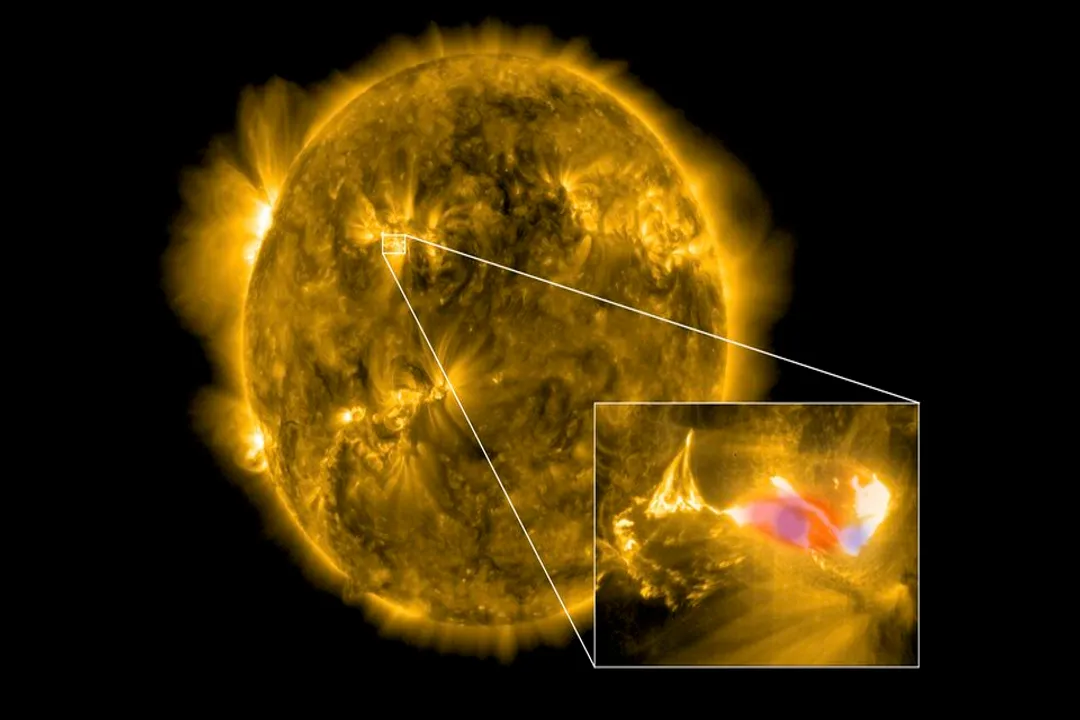
The primary interaction between a solar flare and Earth occurs in the ionosphere. The ionosphere is a layer of the upper atmosphere that is ionized by solar radiation, creating a region of electrons and electrically charged atoms. [8] During a flare, the surge of X-rays and extreme ultraviolet radiation penetrates this layer, causing it to become more densely ionized. [6]
This process changes how the ionosphere handles radio waves. Normally, high-frequency (HF) radio waves—the kind used by aviation, maritime communications, and amateur radio operators—bounce off the ionosphere, allowing them to travel long distances over the horizon. [6] When a flare hits, the intensified ionization absorbs these radio waves rather than reflecting them. This creates a "radio blackout" on the sunlit side of the planet, effectively silencing communication channels in those frequencies. [6] These blackouts can last from a few minutes to several hours, depending on the severity of the flare. [6]
# Infrastructure Risks
While the atmosphere handles the radiation, our man-made infrastructure is not as resilient. Modern technology relies heavily on GPS and satellite connectivity, both of which face challenges during solar activity. [2]
When the atmosphere heats up and expands due to the energy influx, satellites in low Earth orbit experience increased drag. [5] This atmospheric thickening acts like friction, slowing the satellites down. If the flare is significant enough, this can alter the orbit of satellites, requiring operators to perform maneuvers to maintain their positions. [2]
Furthermore, the integrity of GPS signals depends on precise timing and clear signal paths through the ionosphere. The extra ionization caused by a flare adds "noise" to these signals, introducing errors in positioning data. [2] This usually impacts high-precision systems like those used in agriculture or surveying, rather than the standard navigation app on a smartphone, though extreme events can degrade general location accuracy. [5]
# Grid Vulnerability
It is important to differentiate between a solar flare and a Coronal Mass Ejection (CME). A solar flare is a burst of radiation (light) that arrives in minutes. [7] A CME is a massive cloud of magnetized plasma ejected from the Sun that takes one to three days to reach Earth. [2] People often confuse the two because they frequently happen together.
If a flare is accompanied by a CME, the plasma cloud interacts with Earth’s magnetic field, causing a geomagnetic storm. [8] This is where the real risk to power grids emerges. During such a storm, the fluctuating magnetic fields induce electrical currents in long-distance conductors, such as high-voltage power lines. [2] These are called Geomagnetically Induced Currents (GICs).
These GICs do not behave like the standard alternating current (AC) designed for our grid; they act as a "direct current" (DC) bias. This DC bias can saturate the iron cores of large power transformers, potentially overheating them and causing damage. [2] While modern grids have protective measures, a severe enough event could lead to widespread, long-term power outages. This susceptibility is a unique feature of our modern, interconnected electrical world; in the 19th century, the impact was limited to telegraph wires, whereas today, the grid spans continents, acting like a giant antenna for these induced currents.

# Monitoring Systems
We do not just wait for these events to happen to us. Organizations like the National Oceanic and Atmospheric Administration (NOAA) and the Space Weather Prediction Center (SWPC) monitor the Sun 24/7 using a fleet of satellites. [6]
By tracking sunspots—where flares are most likely to originate—and observing the solar disk with X-ray and extreme ultraviolet telescopes, scientists can provide forecasts. [7] When a significant flare occurs, alerts are sent to satellite operators, aviation authorities, and power grid managers. This allows them to switch to backup systems, cancel flights that rely on HF radio in polar regions, or adjust grid loads to mitigate the risk of damage. [6]
# Common Misconceptions
There is often fear that a solar flare will destroy the Earth. This stems from a misunderstanding of the scale of space and the nature of the Sun. A flare is a localized event on the Sun's surface. [3] While it releases an immense amount of energy, it is a drop in the ocean compared to the constant stream of radiation Earth receives. The Earth's magnetic field acts as a shield, funneling particles toward the poles and protecting the surface from the most harmful radiation. [8]
Another common point of confusion is whether we can "feel" a flare. Humans have no sensory organs that detect magnetic field fluctuations or increased X-ray flux. Unless you are looking at a specialized instrument, a solar flare is invisible to the naked eye. Even the resulting aurorae—the dancing lights often seen at high latitudes—are not caused by the flare itself, but by the particles from a CME entering the atmosphere days later. [8]
In essence, living through a solar flare is a non-event for the average person on the ground. Most people will never know one has occurred unless they read about it in the news or notice a temporary hiccup in their GPS navigation. Our planet is well-equipped to handle the radiation; it is our satellite-based society that has to do the heavy lifting in adapting to our volatile star.
#Videos
The Impact Of Solar Activity On Earth - YouTube
Related Questions
#Citations
Solar Storms and Flares - NASA Science
What actually happens when the Sun sends a powerful storm our ...
Solar flare - Wikipedia
If a massive solar flare hit Earth, the kind described as "sending us ...
Solar flares: What are they and how do they affect Earth? - Space
Solar Flares (Radio Blackouts) - Space Weather Prediction Center
ESA - What are solar flares? - European Space Agency
What Is Space Weather and How Does It Affect the Earth?
What are the effects of a solar flare on Earth? Can it knock us off ...
The Impact Of Solar Activity On Earth - YouTube