How does the Sun's stellar population compare chemically to typical stars in a globular cluster?
Answer
The Sun is Population I and metal-rich, unlike the metal-poor stars of the cluster.
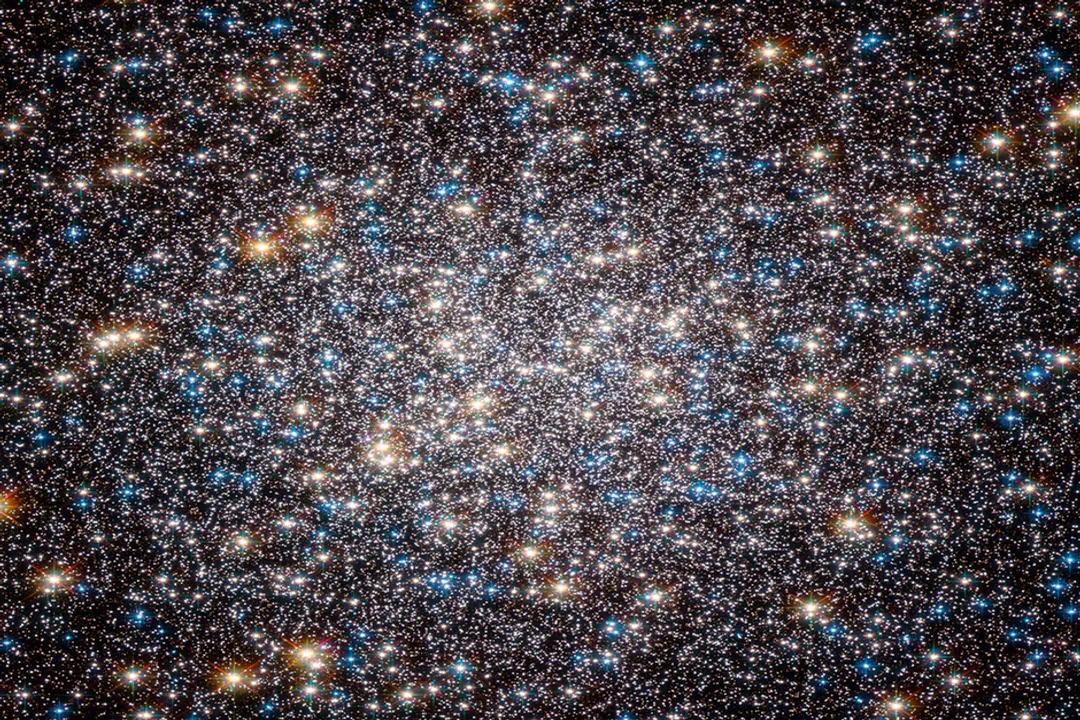
The Sun is classified as a Population I star, formed relatively recently in the metal-rich galactic disk, contrasting with the metal-poor Population II stars typical of globular clusters.
#Videos
What If We Lived in a Globular Cluster? - YouTube
Related Questions
What stellar population type generally populates globular clusters?What does the term 'metals' refer to in astrophysics regarding stellar composition?Why might rocky planets like Earth be scarce in old globular clusters?What is a primary gravitational hazard caused by the high stellar density in a cluster core?How long might life have had an opportunity to evolve within the oldest globular clusters?How does the Sun's stellar population compare chemically to typical stars in a globular cluster?What technological mastery might a civilization in a violent cluster core develop due to gravitational challenges?What concern arises from the extreme age of globular cluster stars regarding life evolution?Due to current observational limitations, what are scientists primarily focusing on when searching for life in globular clusters?What is the general composition of stars populating globular clusters?