Why can't rockets be electric?
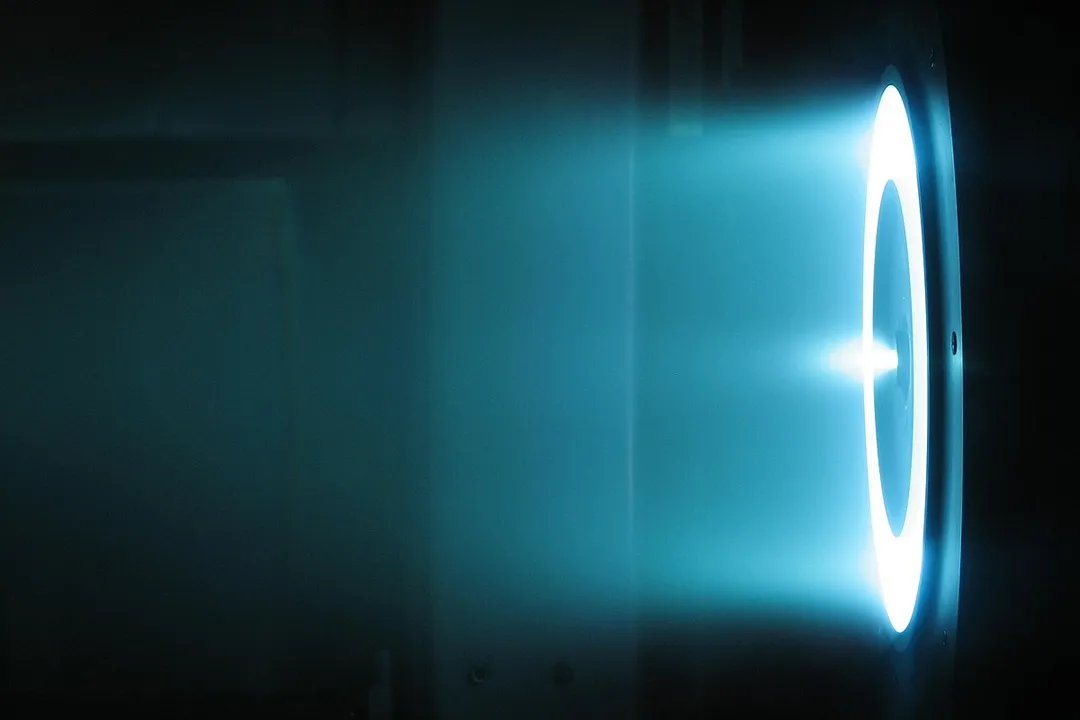
The fundamental challenge behind powering a rocket entirely with electricity for liftoff isn't a matter of impossibility in the abstract sense—electric propulsion systems do exist and fly today—but rather a brutal confrontation with physics when trying to escape the massive gravitational well of Earth. [6][4] Chemical rockets, which burn massive amounts of fuel to create superheated exhaust, succeed because they provide an overwhelming, instantaneous thrust. An electric rocket, in contrast, offers a gentle, continuous push that simply isn't strong enough to beat gravity off the launchpad. [1][4]
# Thrust Scale
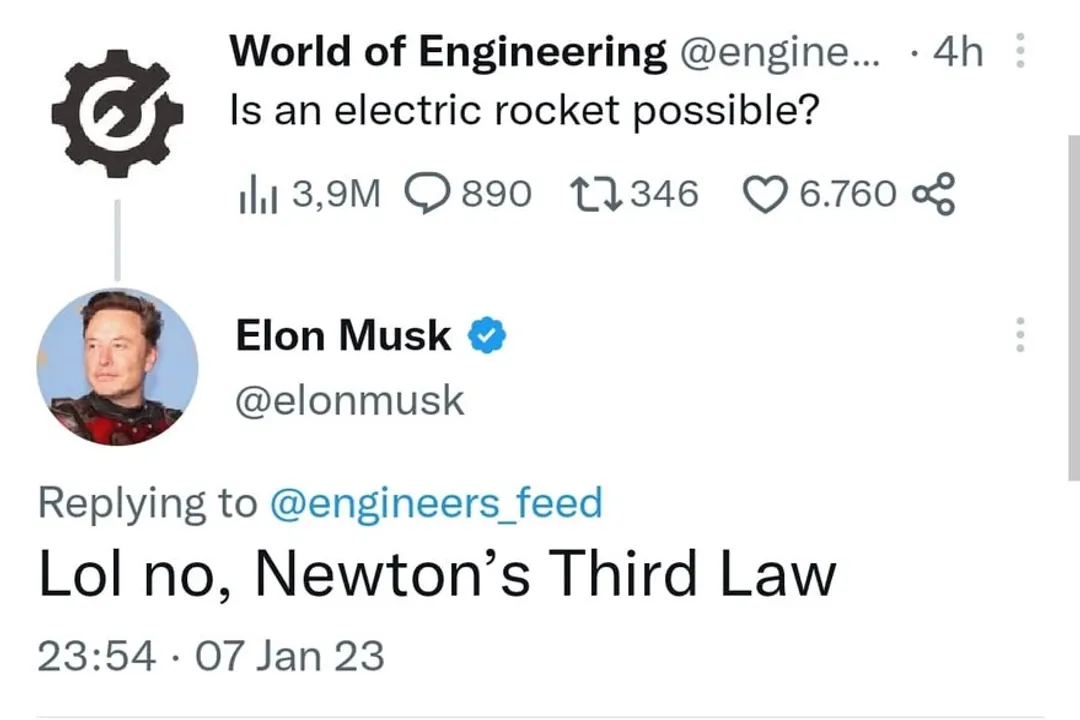
Rockets leaving Earth require a Thrust-to-Weight Ratio (TWR) greater than one just to become airborne. [4] This means the upward force generated must exceed the weight of the fully fueled vehicle. A typical heavy-lift chemical rocket generates millions of pounds of thrust at liftoff—hundreds of thousands of Newtons of force—for a very short duration, perhaps just a few minutes, to achieve escape velocity. [1]
Electric propulsion systems, such as the well-known ion thrusters, operate on a vastly different scale. These systems work by ionizing a propellant, often xenon gas, and then using powerful electric fields to accelerate these charged particles out the back at extremely high velocities. [5] While this results in incredibly high exhaust velocities, the mass flow rate—the amount of propellant ejected per second—is minuscule compared to chemical rockets. [6] An ion engine might produce thrust measured in millinewtons, enough force to hold a sheet of paper steady against gravity, but utterly incapable of lifting itself, let alone a heavy payload, off the ground. [1]
If we compare the brute force needed, consider this: a standard SpaceX Falcon 9 first stage produces roughly 1.7 million pounds of thrust at liftoff. To match that thrust with a state-of-the-art solar electric propulsion system, which might generate thrust in the range of a few newtons, you would need an array of hundreds of thousands, if not millions, of such engines operating simultaneously, all drawing staggering amounts of power. [6] The sheer structural mass of such an electric engine array would defeat the entire purpose of trying to lift the vehicle in the first place. [4]
# Efficiency Metric
The reason engineers are so keen on electric propulsion lies in its fuel efficiency, measured by specific impulse (). [5][6] Specific impulse is essentially the rocket equivalent of miles per gallon; it indicates how much thrust you get for the amount of propellant consumed over time. [3] Chemical rockets are relatively inefficient, achieving values typically ranging from $250$ to $450$ seconds. [5]
Electric propulsion systems shatter these figures. Because they rely on electric fields to accelerate propellant instead of the chemical energy released by combustion, they can achieve exhaust velocities much higher than any chemical reaction allows. [5] Ion engines routinely achieve values ranging from $2,000$ to over $10,000$ seconds. [5][6] This means an electric system uses far less propellant mass to achieve a given change in velocity () for a mission. [3] For journeys across the solar system, where propellant mass is the limiting factor, this efficiency is unmatched. [3] However, this efficiency comes at the cost of power and time. [4] You trade high thrust for high . [6]
# Ground Ascent
The requirement for rapid acceleration to overcome the dense lower atmosphere and Earth’s gravity dictates the use of chemical energy for initial launch. [4] Electric thrusters are power-limited, not propellant-limited, for generating thrust. [4] To lift even a small, uncrewed satellite from the ground using only electric propulsion would necessitate an impossibly massive onboard power source or a ridiculously long burn time measured in months or years, which is impractical for any meaningful trajectory. [2][4]
This highlights a critical difference in operational environments: chemical rockets are designed to operate where mass flow rate is key (near Earth), while electric rockets are designed for the vacuum of space where propellant mass conservation is key (long-duration, low-thrust maneuvers). [5] One way to visualize this constraint is thinking about the power density required. For a 1,000-kilogram payload launched to Low Earth Orbit (LEO), the energy required is substantial. A chemical rocket delivers that energy very quickly, often within 10 minutes of ascent. An electric system, even if somehow powered, would need to store and deliver that equivalent energy over days or weeks just to reach orbital velocity, assuming it could even generate enough continuous thrust to stay aloft. [4] A common thought experiment involves powering an electric launch vehicle with batteries; the mass of the batteries required to provide even one minute of required thrust would far outweigh the mass of the payload itself, making the vehicle too heavy to lift off in the first place. [1]
# Power Supply
If an electric rocket is to work, it needs electricity, and lots of it, especially if we imagine scaling it up for larger vehicles. [3] For the small systems used on current satellites, solar power is often sufficient. [5] Solar arrays collect energy from the Sun, which is then fed into the thrusters. However, this presents several scaling problems for Earth launch or deep-space travel:
- Distance: As a spacecraft moves away from the Sun (e.g., toward Jupiter or beyond), the intensity of sunlight drops off rapidly, severely limiting the available electrical power. [3]
- Area: To compensate for lower intensity, the solar arrays must become physically huge. For a powerful electric launch system, the required array size might become structurally unsound or too massive to be launched by any existing vehicle. [3]
- Mass: The necessary power conversion electronics and the thrusters themselves add mass, which must be accelerated by the very force they generate. [4]
For missions where solar power is insufficient, the alternative is onboard nuclear power sources. [3] Fission reactors or Radioisotope Thermoelectric Generators (RTGs) could supply the megawatts of continuous electrical power needed for powerful electric propulsion stages. [3] While nuclear power is feasible and used for deep-space probes, it introduces significant regulatory hurdles, safety concerns, and high development costs associated with launching radioactive material. [3] This complexity often outweighs the potential benefits for missions where time is not the primary constraint.
# In Space
It is important to remember that electric rockets are not science fiction; they are a workhorse technology for modern spaceflight, just not for the launch phase. [5] They are invaluable once a spacecraft is already in orbit or coasting through interplanetary space. [5]
Electric propulsion allows spacecraft to perform significant velocity changes () over long periods without carrying massive amounts of chemical propellant. [3]
Examples of their utility include:
- Station Keeping: Keeping communications satellites precisely positioned in their required orbits against gravitational perturbations and solar pressure. [5]
- Deep Space Probes: Missions like NASA’s Dawn spacecraft, which visited the asteroids Vesta and Ceres, relied on ion propulsion to manage its long, efficient cruise between targets. [5] The long burn times were acceptable because the mission timeline was measured in years. [3]
The trade-off is time. A maneuver that a chemical rocket completes in minutes might take weeks or months using an ion engine, but the mass savings on propellant mean the spacecraft can carry more scientific instruments or a larger final payload. [3][6]
# Theoretical Paths
For electric rockets to ever take over launch duties, a revolutionary breakthrough in power delivery would be required, one that decouples the vehicle’s power generation from its immediate structure. [4]
One concept involves beaming power from the ground up to the launch vehicle. [4] Imagine massive ground-based power stations beaming microwave or laser energy to a receiver on the rocket, which then converts that energy directly into the high-voltage electricity needed for powerful electric thrusters. [4] This shifts the weight penalty from the rocket to the ground infrastructure. [2] However, the challenges here are immense: atmospheric attenuation of the beam, the massive size and inefficiency of the conversion process at the receiving end, and the sheer engineering difficulty of keeping a focused, high-energy beam locked onto a rapidly accelerating, vibrating vehicle make this largely theoretical for now. [2][4]
Another consideration is scaling up the type of electric propulsion. Hall-effect thrusters, for instance, are more powerful than traditional gridded ion engines, but they still fall far short of chemical thrust levels. [5] The physics governing the conversion of stored electrical energy into kinetic energy of the exhaust suggests that achieving the required thrust-to-weight ratio for Earth escape while remaining below the practical power density limits of current technology remains the insurmountable barrier for launching vehicles off the ground. [4] Until we can miniaturize a gigawatt-scale nuclear reactor that weighs only a few hundred kilograms, or until electromagnetic launch assist systems become viable, the roar of chemical combustion will remain the necessary sound of leaving our planet. [1]
Related Questions
#Citations
ELI5:What would it take for a rocket shuttle to use electricity and not ...
Why isn't an electric rocket engine possible? - Quora
Space Power Chapter 7: Electric Rockets – Opening the Solar System
Can we thrust a rocket from earth using electric power?
Spacecraft electric propulsion - Wikipedia
What About Electric Rockets? #reel #electric #rockets #science #fuel
Are electric rockets possible? - Kerbal Space Program Forums
Electric Rockets and the Future of Satellite Propulsion