electric propulsion articles
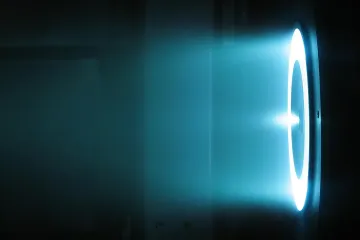
What is the fundamental physics challenge preventing electric rockets from powering liftoff from Earth?
What metric must a rocket's Thrust-to-Weight Ratio (TWR) exceed just to become airborne?
How do electric propulsion systems, like ion thrusters, achieve extremely high exhaust velocities?
What physical quantity measures the fuel efficiency of a rocket engine, analogous to miles per gallon?
What is the typical Specific Impulse ($ ext{I}_ ext{sp}$) range achieved by chemical rockets?
What primary trade-off do engineers accept when choosing electric propulsion systems over chemical ones?
Why is rapid, high-thrust power dictated by chemical energy for ground ascent near Earth?
What is a major scalability problem when relying solely on solar power for a powerful electric launch system?
For what purpose are electric rockets currently considered a workhorse technology in spaceflight?
What is the theoretical ground-based solution proposed to bypass the onboard power mass problem for electric launch vehicles?
Why would using onboard batteries to power an electric launch vehicle be impractical?
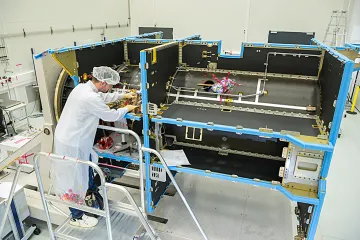
What is the primary force causing most near-Earth satellites to require propulsion systems?
If atmospheric drag on a LEO satellite is left uncorrected, what is the eventual outcome?
What is the most critical application of propulsion for satellites operating in Geostationary Orbit (GEO)?
What causes longitudinal drift and inclination changes for satellites in Geostationary Orbit?
What type of maneuver requires significant velocity adjustments, or Delta-V, provided by onboard thrusters?
When comparing chemical and electric propulsion systems, what specific measurement defines the trade-off between thrust magnitude and propellant efficiency?
How do chemical propulsion systems generate thrust?
What advantage do Ion Thrusters offer over chemical systems for long-duration missions?
What condition allows designers to deliberately omit propulsion systems, opting for passive orbits?
What mechanism is cited as an emerging concept for next-generation satellites to maneuver or maintain altitude without conventional propellant tanks?
How do electrodynamic tethers generate directional force without expending stored propellant mass?