Do satellites require propulsion?
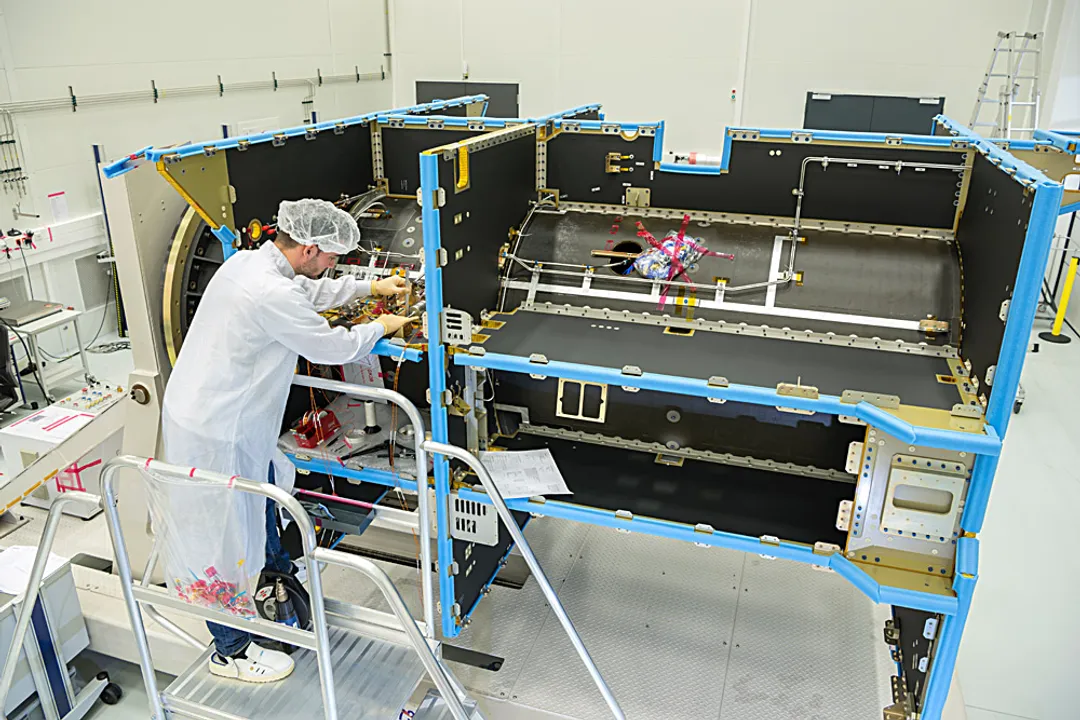
The necessity of propulsion for an orbiting object is not always intuitive; after all, once a satellite is launched, it is constantly falling around the Earth, maintaining its velocity in what appears to be a stable path. However, maintaining a precise and long-term orbit demands more than just the initial velocity imparted by the launch vehicle. While some objects in the very highest reaches of space might coast for centuries, most artificial satellites, particularly those operating in the crowded bands near Earth, absolutely require systems to adjust their course or altitude. [2][4] The simple truth is that orbits are rarely perfect, and the space environment is rarely empty or benign.
# Atmospheric Drag
The primary reason most near-Earth satellites require propulsion relates to the tenuous remnants of our atmosphere present even in Low Earth Orbit (LEO). While LEO is often described as a vacuum, there are still stray air molecules present. [1] When a satellite plows through this thin gas layer at speeds of several kilometers per second, it experiences a very small but constant force called atmospheric drag. [1]
This drag acts as a continuous brake, bleeding off the satellite's orbital energy. Over time, this cumulative effect causes the satellite's altitude to slowly decay. [1] For a satellite at, say, 600 kilometers above the planet, this decay might be measured in meters per day or even per week, depending on the satellite’s cross-sectional area and mass. [1] If left uncorrected, the satellite would spiral inward until it re-entered the denser atmosphere and burned up. [1] Therefore, propulsion is required simply to counteract this braking effect and keep the satellite in its assigned slot for its operational lifetime. [4]
# Maneuvering Needs
Beyond simply staying up, satellites must be able to move purposefully. This need breaks down into several critical maneuvers. [2][4]
# Station Keeping
For satellites in Geostationary Orbit (GEO), station-keeping is perhaps the most critical application of propulsion. GEO satellites are positioned about 35,786 kilometers up, where their orbital period matches the Earth's rotation, making them appear fixed over one point on the equator. [4] While drag is negligible at this altitude, other forces constantly try to pull the satellite out of its precise slot. The gravitational pull of the Sun and Moon, along with the slight oblateness (non-perfect sphericity) of the Earth, causes longitudinal drift and inclination changes. [4] To remain fixed above a specific region for communications or weather monitoring, these satellites must fire thrusters periodically to correct their longitude and maintain the zero-degree inclination. [4]
# Orbit Changes
Satellites might need to change their orbit for operational reasons. Perhaps a commercial imaging satellite needs to shift from a sun-synchronous orbit to one that passes over a specific region during local morning hours for better lighting conditions. [4] Or, perhaps a new satellite needs to raise itself from a lower transfer orbit to its final operational altitude after launch. These large changes require significant velocity adjustments, or Delta-V, provided by onboard thrusters. [2][4]
# Collision Avoidance
As orbital traffic increases, the risk of collision—a major concern for modern operators—becomes more pressing. [1] If ground tracking identifies a potential close approach with another object, the satellite must execute a "collision avoidance maneuver," which involves a precisely timed burst of propulsion to slightly alter its trajectory and ensure a safe separation distance. [1]

# System Options
The methods used to generate thrust vary widely based on the mission profile, the required maneuver size, and the available power and mass budget. [3][4] The choice fundamentally boils down to a trade-off between thrust magnitude and the efficiency with which propellant is used, measured by specific impulse (). [5]
# Chemical Propulsion
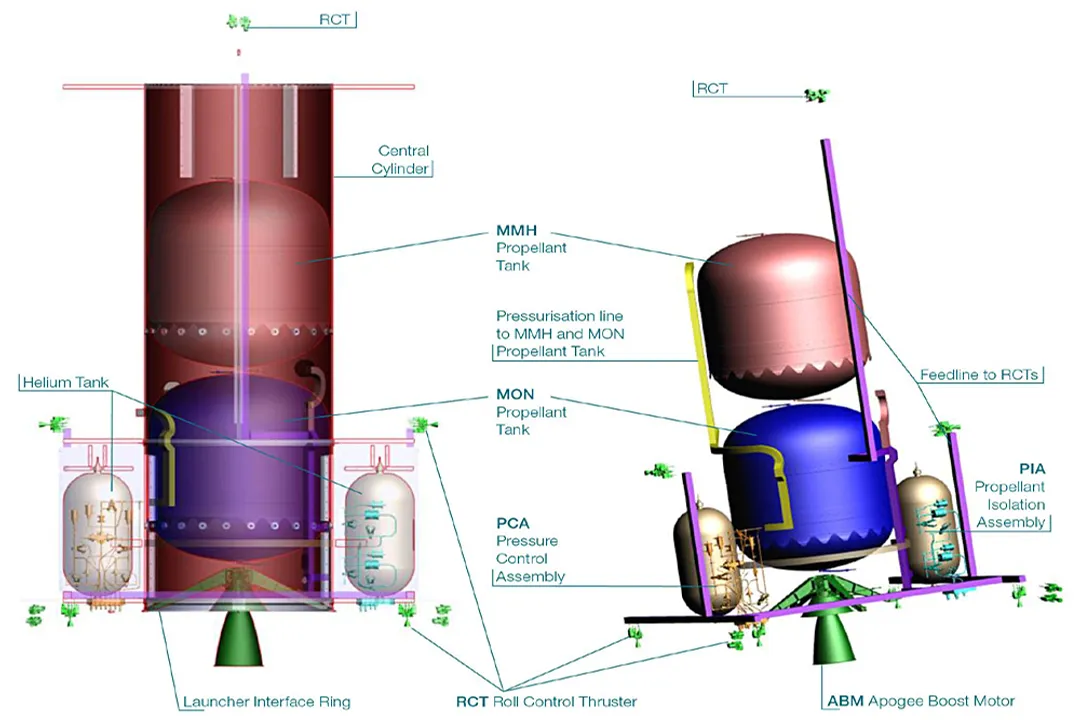
The traditional workhorse of spaceflight is chemical propulsion. [3] This involves mixing and igniting propellants—often storable liquids like hydrazine—to generate hot gas expelled at high velocity. [3][4]
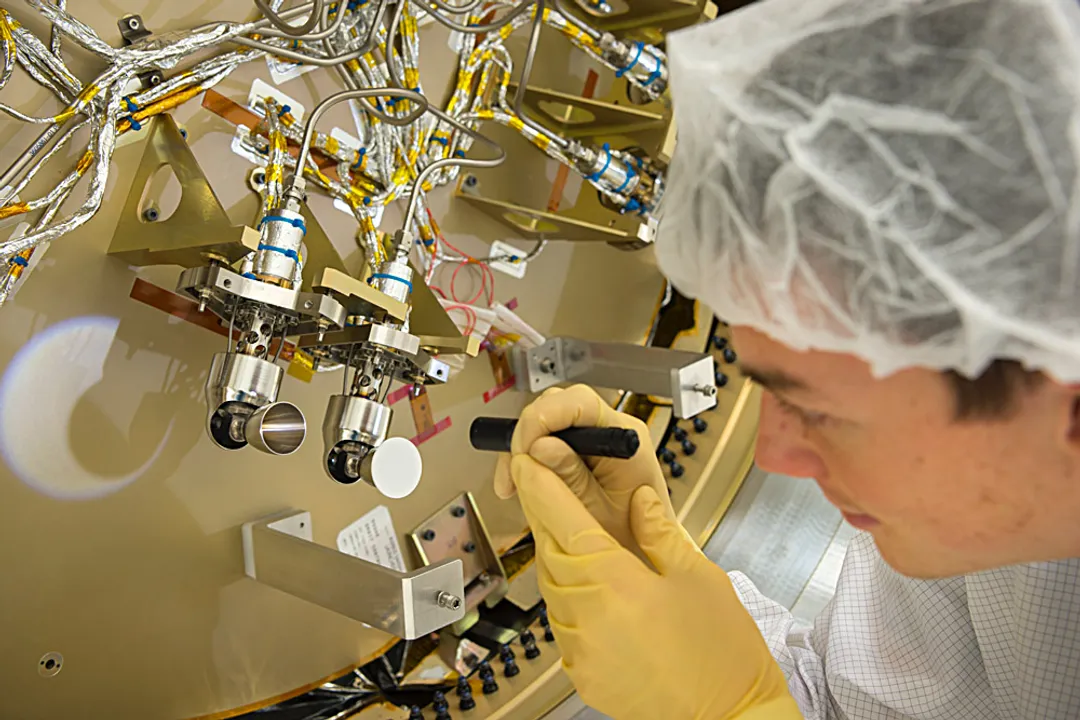
- Monopropellant Systems: These are simpler, using only one chemical (like hydrazine) that decomposes catalytically to produce thrust. They are reliable and often used for smaller maneuvering or attitude control thrusters. [4]
- Bipropellant Systems: These involve two fuels (a fuel and an oxidizer) that are mixed and ignited, offering greater performance and higher thrust capabilities for larger maneuvers, such as major orbit changes or deorbit burns. [3][4]
Chemical systems provide relatively high thrust, meaning they can change an orbit quickly, but they consume propellant mass rapidly because their is lower compared to electric methods. [5] For a mission planner designing a small LEO Earth observation satellite requiring a small, infrequent corrective burn every six months, choosing a simple, lightweight monopropellant thruster might be the most cost-effective solution, even if it wastes a bit more of the propellant mass relative to the actual change achieved. This decision prioritizes hardware simplicity and low upfront mass over ultimate propellant economy. [5]
# Electric Propulsion
For missions requiring very high efficiency over long durations, electric propulsion is increasingly favored. [5] These systems use electrical power—usually generated by solar panels—to accelerate a propellant (like xenon gas) to extremely high speeds using electric or magnetic fields. [5]
- Ion Thrusters: These are the most famous example, operating at very low thrust levels but achieving extremely high specific impulse. [5] They consume propellant very slowly, meaning a small tank of xenon can provide enough for station-keeping or orbital transfers that would require tons of chemical fuel. [5] While an ion thruster's thrust might only be equivalent to the weight of a sheet of paper, it can run continuously or near-continuously for years, making it perfect for deep space probes or maintaining the altitude of large GEO satellites over decades. [5]
# Passive Orbits
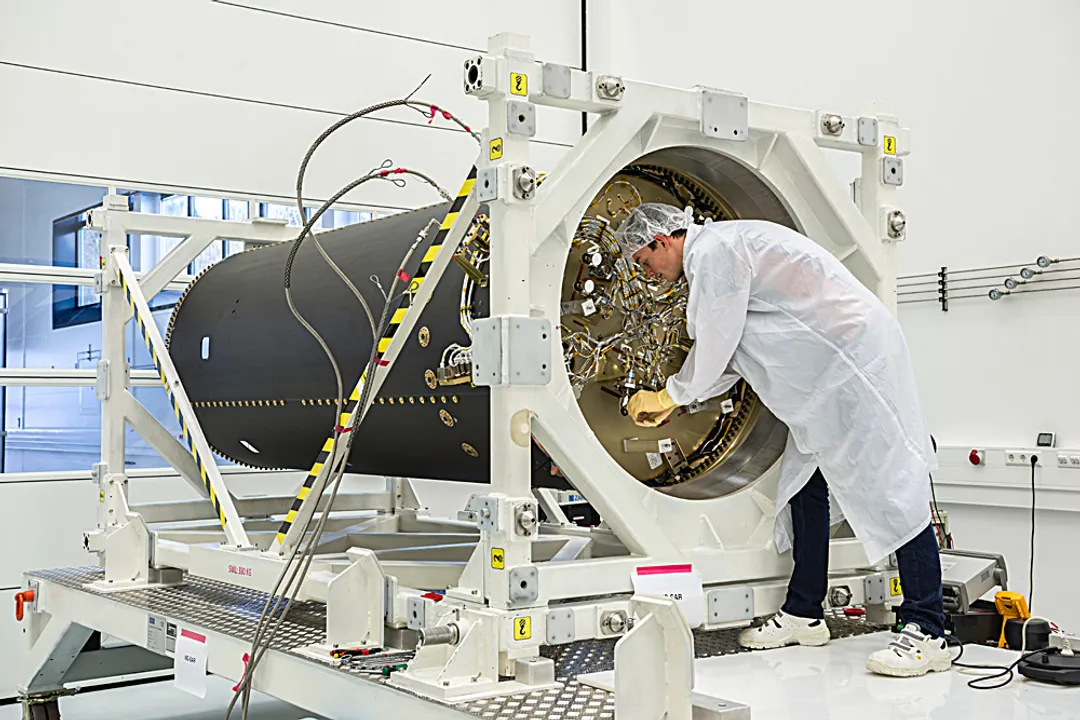
The premise that all satellites need propulsion, however, is factually incorrect. [2] Propulsion systems add mass, complexity, cost, and a potential point of failure. Therefore, designers sometimes deliberately omit them, opting for "passive" orbits where the satellite’s lifespan is dictated by the orbit itself. [2]
This strategy is most common for smaller satellites, particularly CubeSats, operating in the lowest practical LEO bands, sometimes as low as 400 or 500 kilometers. [6] These satellites are designed with the expectation that atmospheric drag will eventually cause them to re-enter the atmosphere within a few years, sometimes as little as six months, depending on their ballistic coefficient (the ratio of mass to drag area). [2]
One emerging concept in this passive or near-passive realm involves exploiting the atmosphere itself. Researchers are looking at next-generation satellites that could skim the upper atmosphere, using aerodynamic effects to maneuver or even maintain altitude without carrying heavy chemical or electric propellant tanks. [6] This involves intricate control over the spacecraft's shape and orientation to interact with the few air molecules present, treating the atmosphere as a propellant source. [6]
A telling comparison emerges when looking at the historical shift in satellite design philosophy. Early communication and navigation satellites were engineered for maximum longevity, often carrying decades' worth of maneuvering propellant, banking on the possibility of future service needs or unexpected orbital shifts. Conversely, many modern LEO constellations are designed with a fixed, often short, operational window. The engineering choice shifts from maximizing lifetime via fuel mass to maximizing the number of operational satellites by minimizing all non-essential mass, including fuel reserves for maneuvers that might only extend the life by a few extra months. [2] The mass budget is allocated to sensors and payload, accepting a defined, finite lifespan dictated by drag.
# Propulsion Alternatives
While thrusters are the standard, alternative methods exist for generating small amounts of directional force that don't rely on expelling stored propellant mass.
One such concept involves using electrodynamic tethers. [4] These are long conductive wires deployed from a satellite that interact with the Earth's magnetic field to generate a Lorentz force, which can produce a gentle thrust or drag. [4] While this doesn't require traditional propellant, it does require a conductive tether, which adds its own deployment complexity and risk. [4] Electrodynamic systems offer a way to reduce orbital altitude over a very long period without consuming conventional fuel, though the forces generated are extremely small. [4]
Ultimately, the decision of whether a satellite requires propulsion, and what kind, is a carefully calculated exercise in mission planning. It balances the need for precise positioning—especially in GEO—against the unavoidable mass penalty associated with carrying fuel, an engineering constraint that remains as fundamental today as it was at the dawn of the space age [4][5]
#Videos
Satellites That Scoop Air And Use It As Propellant - YouTube
Related Questions
#Citations
Why do satellites need to thrust to maintain orbit? - Reddit
Do all artificial satellites have engines?
What type of propulsion system do satellites typically use to orbit ...
What is Satellite Propulsion? | The Lee Co
Ion Thrusters Keep Satellites Going and Going - NASA Spinoff
Next Generation Satellites Might Skim the Atmosphere, Using Air as ...
Spacecraft propulsion - Wikipedia
Satellites That Scoop Air And Use It As Propellant - YouTube
Space Propulsion Systems for Satellites and Spacecraft