What is the very first star?
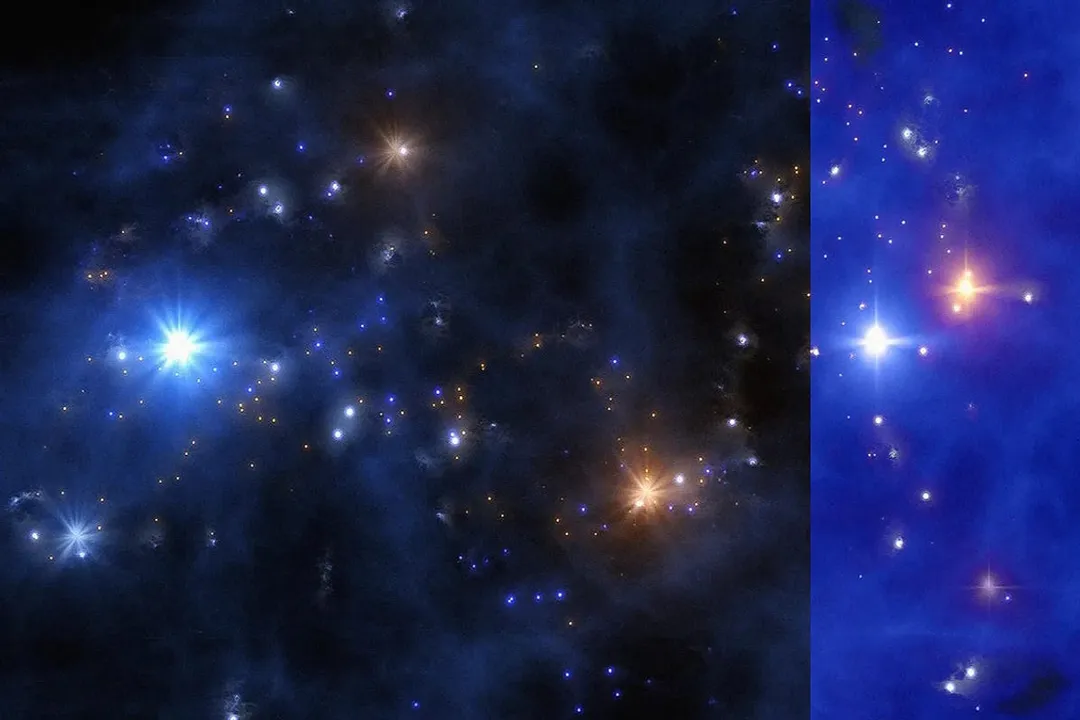
The identity of the very first star in the cosmos remains one of astronomy’s greatest ongoing quests, representing the dawn of light after the universe cooled sufficiently following the Big Bang. These objects, often theorized as Population III stars, were fundamentally different from the Sun or any star we observe today. They were forged from the raw material of the early universe, a gas mixture consisting almost purely of hydrogen and helium, with negligible amounts of heavier elements, or "metals" as astronomers call anything heavier than helium. [3][7][8] Understanding these pioneers is key because they set the entire chemical evolution of the cosmos in motion. [7]
# Pristine Material
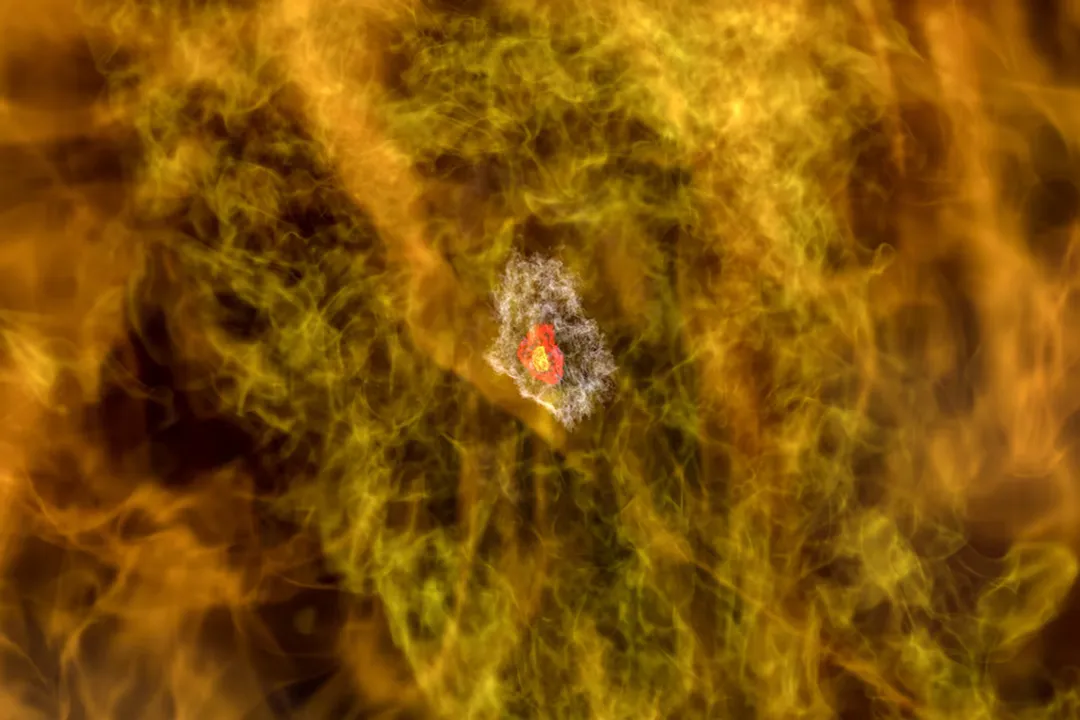
The universe took time to produce the elements necessary for terrestrial life, planets, and even modern stars. In the immediate aftermath of the Big Bang, about 380,000 years after the event, the primordial plasma cooled enough for nuclei and electrons to combine, forming neutral hydrogen and helium. [7] This created vast, dark clouds of gas that would eventually collapse. Crucially, these clouds lacked the "dust" and heavier elements like carbon and oxygen that are common today. [3][5]
This scarcity of metals profoundly dictated how the first stars formed. In modern stellar nurseries, trace amounts of heavy elements radiate heat away very efficiently, allowing gas clouds to fragment into many small pieces, which then form lower-mass stars, like our Sun. [5] Without this efficient cooling mechanism, the earliest clouds had only one viable path for collapse: direct gravitational instability driven by the sheer mass of the cloud. [4]
Consider the scale of chemical change required: For a gas cloud to form a star like our Sun, it needs metals to facilitate fragmentation and cooling. [5] The earliest stellar nurseries began with perhaps one part in $10^7$ (a millionth) of the mass present as metals, whereas stars forming today (Population I) have metal abundances around one to two percent of their total mass. [3] This difference illustrates that the first stellar generation had to overcome an immense physical hurdle—the high temperature barrier—simply because the available coolant elements had not yet been synthesized. [1]
# Cloud Collapse
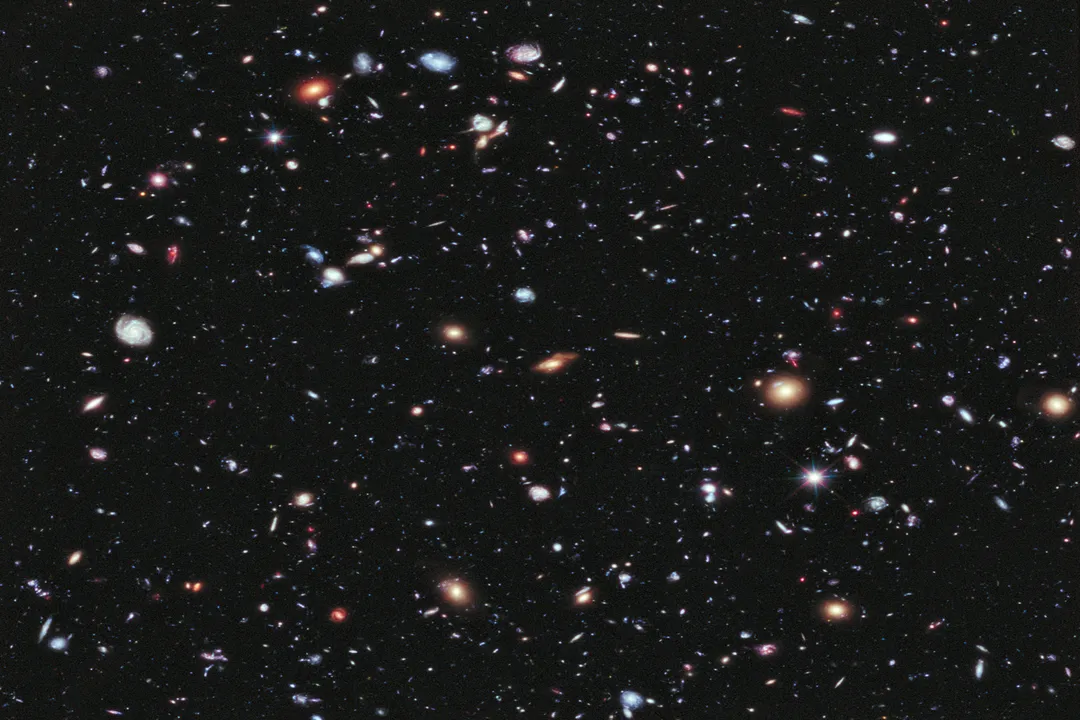
The mechanism driving the birth of Population III stars involved large, relatively uniform gas clouds dominated by molecular hydrogen (). [4] The process wasn't slow and competitive like today; it was a dramatic, rapid free-fall collapse of enormous masses. [5]
The existence of molecular hydrogen is critical here. While atomic hydrogen alone struggles to cool dense gas sufficiently, the formation of molecules allows for the necessary cooling pathways to activate, albeit less efficiently than metal-line cooling in later eras. [4] Theoretical simulations suggest that once cooling was established, the gas collapsed nearly isothermally until it became dense enough for protostars to form. This runaway cooling favored the creation of a few, extremely massive clumps rather than the myriad of small clumps we see in nebulae today. [4][5]
One analytical takeaway from these models relates to pressure support. In later generations of star formation, the gas can achieve a hydrostatic equilibrium fairly early, balancing gravity with thermal pressure, leading to fragmentation. In the metal-free environment, the initial collapse likely proceeded much more violently, leading to the formation of single, massive objects because the pressure support needed to fragment the cloud was not established until later stages of collapse, long after the initial core had condensed. [4]
# Massive Giants
The consensus among astrophysicists is that the first stars were true behemoths, fundamentally different in scale from the vast majority of stars currently visible. [3][7] While Population I stars, like the Sun, range from about $0.08$ to over $100$ solar masses, the initial Population III stars are thought to have ranged from $100$ to perhaps several hundred solar masses (). [3][5][8] Some extreme models even suggest the very first object could have been a single star exceeding . [7]
These high masses are a direct consequence of the formation physics described above—the inability of the metal-free gas to fragment into smaller pieces. [4] A star’s temperature and its main sequence lifetime are directly related to its mass. Being so much heavier than the Sun, these primordial giants were incredibly hot and luminous. [5] They converted their hydrogen fuel into helium at a furious rate, leading to a very short existence in cosmic terms. [7]
# Short Lives
The stellar lifecycle is intimately tied to mass, and for the first stars, this meant a rapid end. [7] A star that is 100 times the mass of the Sun burns its fuel perhaps a million times faster than our Sun. [8] While the Sun is expected to live for about 10 billion years, these first stars are predicted to have survived for only a few million years. [7][8]
Their spectacular deaths were arguably more important to the universe's subsequent evolution than their brief lives. These massive stars could not simply fade away like smaller stars; they ended their existence in colossal explosions known as pair-instability supernovae. [7][8] These explosions were so energetic that they obliterated the star completely, scattering the first synthesized heavy elements—the products of fusion in their cores—into the intergalactic medium. [3][7] This newly enriched gas would then mix with the pristine hydrogen and helium, creating the conditions necessary for the second generation of stars.

# Cosmic Inheritance
The chemical legacy of the first stars defines the subsequent generations. When the next clouds collapsed, they now contained trace amounts of elements like carbon, oxygen, iron, and silicon—the building blocks created by those initial supernovae. [2]
This chemical enrichment allowed for the formation of stars with lower masses, including stars similar to our Sun (Population I stars) or the slightly older, metal-poor stars known as Population II. [2] These second and third generations benefit from the metal cooling mechanisms, enabling them to form with a wider range of masses and allowing them to live far longer than their ancestors. [5] Without the explosive end of the very first stars, the universe would remain a vast, dark expanse dominated only by hydrogen and helium.
# Tracing Light
Directly observing a Population III star is exceptionally challenging. They formed perhaps 100 to 400 million years after the Big Bang, meaning we are looking back across more than 13 billion years of cosmic history. [4][6] Furthermore, they were likely massive, luminous, but also very short-lived, making the observational window small. [7]
Astronomers are currently employing sophisticated techniques to find indirect evidence. [1] Since these first stars likely lived within the first, small galaxies, researchers are looking for the telltale chemical signatures of their supernova remnants imprinted on the spectra of stars that formed later in those primordial galaxies. [1] Gravitational lensing, where the gravity of a massive foreground galaxy magnifies the light from a distant source, is another key tool, potentially offering enough magnification to catch a glimpse of the light from the very first stellar populations or the earliest small galaxies they powered. [1]
The James Webb Space Telescope (JWST) is specifically designed to probe this era, looking for the faint light of the first galaxies whose light is redshifted deep into the infrared spectrum. [6] While JWST has already detected galaxies that formed remarkably early, identifying a true, unmixed Population III star remains elusive. [1][6] The signal we seek is incredibly faint, perhaps requiring us to look at the spectral "fingerprints" left in the surrounding gas, rather than the star itself. Imagine trying to detect the residual smoke from a fire that went out 13 billion years ago, using only the faintest discoloration left on the walls of the room—that is the observational difficulty inherent in finding the very first star. [1] The search continues, pushing our instruments to their theoretical limits to confirm the nature of these long-vanished cosmic pioneers. [4][6]
#Videos
WHEN did the first ever stars form in the Universe? - YouTube
Related Questions
#Citations
Potential first traces of the universe's earliest stars uncovered | NSF
When did the first sun-like stars first form in the Universe? - Reddit
Star formation - Wikipedia
First Stars and Galaxies
The First Stars - Center for Astrophysics | Harvard & Smithsonian
WHEN did the first ever stars form in the Universe? - YouTube
The First Stars and Galaxies – Department of Physics and Astronomy
This is what the first stars looked like as they were being born
Ask Ethan: What are the “first stars” in the Universe? - Medium