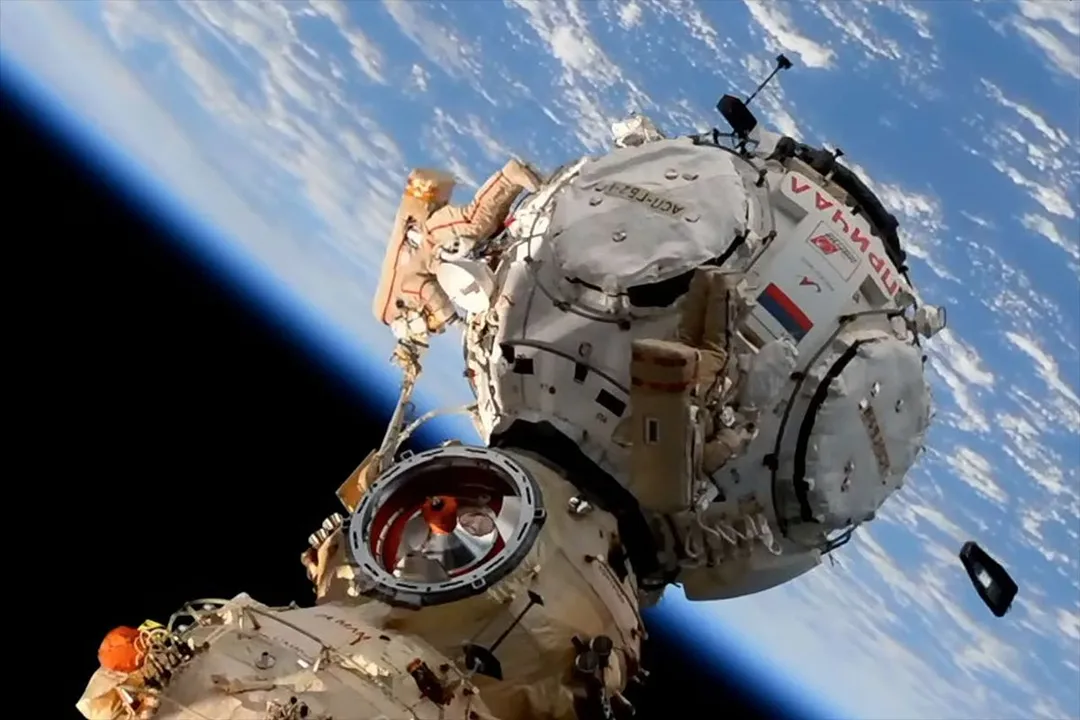
Why does the ISS require regular reboosts, unlike deep-space probes?
To counteract slight, constant atmospheric drag
Even though the International Space Station orbits at 400 kilometers, which is above the altitude where conventional airplanes operate, it is not in a perfect vacuum. It resides in the upper reaches of the thermosphere, where trace amounts of air molecules still exist. These residual molecules cause a very slight but constant atmospheric drag against the massive structure. This drag slowly erodes the station's orbital velocity, causing it to lose altitude. Therefore, periodic engine firings, or reboosts, often performed using visiting spacecraft like Progress vehicles, are essential to push the ISS back up to its operational altitude and prevent it from spiraling down into the denser atmosphere.