What distance defines the Kármán line, the conventional boundary for aerodynamic flight?
Answer
100 kilometers above sea level
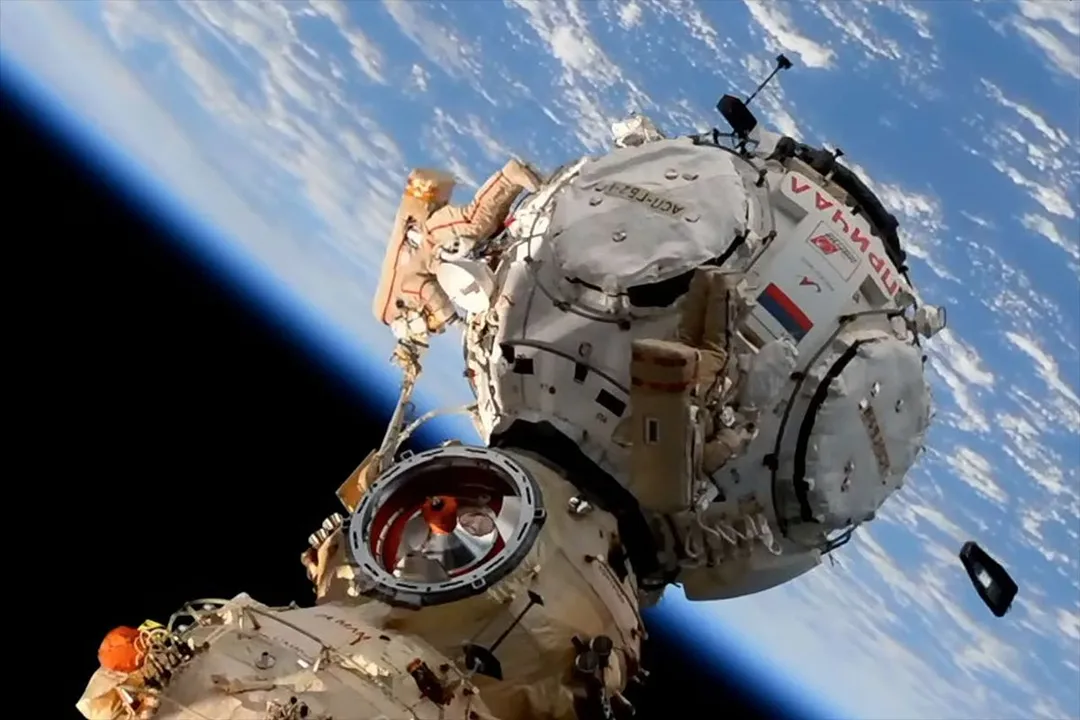
The Kármán line serves as the internationally recognized, conventional threshold separating the Earth's atmosphere from outer space. This line is officially set at an altitude of 100 kilometers, or about 62 miles, above sea level. It signifies the altitude where the atmosphere becomes too thin to support conventional aerodynamic flight, meaning that aircraft relying on airfoils can no longer generate sufficient lift. Although the ISS orbits considerably higher than this line, it is important to note that even at 100 kilometers, some trace amounts of atmospheric gas still exist.
Related Questions
What is the average orbital altitude of the International Space Station (ISS)?What distance defines the Kármán line, the conventional boundary for aerodynamic flight?Approximately how fast does the ISS travel to maintain its orbit around Earth?What physical state results from the ISS constantly falling towards Earth while moving fast enough to miss it?Why does the ISS require regular reboosts, unlike deep-space probes?Which unique environment available on the ISS is leveraged for research in biology and physics?What orbital classification does the ISS occupy relative to Geostationary Orbit (GEO)?Which space agency is NOT listed as a key supporter of the ISS multinational research facility?Around which year are current plans set for the controlled retirement and deorbiting of the ISS?What is the planned goal for destinations following the ISS retirement?