When the Sun passes through Sagittarius, what significant galactic feature is conceptually *behind* the Sun?
Answer
The densest, brightest parts of the Milky Way
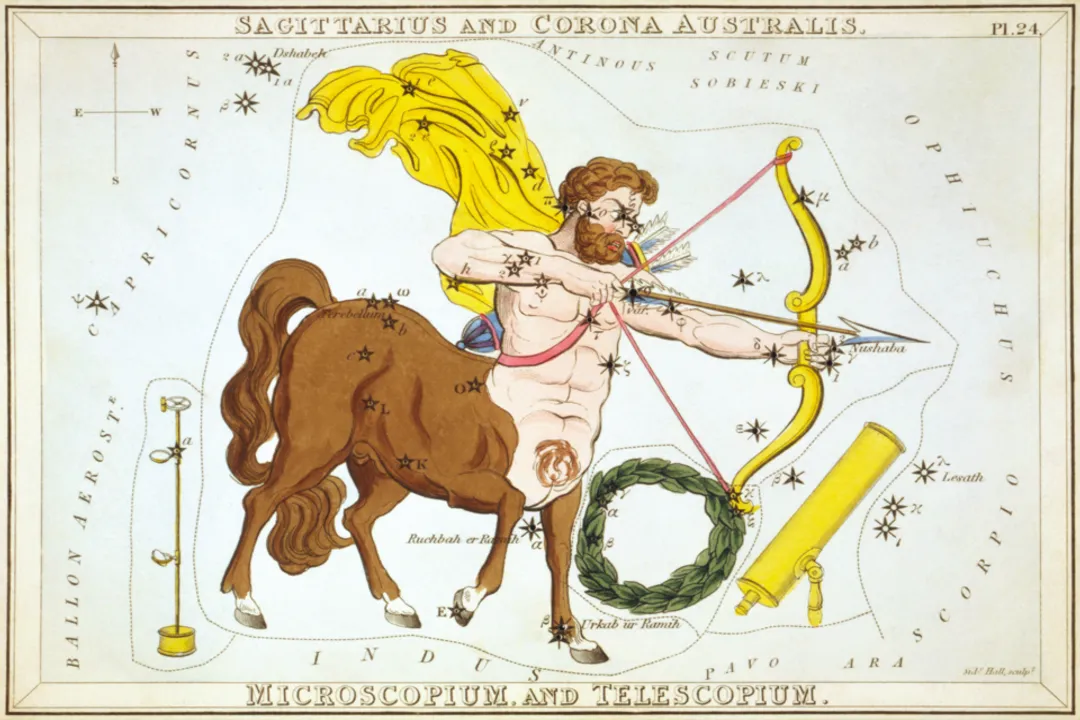
The Sun's position within the Milky Way galaxy dictates what we see in our sky. When the Earth orbits such that the Sun appears to be passing through the boundaries of Sagittarius, this alignment places our solar system in a perspective where the direction behind the Sun points directly toward the true center of our own galaxy, the Milky Way. Consequently, the region containing the highest concentration of stars, gas, and dust—the densest and brightest parts of the galactic core—is situated along that line of sight. Because this region is positioned directly behind the Sun during the day, it is rendered completely invisible to us until nightfall, when we can look away from the Sun.
Related Questions
What is the ecliptic in relation to Earth’s orbit around the Sun?What celestial bodies were ancient observers noting when defining the zodiac constellations?Which constellation is the extra one traversed by the Sun besides the twelve traditional zodiacal signs?What phenomenon caused the shift in constellation boundaries relative to the equinoxes over two millennia?Approximately how far eastward does the Sun appear to move daily across the background stars along the ecliptic?If the Sun is currently in Sagittarius, which constellation is highest in the sky around local midnight?Why are the stars of the constellation the Sun currently occupies completely invisible during the day?When the Sun passes through Sagittarius, what significant galactic feature is conceptually *behind* the Sun?Which characteristic defines the constellations included in the zodiac band the Sun's path slices through?What is the practical result of the original constellation boundaries being set based on positions from two thousand years ago?