Where is the Sun located during the day?
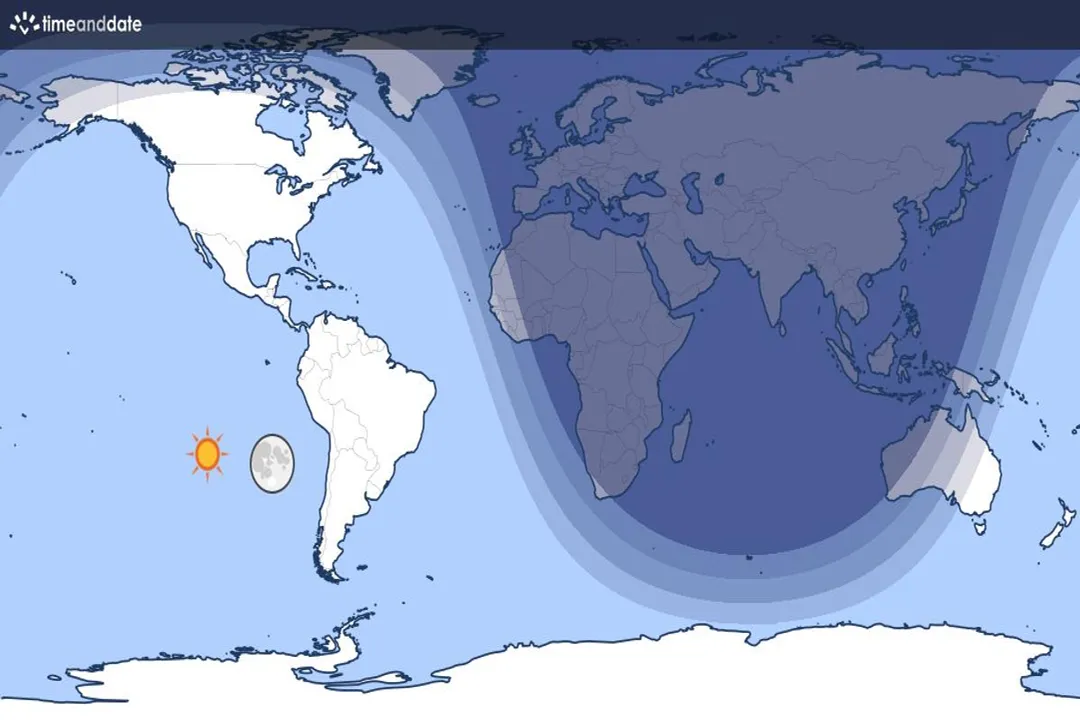
The Sun, that constant fixture of our daytime sky, seems simple enough—it rises in the east, crosses overhead, and sets in the west. However, its precise location at any given moment is a surprisingly dynamic calculation, shifting continuously based on your location on Earth, the time of day, and the time of year. [1][2] It never stays still; its path traces an arc tailored uniquely to your spot on the planet. [6]
# Apparent Path
What we observe is the apparent movement of the Sun, which is actually caused by the Earth spinning on its axis. [5] This rotation makes the Sun appear to travel across the sky in a curved path. [1] In the middle of the day, specifically at local solar noon, the Sun reaches its highest point in the sky for that specific 24-hour period. [2]
When tracking the Sun's position, two key measurements are essential for describing where it is relative to an observer: altitude and azimuth. [1][7] Altitude describes how high the Sun is above the true horizon, measured in degrees, where is the horizon and is directly overhead (the zenith). [1][2] Azimuth describes the direction along the horizon, typically measured in degrees clockwise from true North ( North, East, South, West). [1][6] At sunrise, the altitude is , and the azimuth is close to (East); at sunset, the altitude is , and the azimuth is near (West). [2]
# Seasonal Changes
If the Earth's axis of rotation pointed straight up perpendicular to its orbit around the Sun, the Sun would always rise due East and set due West, maintaining the same altitude at noon every day of the year. However, the Earth is tilted by approximately relative to its orbital plane. [5] This axial tilt is the primary driver behind our seasons and the changing position of the Sun. [1][5]
This tilt means that depending on the time of year, the Sun's path appears significantly higher or lower in the sky. [1] During the summer months in the Northern Hemisphere, the Sun follows a much higher, longer arc, peaking at its highest point during the summer solstice. [5] Conversely, in the winter, the path is lower and shorter, reaching its lowest peak during the winter solstice. [5] If you live at a mid-northern latitude, like approximately North, the difference in the Sun's noon altitude between the summer and winter solstices is substantial. The total swing in that midday height, due to the tilt, amounts to nearly between the two extremes. [1] This explains why midday shadows are much shorter in July than in December, even at the same time of day, as the altitude angle changes dramatically. [5]

# Horizon Definition
While we often associate the Sun with being above the horizon, its location relative to the horizon is crucial for determining when we experience actual daylight versus twilight. [3] Astronomers divide the period when the Sun is below the horizon into distinct phases based on its angular distance beneath the visible horizon. [4]
These phases are:
- Civil Twilight: This is the brightest twilight phase. It occurs when the Sun is between and below the horizon. [3] During civil twilight, there is enough ambient light for most outdoor activities to occur without artificial lighting. [3]
- Nautical Twilight: As the Sun drops further, from to below the horizon, nautical twilight begins. [3] At this point, the horizon is generally still visible, but artificial lights are necessary for most detail work.
- Astronomical Twilight: The final phase is when the Sun is between and below the horizon. [4] Once the Sun passes below the horizon, the sky is considered completely dark, as the Sun's light is too faint to interfere with astronomical observations. [3][4]
The exact time these twilight phases begin and end is highly dependent on location and the season, directly correlating with the Sun’s calculated position relative to the local horizon plane. [3]
# Positional Calculations
Because the Earth is a sphere, two observers at different latitudes or even longitudes will see the Sun in different positions at the exact same moment, even if they are in the same time zone. [6] To accurately determine the Sun's position—its altitude and azimuth—one must use specific calculations involving latitude, longitude, date, and time. [7] Specialized tools, often available online, can perform these complex spherical trigonometry calculations instantly. [2][7]
These calculation tools typically map the Sun’s projected path onto a local stereographic projection map of the horizon, providing a visual representation of where the Sun is relative to the cardinal directions for any chosen time. [3][7] Furthermore, these tools can model the future or past location, allowing you to see, for example, the Sun's azimuth at 4:00 PM next Tuesday from your current coordinates. [4][7]
When observing the Sun rise or set, the apparent visual timing can be subtly altered by the atmosphere. Atmospheric refraction—the bending of light as it passes through layers of air with different densities—causes the Sun to appear slightly higher in the sky than its true geometric position, especially when it is close to the horizon. [1] This optical effect means that the Sun actually breaks the horizon a minute or two before the calculated moment of geometric sunrise, and remains visible a minute or two after the calculated geometric sunset. This is a practical, local consideration that changes the observed time of the Sun’s apparent location crossing the altitude line. [1]

# Viewing Tools
For anyone needing to know the Sun’s location for planning outdoor activities, solar power installation, or photography, dedicated resources exist that simplify these positional calculations. [2][6][7] These platforms use known astronomical constants and the input of a precise location to generate current or predicted positions, often displaying the data in easily readable tables or graphical maps. [4][7] Some services allow users to input specific coordinates and an exact date to see a projection of the Sun’s entire daily arc. [6][7] While the fundamental geometry relies on the Earth's rotation and orbit, these tools translate that science into actionable, real-time directional data, offering precise azimuth and altitude values for any second of the day. [2]
Understanding that the Sun’s location is never static, but rather a continuous function of your place on Earth and the season, moves the topic from simple observation to applied geometry. [1][5]
#Videos
Where does the sun go at night? | #STEM for kids - YouTube
Related Questions
#Citations
Day and Night World Map - Time and Date
SunCalc - sunrise, sunset, shadow length, solar eclipse, sun ...
Live map of where it is daytime, twilight or night time - In-The-Sky.org
SunCalc - sun position, sunlight phases, sunrise, sunset, dusk and ...
Sun Direction: orientation of the sun throughout the day
Where is The Sun? How to Find The Sun in the Sky - TheSkyLive
Calculation of sun's position in the sky for each ... - SunEarthTools.com
Where does the sun go at night? | #STEM for kids - YouTube
SSL Home - NASA