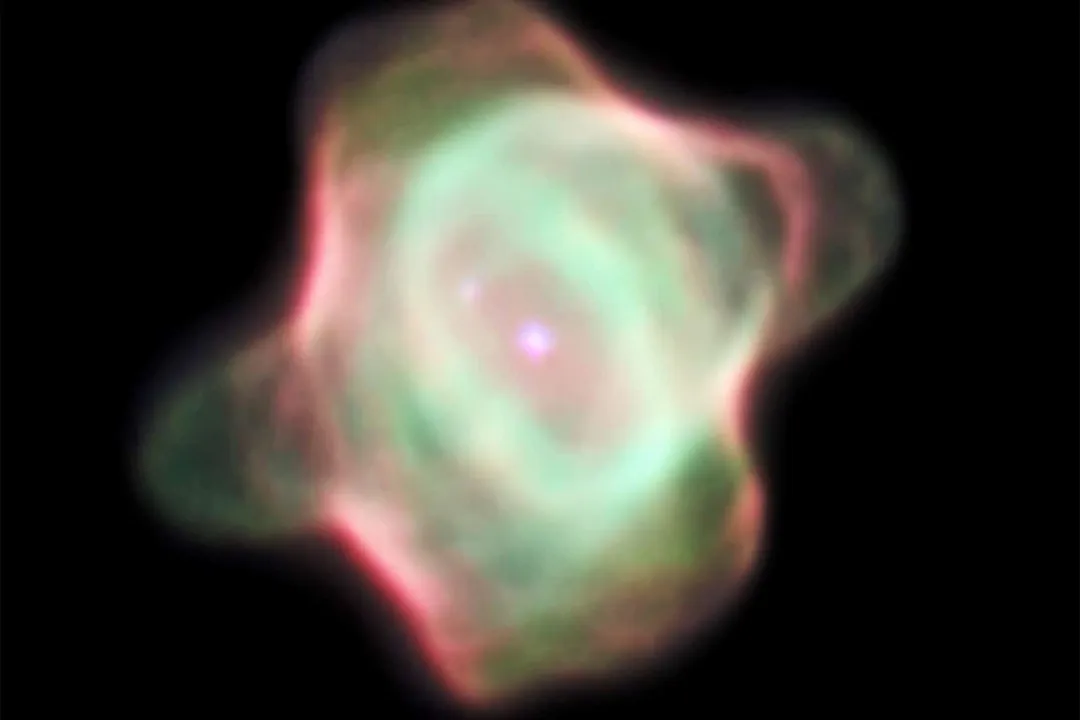
What suggests the central star did not expel its outer layers in a single, steady pulse?
Answer
The complexity and distinct features of its shape
The complex geometry, featuring defined features, suggests the star might have ejected its layers through a series of distinct, energetic expulsions over a relatively short time.
Related Questions
What is the formal catalog designation for the Stingray Nebula?Approximately how old is the Stingray Nebula estimated to be?When did the initial observation signaling the birth of the Stingray Nebula occur?Why did these objects receive the term 'planetary nebula'?What object remains exposed at the center of a planetary nebula, illuminating the surrounding gas?What structural features characterize the rapidly evolving visual appearance of the Stingray Nebula?How does the evolutionary rate of the Stingray Nebula compare to older nebulae like the Ring Nebula?What kind of star typically forms a planetary nebula like the Stingray Nebula?What suggests the central star did not expel its outer layers in a single, steady pulse?What process marks the transition of the dying star into the planetary nebula phase?What cosmic timescales does the formation of the Stingray Nebula allow astronomers to observe in real time?