How old is the youngest nebula?
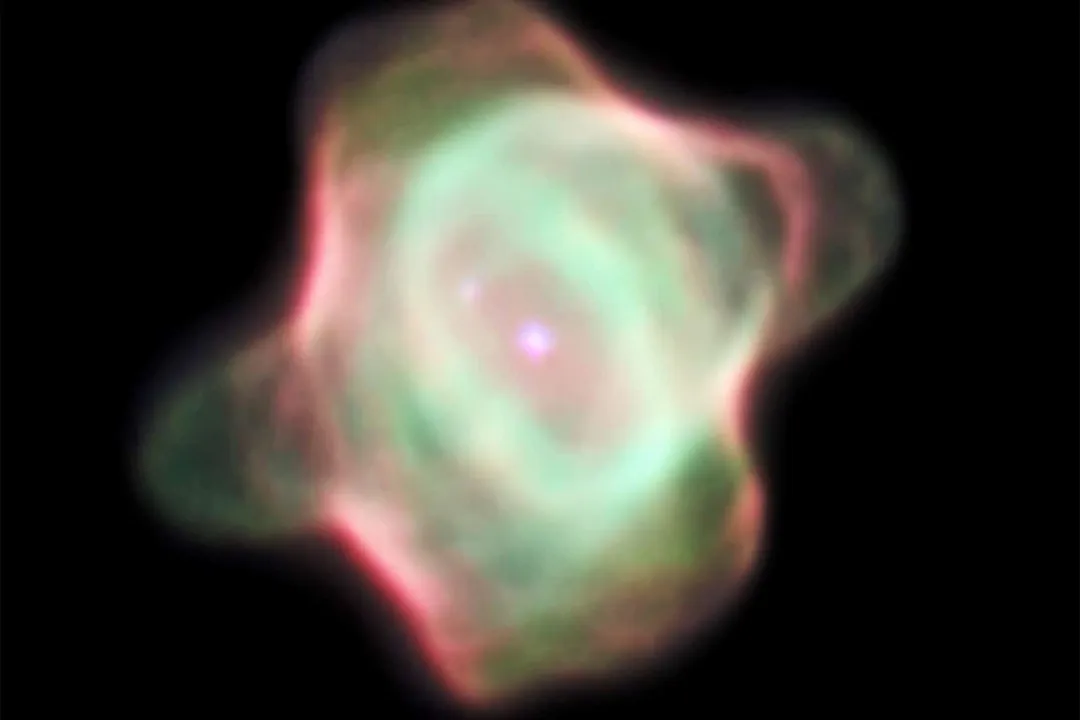
The universe is filled with vast, glowing clouds of gas and dust that capture the imagination, remnants of stars that have reached the end of their lives. These celestial objects, known as nebulae, can span light-years across the cosmos, suggesting immense age. Yet, among these ancient-looking structures, there exists a surprisingly recent addition, a cosmic newborn whose story is being written in real time as we observe it.
# Youngest Object
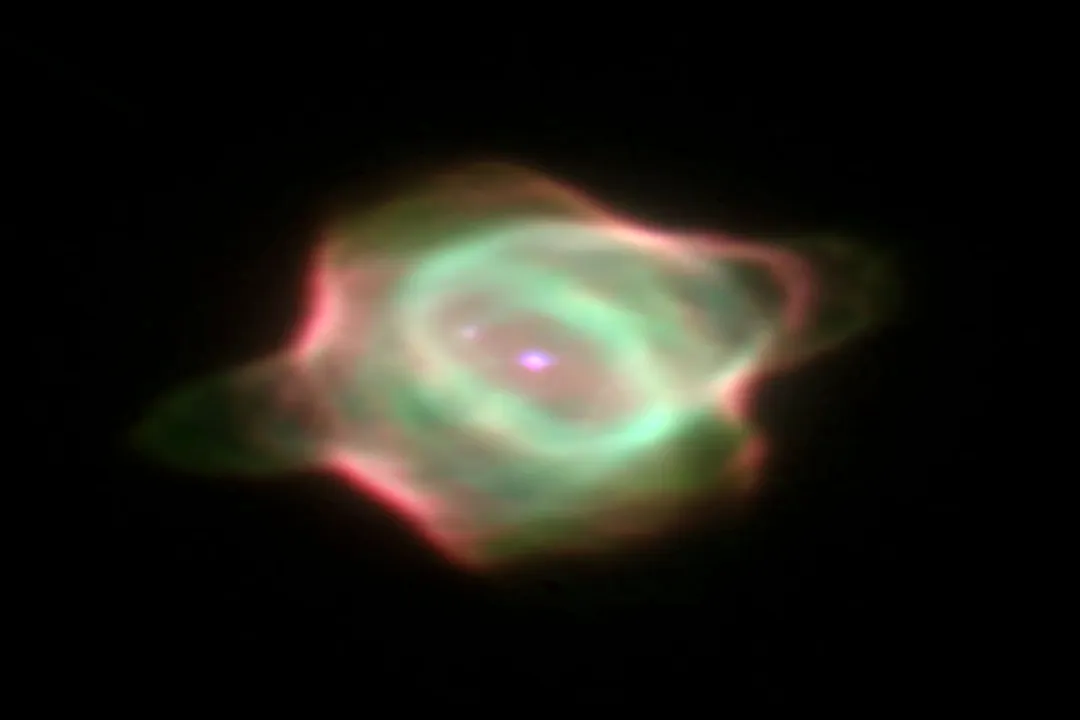
The title of the youngest known planetary nebula belongs to the Stingray Nebula, formally cataloged as Henize 1357. [1][2][3] This object is remarkable because its formation is so recent that astronomers have been able to witness a significant portion of its evolution within human lifetimes. [6] While many nebulae are thousands or even millions of years old, the Stingray Nebula is estimated to have begun forming only about 150 years ago. [1][6][7] This timeline places its dramatic ejection event firmly within the modern era of astronomical record-keeping. [1]
The process that created this nebula started when its central star began its final transformation. [2] The initial observation that signaled its birth occurred around 1989. [2][6] This means that the light we see now is showing us a structure that was essentially created after the American Civil War, making it an unparalleled subject for studying the immediate aftermath of stellar death. [1][6]
# Nebula Formation
A planetary nebula is not related to planets; the term originated from early telescopic views that made these roundish objects resemble planets. [2] Instead, these objects are formed when a star, similar to our Sun but slightly more massive, exhausts the nuclear fuel in its core. [2] As the core contracts and heats up, the outer layers of the star are blown away into space in an expanding shell of gas. [2] This ejected material is illuminated by the intensely hot, exposed core—now a white dwarf—which emits ultraviolet radiation that causes the surrounding gas to glow. [2]
The Stingray Nebula represents this explosive final act. [2] The expanding shell of gas is what we observe as the nebula itself. [1] The rapid, energetic expulsion of mass from the dying star is what marks the transition from a red giant phase to the planetary nebula phase. [2] The fact that this transition happened so recently in the history of the galaxy makes Henize 1357 a critical case study for stellar evolution models. [7] For context, a star like the Sun will take billions of years to reach the point where it begins shedding these outer layers, making the brief few thousand years of the planetary nebula stage an incredibly rare window to study. [2] To think that we are witnessing the light from a structure that has only existed for perhaps three or four human generations is quite striking when considering the typical timescales we deal with in astrophysics. [1]
# Rapid Change

What truly sets the Stingray Nebula apart is its extreme rate of evolution. [7] Unlike older, more established nebulae whose shapes and brightness remain relatively constant over centuries of observation, the Stingray Nebula is changing quickly. [6] When Hubble captured images of it, scientists noted that the structure was already significantly different from earlier ground-based observations. [6]
The nebula is characterized by intricate structures, including distinct jets and wisps of gas expanding outward. [1] The gas appears to be moving at high speeds away from the central star. [2] This rapid expansion and subsequent fading mean that the visual appearance captured by instruments like the Hubble Space Telescope will likely look quite different even a few decades from now. [7] This rapid evolution presents a challenge and an opportunity: it makes precise modeling difficult because our observational window is so short, but it provides invaluable empirical data on the initial, most dynamic phase of nebular expansion. [7]
# Visual Structure
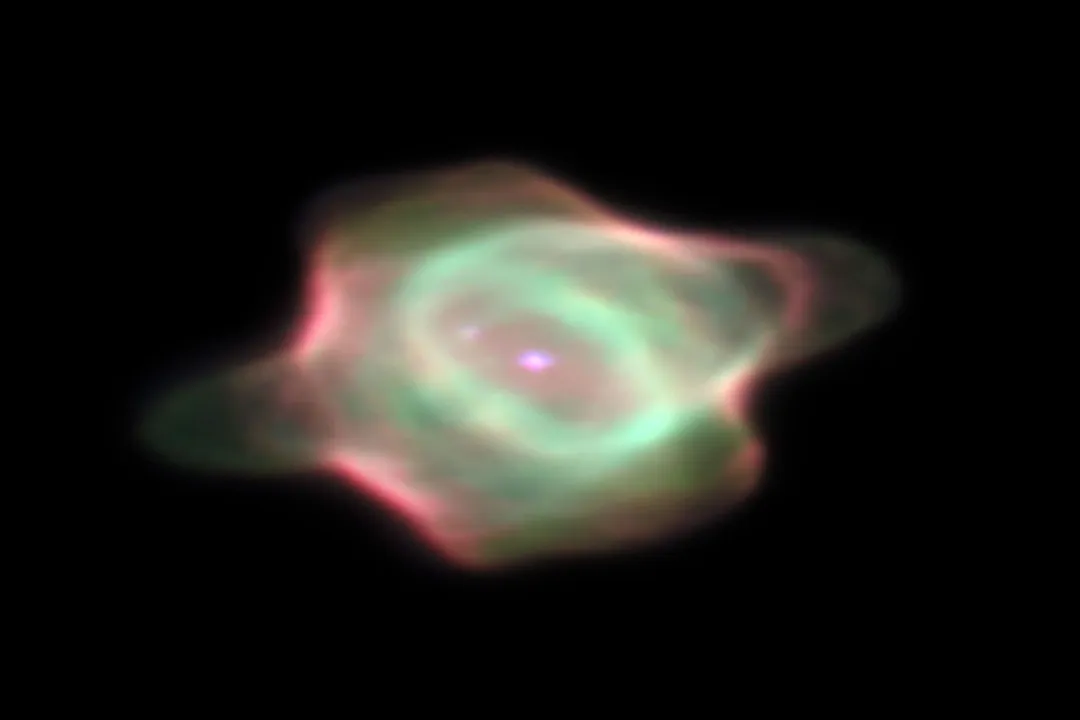
When viewed through powerful telescopes, the Stingray Nebula earns its evocative name. [3] Its structure is highly organized, featuring an expanding cloud that bears a resemblance to a stingray floating in space. [3] This is not a simple, uniform bubble; rather, it displays clear evidence of the highly directional forces at play during the star’s death throes. [1]
Data collected by the Hubble Space Telescope allowed astronomers to map out these details, revealing a complex geometry. [6] The visual elements—the central star, the expanding envelope, and the defined shape—are all consequences of the star’s final moments. [2] Different elements within the nebula glow in various colors depending on the specific gas present and the energy they absorb from the central white dwarf. [2] The detailed images provided by instruments like Hubble are essential for verifying theoretical predictions about how ejected stellar material interacts with the interstellar medium immediately following ejection. [6]
The complexity of its appearance, far from being static, suggests that the central star might not have expelled its layers in a single, steady pulse but possibly through a series of distinct ejections occurring over a relatively short period, carving out the distinct features we observe today. [1] If we were able to watch this object over the span of just one century, we would likely see its overall shape distort significantly, a stark contrast to features like the Ring Nebula, whose structure has remained largely consistent for hundreds of years of human observation. [7] This rapid transformation is precisely what makes the Stingray Nebula so important: it is a real-time demonstration of stellar demise captured on the cosmic clock. [1][7]
Related Questions
#Citations
The Youngest Known Planetary Nebula (Hen-1357) - NASA Science
ESA - Stingray Nebula (Henize 1357) - European Space Agency
Meet the youngest known planetary nebula, the Cosmic Stingray ...
The Youngest Known Planetary Nebula - ESA/Hubble
the Stingray Nebula (Hen 3-1357) [509x509] : r/spaceporn - Reddit
Hubble Observes Rapidly Fading Stingray Nebula - Sci.News
Stingray Nebula - Numbers Wiki - Fandom
Stingray Nebula fades just 20 years after its arrival - Futurity.org