What primary characteristics do astronomers use to classify major spiral arms in the Milky Way?
Answer
High density, long, continuous structure, and very high star formation
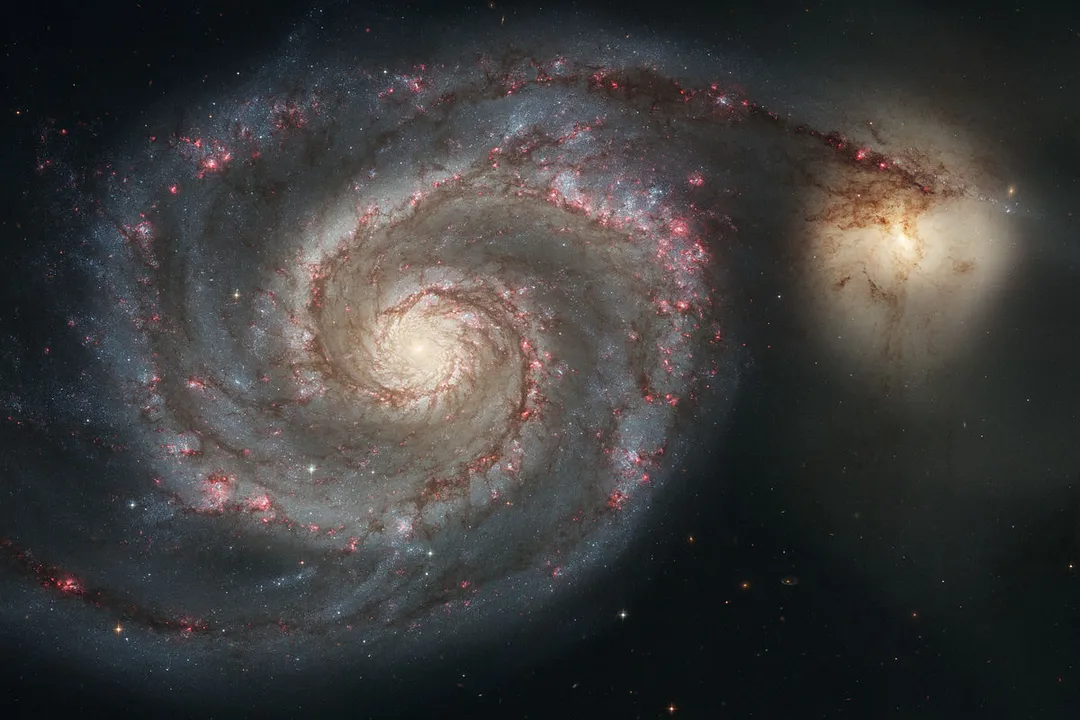
In current astronomical models, structures within the Milky Way are categorized by their density and star-forming activity. Major spiral arms are characterized by their high density, their long and continuous nature, and very high rates of star formation. This contrasts with minor arms, which are generally of lower density and more fragmented, or local features like the Orion Spur, which have moderate star-forming activity.
#Videos
How do we know the Milky Way is a spiral? - YouTube
What and where are the arms of the Milky Way? - YouTube
Related Questions
What is the primary difficulty astronomers face when attempting to represent the Milky Way galaxy from within its disk?How does the Gaia mission determine the precise positions and distances of stars within the Milky Way?How does density wave theory explain the formation and persistence of spiral arms in galaxies?Which two structures are identified as the major spiral arms of the Milky Way?Within which specific feature of the Milky Way is the solar system situated?Why should spiral arms in the Milky Way not be considered solid physical structures?What feature has been identified in the Sagittarius arm that challenges the model of smooth, continuous spiral paths?Why do astronomers utilize infrared telescopes and radio observations to study the structure of the Milky Way?What primary characteristics do astronomers use to classify major spiral arms in the Milky Way?What role does the gravitational dance between the central bar and the galactic disk play regarding spiral arms?