How do scientists represent the Milky Way with the use of arms?
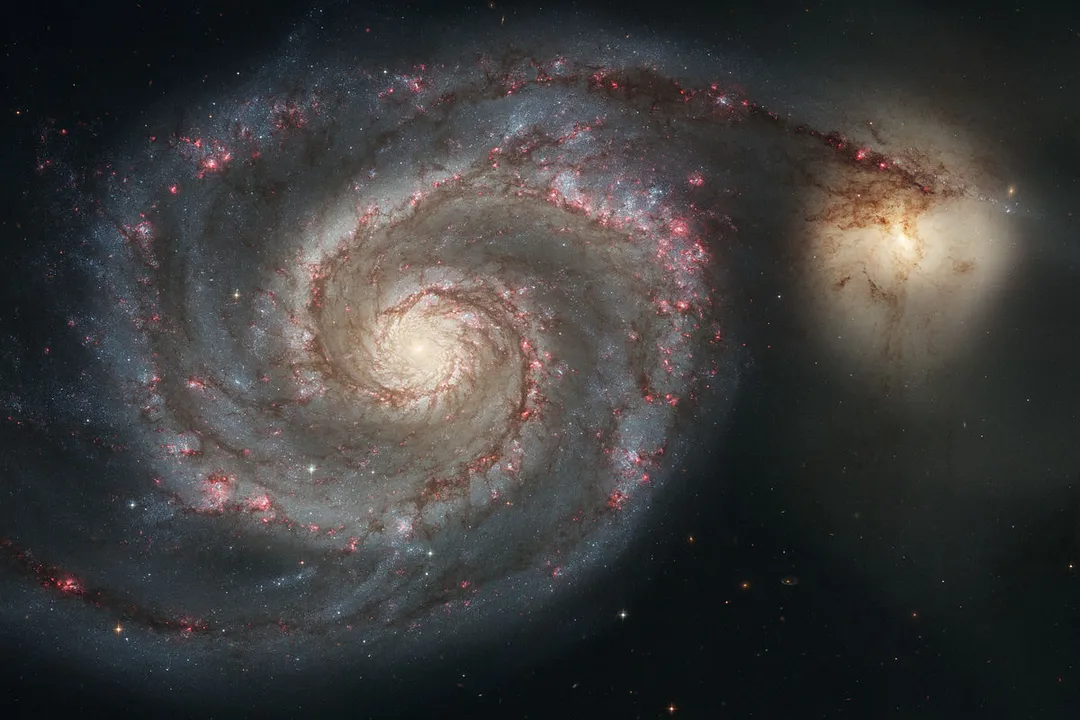
Mapping our galaxy is essentially an exercise in perspective. Since humans reside deep within the Milky Way, obtaining a direct overhead view is impossible. Instead, astronomers deduce the galaxy's shape by measuring the distribution of stars, gas, and dust across the night sky. [5] This task is similar to trying to create a map of a city while standing in the middle of a dense forest, unable to see beyond the closest trees. To overcome this limitation, researchers rely on data collected from infrared telescopes, radio observations, and precise star-tracking missions to piece together the structure of our galactic home. [5][7]
# Mapping Challenges
The primary difficulty in representing the Milky Way lies in the obstruction caused by dust. Much of the galaxy is obscured by dense clouds that block visible light, making it hard to see distant stars on the other side of the disk. [5] For decades, astronomers had to rely on indirect methods to infer the existence of spiral arms. They tracked ionized hydrogen, which emits specific radio signals that pass through dust, allowing them to pinpoint the locations of massive, star-forming regions. [7][10]
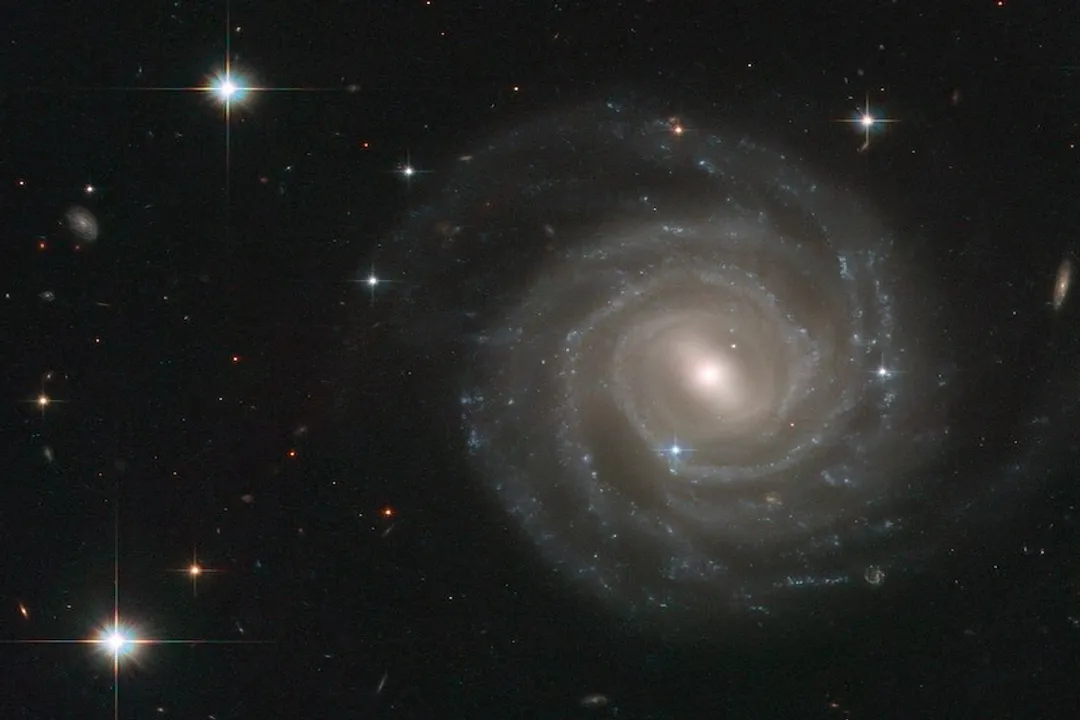
By plotting the positions of these regions, scientists began to identify elongated patterns, which they interpreted as the spiral arms. These arms are not solid physical objects like the spokes of a wheel. Instead, they are regions of higher density where gas and dust accumulate, triggering the birth of new, bright stars. [3][10] When these stars shine, they make the arms appear prominent in our observations, even if the arms themselves are dynamic, moving features rather than static structures.
# Gaia Mission
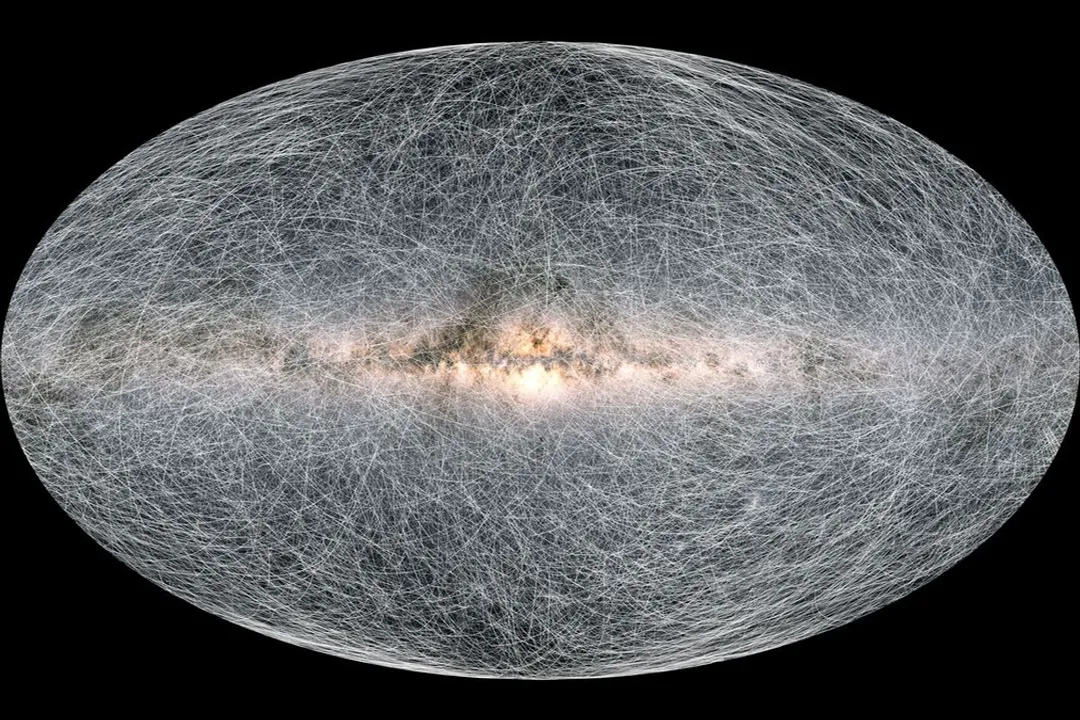
The landscape of galactic mapping changed dramatically with the Gaia mission. Launched by the European Space Agency, Gaia measures the precise positions, distances, and motions of over a billion stars in our galaxy. [5] By using parallax—the apparent shift of an object against a distant background when viewed from different points—Gaia provides an incredibly accurate 3D map of our local galactic neighborhood. [5]
This data has allowed scientists to refine their models of the Milky Way’s shape. Rather than guessing the distance to a far-off gas cloud, researchers now have high-confidence distance measurements for countless stars. This shift from estimation to measurement has confirmed that the Milky Way is not just a collection of random star clusters but a structured, barred spiral galaxy. [5][10]

# Arm Structures
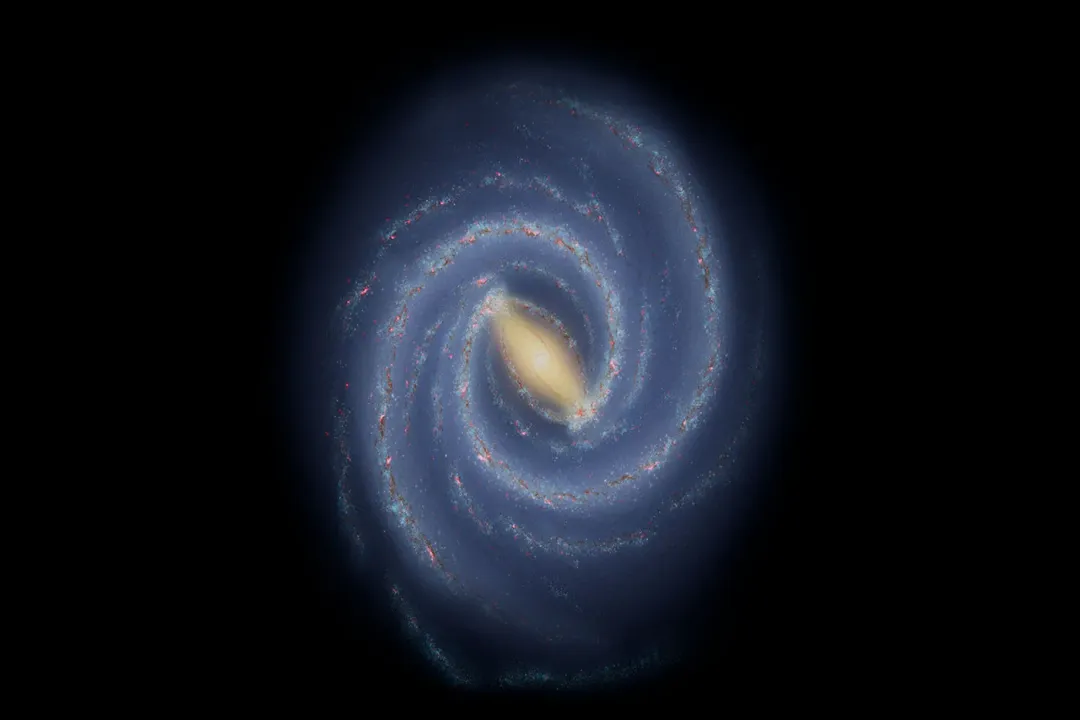
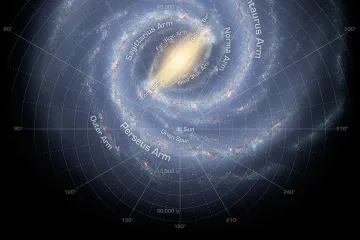
The Milky Way is typically represented as having two major spiral arms and several minor arms. The two major arms are the Scutum-Centaurus and the Perseus arms, which contain the highest concentrations of young stars and molecular gas. [9][10] These arms extend from the central bar of the galaxy, a dense, elongated region of stars at the galactic core.
Interspersed between these major arms are minor arms, such as the Sagittarius and Norma arms. [9] These are less distinct and often contain fewer stars, though they still play a significant role in the galaxy's overall gravitational dynamics. Our own solar system resides within a smaller feature often called the Orion Spur, or the Orion Arm. [9] It is situated between the Sagittarius and Perseus arms. While it was once considered a minor bridge of stars, some current data suggests it may be a more significant structure than previously thought, perhaps even a branch of the Perseus arm. [9]
# Density Waves
Understanding why these arms exist requires looking at the physics of spiral galaxies. A helpful way to visualize this is to imagine a traffic jam on a highway. The cars—representing stars and gas—flow into the jam from behind, move through it, and then exit the other side. The jam itself remains, even though the individual cars are constantly changing.
This is known as the density wave theory. [3] Gravitational forces compress the gas in the disk, creating a ripple or wave that moves through the galaxy. As this wave travels, it forces gas to bunch up and collapse, creating the bright, hot stars that define the spiral arms we observe. The arms are, therefore, visible because they are regions where star formation is active, not because they contain the same material permanently. [3]
# Recent Discoveries
While the general model of spiral arms has been accepted for years, new data continues to reveal nuances in these shapes. For example, observations from NASA’s Spitzer Space Telescope and the WISE mission have shown that the arms are not always smooth, continuous paths. [1] Scientists identified a noticeable "break" or a "kink" in the Sagittarius arm, a segment of stars and gas that seems to jut out at a different angle than the rest of the arm. [1]
This finding suggests that the galaxy's spiral structure is more irregular than simplified textbook diagrams imply. These breaks can be caused by the gravitational influence of smaller companion galaxies, the internal turbulence of the gas disk, or the interplay of magnetic fields. [1] Such irregularities serve as a reminder that the Milky Way is a dynamic, evolving system, not a static, perfect spiral.
# Visualizing Arms
To distinguish between the different types of structures within the galaxy, researchers often categorize them by their density and star-forming activity. The following table provides a breakdown of how these components are generally characterized in current astronomical models.
| Structure Type | Characteristic | Star Formation Rate |
|---|---|---|
| Major Arms | High density, long, continuous | Very High |
| Minor Arms | Lower density, fragmented | Moderate |
| Orion Spur | Local, bridge-like feature | Moderate |
| Galactic Bar | Central, high-density core | Variable |
This categorization helps astronomers organize the chaotic data coming from sky surveys. It allows for a standardized way of communicating where specific celestial objects are located relative to the galactic center, even as our understanding of their shapes continues to evolve.
# Analyzing Complexity
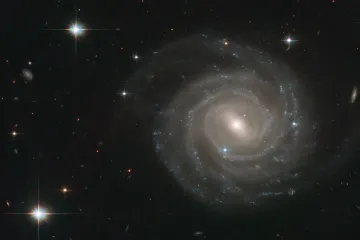
One significant insight from recent research involves the distinction between the "skeleton" of the galaxy and the "gas" of the galaxy. When we look at infrared maps, we see the dust and gas clearly, which traces the spiral arms. However, when we look at the older, mature star population, the spiral structure is often much less obvious. This discrepancy leads to an analytical challenge: are the spiral arms just temporary patterns in the gas, or do they represent a long-term gravitational structure?
The consensus leans toward the idea that while spiral arms are temporary patterns in terms of human lifespans, they persist for billions of years due to the complex gravitational dance between the bar at the center and the disk around it. [3] This suggests that mapping the arms is not just about drawing lines on a map; it is about tracking the long-term history of how matter organizes itself under gravity.
# Future Mapping
As technology improves, the representation of the Milky Way will move from static diagrams to high-definition, dynamic models. Future missions will focus on mapping the far side of the galaxy, which remains difficult to observe due to the thick bulge of the core and the density of gas clouds in the disk. [7]
By combining radio observations, which pierce through the dust, with the precision of Gaia's star-tracking, we are building a more complete picture of our galaxy. We are moving toward a model where every star's position, movement, and relationship to the spiral arms can be calculated with high precision. This transition from "inference" to "observation" marks the current era of galactic astronomy, where we are finally seeing the forest, one tree at a time.
#Videos
How do we know the Milky Way is a spiral? - YouTube
What and where are the arms of the Milky Way? - YouTube
Related Questions
#Citations
Astronomers Find a 'Break' in One of the Milky Way's Spiral Arms
How do we know the Milky Way is a spiral? - YouTube
How the Milky Way Got its Spiral Arms - Astrobites
can seem to find the answer to this… when the milky way is ... - Reddit
Why does the Milky Way have spiral arms? New Gaia data ... - Space
[PDF] The Milky Way has 'arms' and you've probably never even seen them!
How did scientists discover that the Milky Way is spiral in shape ...
Which Milky Way spiral arm contains our sun? - EarthSky
Video: Milky Way Galaxy | Type & Spiral Arms - Study.com