What potential outcome results from an excessively shallow entry angle during re-entry?
Answer
The vehicle generates insufficient drag and may skip off the air back into space.
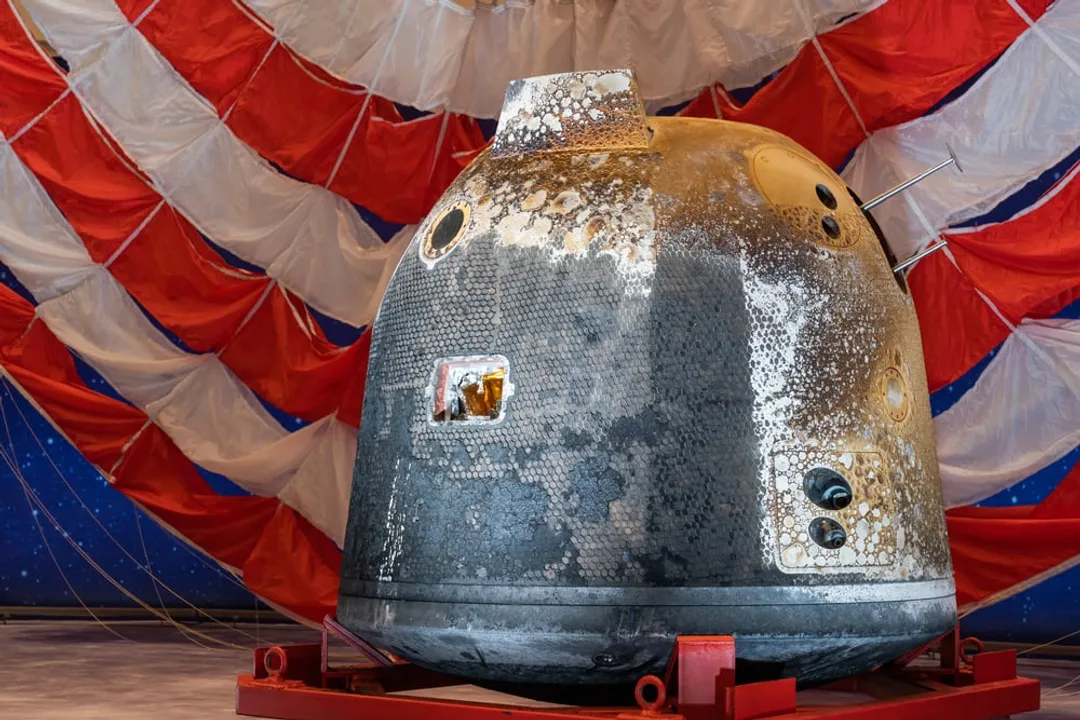
The angle relative to the horizon defines the narrow entry corridor of survival. If the entry angle is too shallow, the spacecraft essentially grazes the upper layers of the atmosphere without achieving sufficient bite or drag to slow down substantially. In this scenario, the vehicle behaves much like a flat stone thrown across water, using the denser air boundary as a trampoline, causing it to 'skip' back out of the atmosphere and potentially remain in orbit or an unrecoverable trajectory. This failure mode has historically affected unrecoverable stages or upper-stage modules.
#Videos
Do Spacecraft Really Have To Endure The Hazards of Reentry
Related Questions
What primarily causes the intense thermal energy at the stagnation point during re-entry?What velocity must a vehicle returning from low Earth orbit often achieve upon re-entry?Why is a return capsule intentionally designed with a blunt shape?What potential outcome results from an excessively shallow entry angle during re-entry?What is the primary structural risk associated with too steep an angle in the entry corridor of survival?How does an ablative heat shield protect a spacecraft during plasma interaction?What specialized material covered the Space Shuttle for its reusable heat protection?How does deceleration control differ between blunt-body capsules and winged vehicles?What maneuver describes the active management used by lifting bodies to reduce immediate thermal load?How does re-entry passive braking contrast with the active process of launch?